
DJI's OSMO Nano Thumb Camera Delivers Strong Performance Despite Heat Management Issues
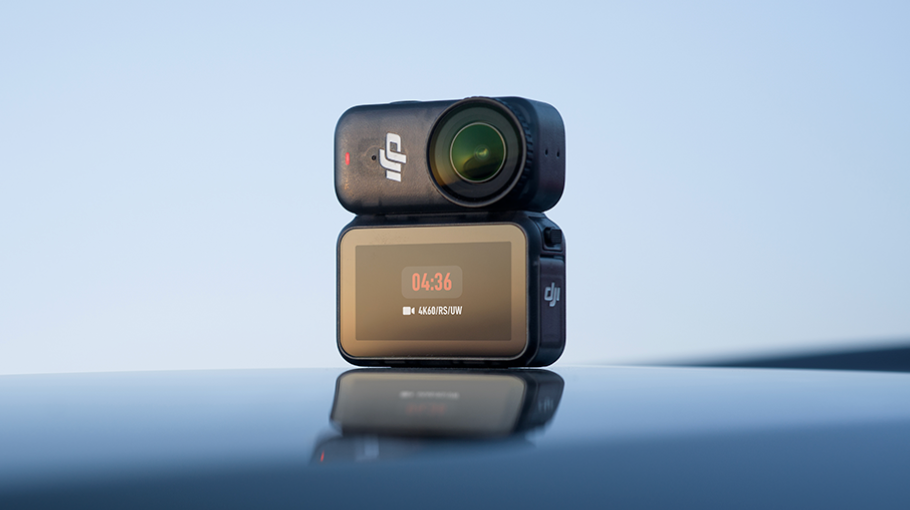
DJI's latest OSMO Nano, a thumb-sized wearable camera targeting the first-person perspective filming market, demonstrates impressive image quality and ecosystem integration while facing thermal management challenges that could affect extended recording sessions, according to a comprehensive review by a tech review platform "Videogoal".
The device leverages DJI's proven 1/1.3-inch sensor technology with 10-bit D-Log M recording capabilities, delivering reliable performance in daylight conditions. For low-light scenarios, the camera incorporates a dedicated night mode with motion blur reduction features.
The OSMO Nano supports 4K 120fps slow-motion recording without image cropping, maintaining consistent image quality across different frame rates. Built-in storage options include 64GB and 128GB variants, providing sufficient capacity for extended shooting sessions at maximum 120Mbps video bitrate.
However, thermal management emerges as a key limitation, with the standalone camera shutting down after 34.5 minutes of 4K30fps recording at 28°C ambient temperature, while combined module recording stopped at 30 minutes due to overheating protection.
Technical Specifications and Performance
The OSMO Nano features magnetic mounting compatibility with DJI's Action camera accessories, supporting both forward and reverse installation for versatile shooting angles. The standalone camera offers IPX8-rated 10-meter waterproof protection, though this drops to IPX4 splash-resistance when combined with the transmission module.
Data transfer capabilities include wired speeds up to 400MB/s for the 64GB version and 600MB/s for the 128GB model. Wireless transmission supports Wi-Fi 6 with maximum speeds reaching 80MB/s, positioning the device ahead of current category competitors.
The camera supports PD 3.0 fast charging protocol, maintaining approximately 15W charging speeds with full battery restoration achieved within one hour for both the camera unit and transmission module.
Transmission Range and Connectivity
Real-world testing reveals transmission limitations, with image quality degradation beginning at 7-8 meters in unobstructed environments and significant lag occurring around 10 meters. Despite these constraints, the performance remains adequate for typical use cases within this camera category.
The device integrates with DJI's broader imaging ecosystem, supporting dual-microphone wireless connectivity for enhanced audio capture capabilities during recording sessions.
User Interface Limitations
The combined camera-transmission module configuration lacks physical lock screen controls, creating potential for accidental operations when the transmission module is stored in pockets or bags. The current touch-screen lock mechanism requires only an upward swipe to unlock, insufficient for preventing unintended activation during transport or storage.
The review suggests DJI should incorporate lock screen functionality into customizable button options and implement more robust unlocking procedures to address operational safety concerns.