
Doubao Introduces Paid Tiers:China AI Industry Shifts to Monetization
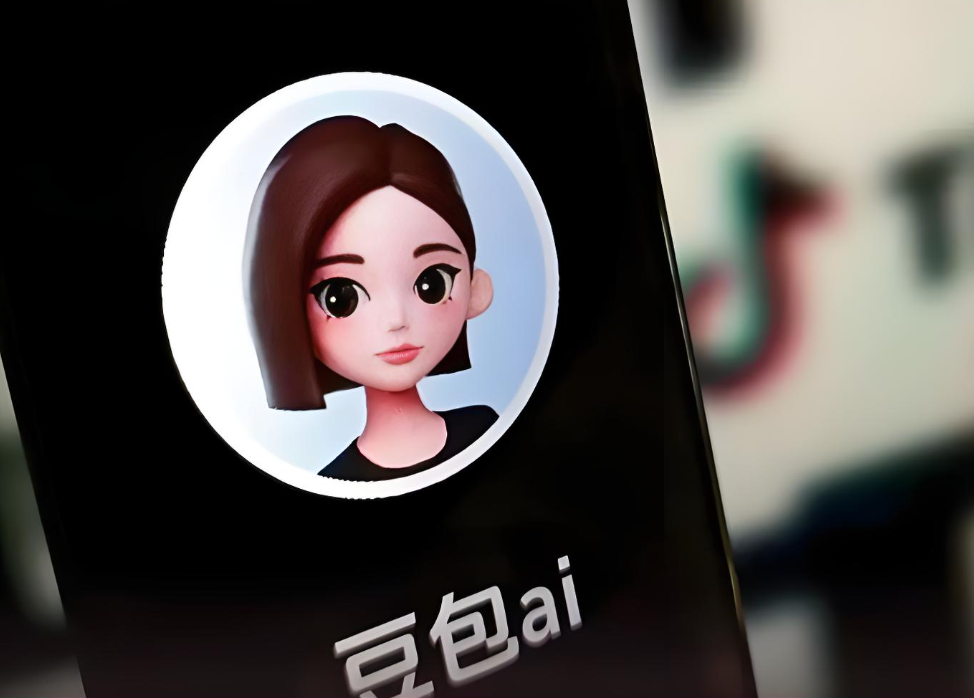
ByteDance's AI chatbot Doubao has quietly introduced paid subscription tiers ranging from $10 to $71 monthly, marking a significant shift in China's consumer AI landscape from user acquisition to revenue generation.
According to a new Morgan Stanley analysis, this move by China's largest AI chatbot app represents the first major monetization effort by a company that previously offered completely free access to attract its 300+ million monthly active users.
Doubao's Three-Tier Pricing Strategy
The new subscription structure, discovered through Doubao's App Store listing, includes:
- Standard: RMB 68/month ($10) or RMB 688/year
- Enhanced: RMB 200/month ($29) or RMB 2,048/year
- Professional: RMB 500/month ($71) or RMB 5,088/year
ByteDance confirmed that basic chat functionality remains free, while paid tiers unlock compute-intensive features including PowerPoint creation, data analysis, and video production capabilities.
Industry Context: The Economics Behind the Shift
Morgan Stanley's analysis identifies three key factors driving this monetization push:
Unsustainable Compute Costs
Doubao currently processes over 120 trillion tokens daily as of March 2026. Unlike traditional internet services—where serving additional users costs virtually nothing—AI applications incur direct compute costs for each query processed. The tiered pricing structure effectively asks heavy users to subsidize their own computational requirements.
Prosumer Market Positioning
The pricing strategy reveals ByteDance's target demographic: creators and knowledge workers rather than mass-market consumers.
At $10 monthly for the entry tier, Doubao prices above domestic competitors like Kimi ($7/month), while remaining competitive with international offerings. This positioning acknowledges the challenge of monetizing China's broader consumer base, where willingness to pay for software subscriptions remains historically low.
Competitive Industry Signal
As the most aggressive subsidizer in China's AI space, ByteDance's shift to paid tiers signals broader industry maturation.
While competitors—including Alibaba's Qwen, Tencent's Yuanbao, and Baidu's Ernie chatbots—maintain free access, Morgan Stanley expects similar monetization moves across the sector.
Revenue Projections and Market Reality
Morgan Stanley's sensitivity analysis projects Doubao's potential subscription revenue between $101 million and $1.5 billion annually, depending on user conversion rates and growth assumptions.
The analysis uses a conservative 0.3–3% paying user conversion rate—significantly below the ~5% achieved by U.S. AI chatbots—reflecting Chinese consumers' historically low propensity for software subscriptions.
The mid-case scenario assumes 1.0–1.5% conversion rates with 435 million monthly active users, generating $426–684 million in annual subscription revenue. However, this remains modest compared to ByteDance's core advertising business.
Broader Implications for China's AI Ecosystem
The monetization shift comes as Chinese AI companies face increasing pressure to justify massive infrastructure investments.
The user education phase—where companies prioritized growth over profitability—appears to be concluding as acquisition costs rise and serving costs scale with usage.
Comparison with Global AI Pricing
Doubao's pricing sits within the global competitive range:
International Benchmarks
- ChatGPT Plus: $20/month
- Claude Pro: $20/month
- Gemini Advanced: $20/month
Chinese Competitors
- Kimi: $7–100/month across four tiers
- Zhipu Qingyan: $7–33/month
- Most coding-focused AI tools: $4–34/month
Technical Infrastructure Challenges
Unlike social media or search platforms that benefit from network effects and marginal cost advantages, AI chatbots face linear scaling challenges.
Each additional query requires computational resources, making the “free forever” model economically unsustainable at scale.
ByteDance's approach—maintaining free basic chat while charging for resource-intensive features—represents an attempt to balance user accessibility with economic reality.
Market Response and Future Outlook
The success of Doubao's monetization strategy will likely influence the broader Chinese AI industry's approach to user monetization.
If ByteDance achieves sustainable conversion rates, expect rapid adoption of similar models across the sector. Conversely, low uptake could force companies to explore alternative revenue streams, including enterprise services and API monetization.
The move also reflects growing maturity in China's AI market, where the focus shifts from user acquisition metrics to sustainable unit economics.
As compute costs continue rising with model complexity and user expectations, the ability to generate revenue from AI services becomes critical for long-term viability.
Conclusion
For consumers, this transition marks the end of the “AI free lunch” period in China, where companies subsidized usage to build market share.
The industry now enters a phase where value delivery must align with revenue generation—potentially leading to more focused product development and clearer value propositions.
Related Coverage:
ByteDance's Doubao Joins AI Red Envelope Battle with Spring Festival Campaign
ByteDance’s AI Chatbot Doubao Surpasses 100 Million Daily Active Users