
Ecovacs Faces Growing Competition from Roborock and Dreame in Robot Vacuum Market
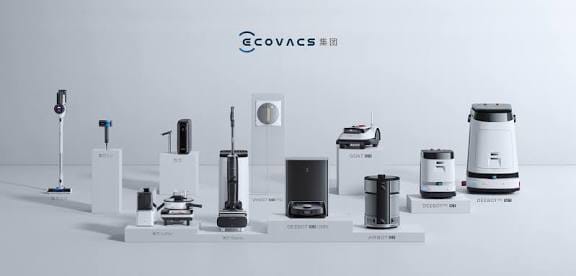
China's leading robot vacuum maker Ecovacs Robotics is grappling with intensifying competition from rivals Roborock Technology and Dreame Technology, despite posting strong financial results in the first half of 2025.
The Suzhou-based company reported revenue of 8.68 billion yuan ($1.2 billion) for the six months ended June 30, up 24.37% year-on-year, maintaining growth momentum from the first quarter. Ecovacs holds more than 35% market share in China's robot vacuum segment, cementing its position as the country's top brand in the category.
However, the company's dominance faces mounting challenges as competitors gain ground with superior algorithms, innovative designs and aggressive pricing strategies. Industry analysts warn that Ecovacs' heavy reliance on robot vacuums and floor washers, which account for over 75% of total revenue, leaves it vulnerable to market volatility and seasonal fluctuations.
The competitive landscape has shifted dramatically as the robot vacuum market transitions from blue ocean to red ocean, forcing companies to compete across multiple dimensions including technology, branding and international expansion.
Revenue Concentration Creates Vulnerability
Ecovacs' business model remains heavily dependent on robot vacuums and floor washers, creating structural risks that competitors have avoided through diversification. The company's revenue concentration in cleaning robots makes it susceptible to supply chain disruptions and seasonal demand variations, particularly during spring and autumn when sales typically decline.
In contrast, Roborock has expanded into comprehensive smart home solutions, while Dreame leverages its motor technology across cleaning appliances, personal care devices and robotics. This diversification provides competitors with greater resilience against market fluctuations and creates multiple revenue streams.
The company's premium positioning strategy has also faced headwinds. Despite pricing flagship models at or above international competitor iRobot's levels, Ecovacs struggles with user perceptions of inferior algorithms and smart features. Consumer complaints about "unintelligent" behavior persist, undermining efforts to command premium pricing through technological differentiation.
Competitors Gain Ground Through Innovation
Roborock has emerged as a formidable challenger in global premium markets since spinning off from Xiaomi Corp.'s ecosystem. The company's G20 series launched in 2024 gained significant traction in Europe and North America, with technology enthusiasts praising its superior suction power and intelligent algorithms.
The competitive threat intensified in the first half of 2025 when Roborock introduced its first combined vacuum-mop robot, directly targeting Ecovacs' core market. This product launch demonstrated Roborock's ability to rapidly innovate and respond to market demands.
Dreame and Narwal Technology have also gained momentum through targeted strategies. Dreame's proprietary high-speed motors reaching 180,000 RPM and aggressive pricing have driven rapid growth in Southeast Asia and Eastern Europe. Meanwhile, Viomi has captured market leadership in China's 2,000-3,000 yuan price segment with its J4 series, focusing on the key customer pain point of hands-free mop cleaning.
Ecovacs' traditionally conservative product development approach, while ensuring technical maturity and quality control, has resulted in delayed adoption of emerging features. The company only fully implemented mechanical arm edge-cleaning technology in 2025, trailing Roborock and Dreame by nearly a year.
Strategic Imperative for Transformation
The cleaning appliance market's evolution demands fundamental strategic adjustments from Ecovacs beyond its current "most units sold" positioning. The company faces pressure to justify premium pricing while defending against value-oriented competitors across multiple price segments.
Ecovacs has begun addressing technological gaps through expanded R&D investment, particularly in algorithms, sensors and human-machine interaction. The company's promotion of its AI Laboratory and launch of the AIVI 3.0 series based on edge-computing large language models signals commitment to technological advancement, though results require time to materialize.
Market expansion beyond traditional cleaning robots represents another critical growth avenue. Opportunities include home service robots, smart agriculture sensors and commercial cleaning systems. Developing targeted sub-brands for specific demographics such as young consumers, pet owners and elderly users could unlock additional market segments.
The Chinese cleaning appliance market remains in its penetration phase, but increasingly sophisticated consumers and innovative competitors are reshaping competitive dynamics. Success will depend on companies' ability to deliver robust technology, seamless user experiences, comprehensive ecosystems and compelling brand narratives in an industry where user expectations continuously evolve.