
EHang’s "Ready-to-Wait" Reality: Regulatory Purgatory Meets Global Ambition
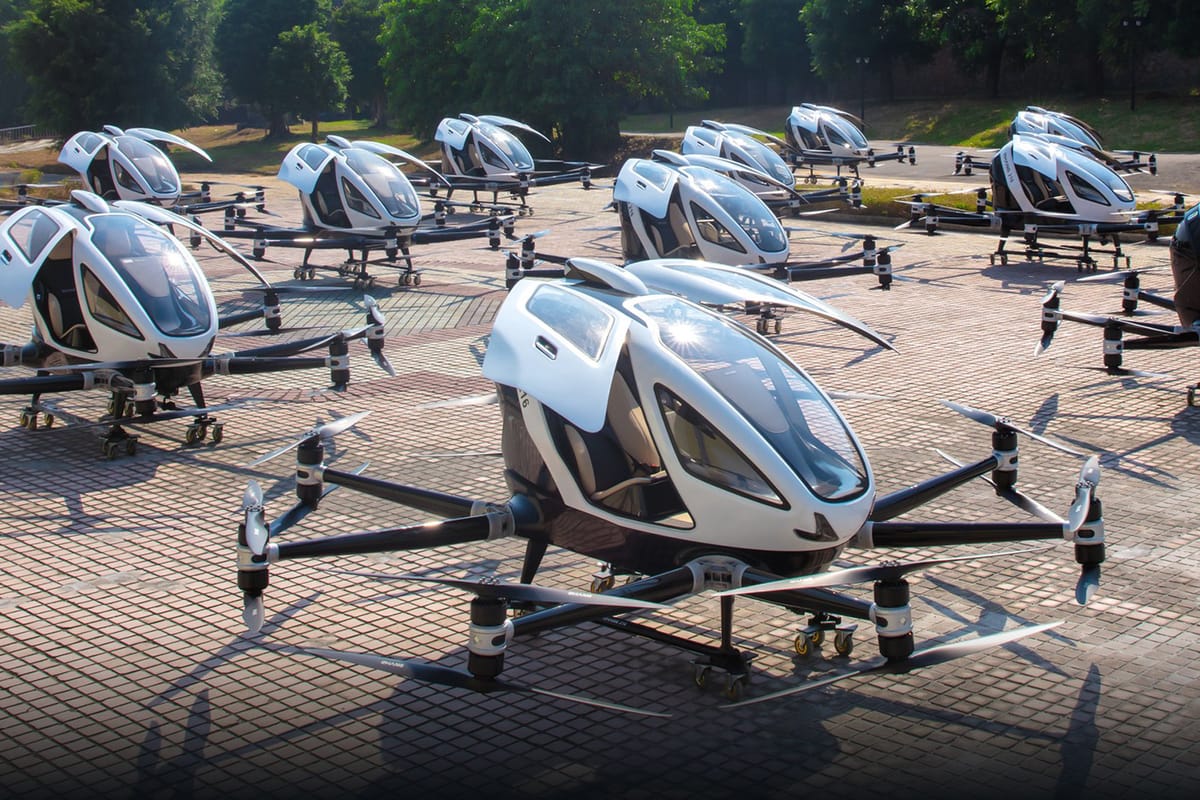
The promise of flying cars has always been just around the corner, but for investors in EHang, that corner keeps getting a little longer.
In a research note released on January 21, 2026, J.P. Morgan’s Asia Pacific Equity Research team offered a sobering look at the Chinese eVTOL (electric vertical takeoff and landing) pioneer. Following EHang’s appearance at the JPM China Opportunities Forum, the takeaway is clear: the hardware is ready, the software is locked, but the rubber stamp—or rather, the regulatory green light—is still pending. J.P. Morgan maintains a "Neutral" rating with a price target of $12.00, suggesting that while the long-term thesis is intact, the near-term reality is a waiting game.
The "Ready-to-Wait" Paradox
Management at EHang is projecting confidence, asserting that 2026 will be "materially better" than 2025. The narrative is that the company is structurally "ready" for commercialization. However, the bottleneck has shifted. It is no longer about proving the aircraft can fly; it’s about proving the people on the ground are allowed to operate them.
According to the report, the regulatory hurdles have evolved. While EHang secured its first two air operator certificates (OCs) in the first half of 2025, regulators subsequently introduced a new requirement: ground remote operators must hold formal licenses.
"Management confirmed that the operator license is the primary incremental bottleneck... During the period when the licensing framework was being defined, approvals linked to commercialization could not progress as originally expected."
Essentially, the aircraft are grounded not by physics, but by paperwork. The company notes that most substantive discussions with regulators on training curricula and safety have been completed, and once finalized, the training-to-certification cycle will take 6–8 weeks. But until then, visibility on the timeline remains "limited."
Revenue Guidance: The Reality Check
The friction of regulatory purgatory is visible in the financials. Management guided to RMB 500 million (US69million) in full−year revenue, as har prevision from an earlier expectation of RMB 900 million (US124 million).
"The revision reflected a pause in approvals for additional OCs, which constrained the pace of commercialization... As a result, commercial operations could not scale, and potential operator customers were unable to complete approvals."
This highlights a critical risk in the eVTOL sector: execution is useless without permission. EHang can build the drones, but if their customers can't get the licenses to fly them, the assembly line slows down.
The "Sandbox" Escape Route
While domestic regulators in China are taking a cautious, phased approach—currently restricting flights to "A-to-A" (taking off and landing at the same spot) sightseeing loops—international markets may offer a faster route to revenue.
J.P. Morgan highlights that EHang is seeing "encouraging overseas momentum," particularly in Thailand and the Middle East. These regions are utilizing "sandbox" frameworks that might allow for actual point-to-point ("A-to-B") commercial operations sooner than in China.
"Management suggested Thailand may allow A-to-B operations earlier than China, potentially making it one of the first countries to enable true point-to-point commercial eVTOL services."
Furthermore, the Middle East’s "Vision 2030" strategies are creating a fertile ground for adoption, with recent passenger flights in Qatar signaling strong government backing.
The Moat: Software Over Hardware
Perhaps the most interesting strategic nugget from the report is EHang’s defense of its R&D spending, which appears lower than some peers. The company argues that the battle isn't just about building a flying machine; it’s about the command-and-control systems that manage them.
"Management emphasized that differentiation lies not only in aircraft hardware but also in command-and-control and fleet management systems... arguing that early participation in standard-setting creates a durable moat."
The company remains adamant that pilotless, small-footprint aircraft are the only viable solution for dense urban environments, dismissing competitors who are building larger, piloted aircraft that require massive infrastructure.
Conclusion
J.P. Morgan’s assessment paints a picture of a company that has done its homework but is stuck in detention. The technology works, the factories are ready, but the bureaucratic gears are grinding slowly. For investors, EHang represents a classic "hurry up and wait" scenario: the upside is tethered to a regulatory pen stroke that no one can predict. Until the ink dries on those operator licenses, EHang remains a high-flying concept in a holding pattern.