
Enflame’s $24 Billion IPO: China’s GPU Race Moves From Scarcity Premium to Profitability Test
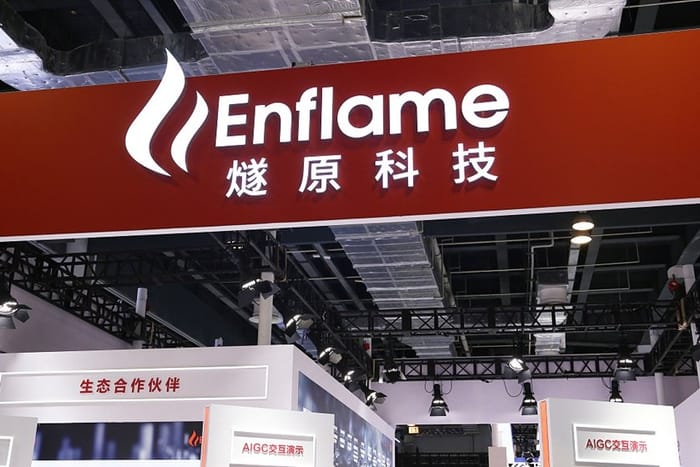
China's last domestic GPU "dragon" to list completes the quartet on the Star Market, commanding a RMB 170.7 billion (US$23.7 billion) intraday market cap — yet three years of cumulative losses exceeding RMB 4 billion and a single-customer revenue concentration of nearly 84% are already testing investor conviction.
Enflame Technology (688801.SH) made a dramatic entrance on Shanghai's Star Market on September 11, 2026, opening at RMB 410 per share — a 188% premium to its RMB 142.18 IPO price — before paring gains to close the morning session up 178.95% at RMB 396.61. The listing formally completes the "Four Dragons" cohort of domestically developed GPU makers on public markets, a milestone that industry analysts say marks the end of the sector's scarcity premium era and the beginning of a far more demanding earnings-verification cycle.
The euphoria was swift but uneven. By midday, the stock had already retreated from an intraday peak that briefly exceeded a 200% gain, a pattern strikingly familiar to peers Moore Threads (688795.SH) and MetaX Integrated Circuits (688802.SH), both of which surged 425% and 693% respectively on their own debut days in December 2025 before subsequently losing more than half their peak value.
Tencent's Dual Role Concentrates Both Upside and Risk
The most structurally significant feature of Enflame's capital table is not its IPO price but the identity of its anchor investor: Tencent. Following the offering, Tencent directly holds 77.267 million shares, or 17.95% of the enlarged share capital, making it the largest external shareholder. At the opening price of RMB 410, that stake is valued at approximately RMB 31.7 billion (US$4.4 billion).
Tencent's affiliated entity Shanghai Qishan Investment also participated in the strategic placement, receiving 1.7471 million shares at a cost of RMB 248 million (US$34.4 million), subject to a 36-month lock-up — the longest restriction period among all strategic investors.
The investor-customer overlap, however, introduces a concentration risk that the prospectus itself does not obscure. Enflame's direct and AVAP-model sales to Tencent accounted for 33.3%, 37.8%, and 83.8% of total revenue in 2023, 2024, and 2025 respectively. In the first half of 2026, total revenue reached RMB 1.12 billion (US$155.6 million) — already surpassing full-year 2025 revenue of RMB 990 million — but the Tencent dependency has only deepened, not diversified.
Enflame Chairman Zhao Lidong stated during the IPO roadshow that existing orders with Tencent are executable through 2027. Yet the prospectus simultaneously discloses that Tencent's demand for AI accelerator cards "far exceeds Enflame's current supply capacity," a constraint that frames the company's near-term growth ceiling as much as its floor.
Revenue Explodes, Losses Persist: Profitability Path Remains Conditional
Enflame's financial trajectory follows the classic deep-tech growth template: revenue scaling rapidly while losses remain substantial and R&D consumes capital at a rate that dwarfs sales.
Revenue grew from RMB 301 million (US$41.8 million) in 2023 to RMB 722 million in 2024 and RMB 990 million in 2025. First-half 2026 revenue of RMB 1.12 billion represented year-on-year growth of 279%. The company's guidance for the first three quarters of 2026 projects revenue of RMB 2.3 billion to RMB 3.0 billion (US$319 million–US$416 million), implying year-on-year growth of 326% to 455%.
Against that trajectory, however, net losses attributable to shareholders totaled RMB 1.665 billion, RMB 1.510 billion, and RMB 1.164 billion in 2023, 2024, and 2025 respectively — cumulative losses of more than RMB 4 billion over three years. The first half of 2026 added a further RMB 632 million to that tally.
The path to profitability is explicitly conditional. Enflame projects it can reach consolidated break-even in 2026 if revenue hits the midpoint of guidance and gross margins hold. If upstream supply-chain cost pressures compress margins or revenue comes in at the low end, the company says profitability most likely shifts to 2027.
Cumulative R&D spending from 2023 through 2025 reached RMB 3.676 billion (US$510.6 million), equivalent to 182.6% of revenue over the same period. As of end-2025, 643 of the company's 838 employees — 76.7% — were classified as R&D personnel. In 2025 alone, R&D expenditure of RMB 1.135 billion represented 114.6% of annual revenue.
The RMB 6.0 billion (US$833.3 million) IPO proceeds — allocated RMB 1.503 billion to fifth-generation AI chip development, RMB 1.197 billion to sixth-generation chip R&D, and RMB 3.3 billion to AI hardware-software co-innovation — are structured to sustain this burn rate while accelerating product iteration.
Four Dragons Diverge on Architecture, Commercialization Speed, and Profitability
With Enflame's listing, the domestic GPU quartet is now fully visible to public market investors, enabling direct cross-company benchmarking for the first time. First-half 2026 revenue rankings place Moore Threads at RMB 1.736 billion, MetaX at RMB 1.324 billion, Biren Technology (06082.HK) at RMB 1.236 billion, and Enflame at RMB 1.12 billion — a relatively tight cluster that masks sharply divergent profitability profiles.
Only MetaX recorded a positive net profit attributable to shareholders (RMB 612 million), though its non-recurring-adjusted net profit remained negative at RMB 48.9 million; its second-quarter adjusted figure, notably, turned positive. Moore Threads reported a net loss of RMB 11.6 million on an attributable basis but RMB 151 million on an adjusted basis. Biren posted an adjusted loss of RMB 337 million. Enflame's RMB 632 million net loss was the deepest of the four in absolute terms.
The divergence maps onto architecture choices. Moore Threads and MetaX pursue GPGPU designs with CUDA-ecosystem compatibility — MetaX's MXMACA platform now supports more than 6,000 CUDA applications and over 1,000 models — prioritizing near-term developer adoption. Biren takes a similar compatibility-oriented approach. Enflame, by contrast, employs a proprietary Domain-Specific Architecture (DSA) with its GCU-CARE compute unit and GCU-LARE high-speed interconnect, paired with its in-house TopsRider software stack, deliberately forgoing CUDA compatibility.
Franklin Li, Executive Director at Frost & Sullivan China, framed the trade-off directly: "Compatibility determines short-term commercialization efficiency; independence determines long-term ecosystem control." He added that Enflame's non-CUDA path "could become a moat or a commercialization barrier — the critical question is not whether the company can operate without CUDA, but whether it can offer developers sufficient performance, low migration costs, and a compelling long-term development experience."
Li also cautioned against reading the post-IPO pullbacks at Moore Threads and MetaX as a fundamental invalidation of the domestic GPU thesis. Moore Threads fell 20% on September 7, the day approximately 25.77 million shares — 5.48% of total share capital — became freely tradable following lock-up expiry. "The early market gave these stocks a scarcity premium," Li told the media. "Now that all four are listed, investors have a comparative framework. Going forward, the market will focus increasingly on actual shipment volumes, revenue growth rates, customer quality and concentration, gross margins, software ecosystems, R&D intensity, and the timeline to profitability."
IPO Mechanics Signal Sustained Institutional Appetite for Hard Tech
The subscription statistics underscore how intensely the market is pricing domestic AI chip exposure. The online oversubscription ratio reached approximately 6,109 times, triggering a clawback mechanism that raised the retail allocation. The final online subscription rate of 0.0246% was lower than both Moore Threads (0.0364%) and MetaX (0.0335%), reflecting marginally stronger retail demand relative to supply.
Strategic placement accounted for 20% of the total offering, or 8.607 million shares. Beyond Tencent, the roster included the National Social Security Fund receiving 984,700 shares across two sub-accounts, alongside industrial investors GigaDevice Semiconductor (603986.SH/03986.HK), Xiaomi Technology, Tongfu Microelectronics (002156.SZ), and ZTE Corporation (000063.SZ/00763.HK) — each subject to 12-month lock-up periods. The breadth of strategic participants signals that Enflame's supply-chain and ecosystem integration story resonates beyond its anchor customer.
At its IPO valuation of RMB 61.1 billion (US$8.5 billion) and an intraday peak market cap of RMB 170.7 billion (US$23.7 billion), the implied price-to-sales multiples are, by any conventional metric, extreme for a company still burning cash. Whether the growth trajectory — and specifically the transition from a Tencent-dependent accelerator card vendor to a broad-based intelligent computing systems provider — can justify that premium remains the central question for investors now holding a stock that opened at nearly three times its issue price.
Related Coverage:
Enflame’s $8.5B IPO Tests How Much China’s GPU Growth Is Worth