
Enflame’s $8.5B IPO Tests How Much China’s GPU Growth Is Worth
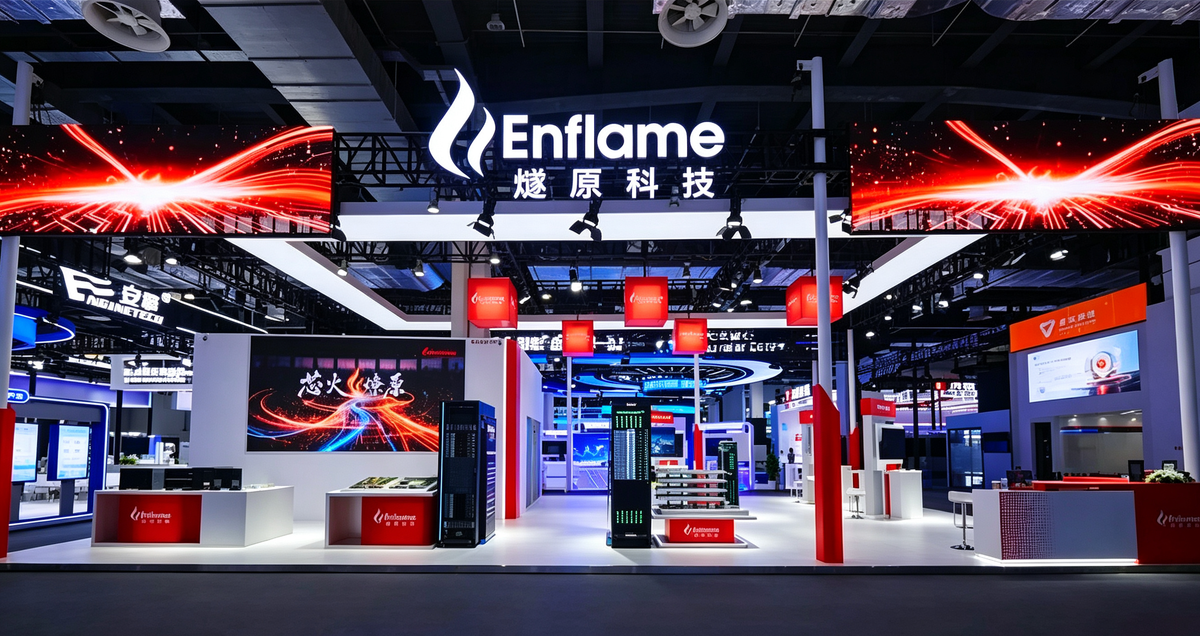
A domestic GPU maker backed by Tencent debuts on Shanghai's STAR Market Friday with a revenue growth trajectory of up to 455%, but its RMB 6.12 billion (US$850 million) IPO valuation at 61.8x price-to-sales raises a harder question: in a market now crowded with domestic GPU contenders, what separates a premium story from an expensive one.
Enflame Technology, one of China's so-called "four GPU dragons," priced its shares at RMB 142.18 apiece for its September 11 STAR Market listing, implying an issuance market capitalization of approximately RMB 61.2 billion (US$8.5 billion). The offering drew subscription demand of 6,109 times oversubscription on the retail tranche, with a final allotment rate of just 0.0246%—a near-zero probability that underscores the speculative intensity surrounding domestic chip plays. Zero abandonment was recorded among institutional investors, and underwriter Citic Securities absorbed a negligible RMB 2.4 million (US$333,000) in retail forfeitures, or roughly 0.04% of total issuance.
The company guided for RMB 23 billion to RMB 30 billion (US$3.19 billion to US$4.17 billion) in revenue for the first nine months of 2026—a year-on-year surge of 326% to 455% from a low base of RMB 9.90 billion in full-year 2025. Yet net profit for the same nine-month period is projected to grow only 3% to 21%, and the company is expected to remain in the red, with a net loss forecast of RMB 7 billion to RMB 8.6 billion (US$972 million to US$1.19 billion).
Tencent Relationship Amplifies Both Revenue and Concentration Risk
The architecture of Enflame's business is inseparable from Tencent. In 2025, revenue directly attributable to Tencent and its associated AVAP procurement model reached RMB 8.30 billion, representing 83.79% of total annual revenue. Post-IPO, Tencent will retain a 17.95% equity stake, maintaining its position as the company's largest shareholder.
The dynamic is structurally unusual: a single entity simultaneously holds the largest equity position and generates the vast majority of commercial revenue. From a capital markets standpoint, this conflates customer risk with ownership risk. The company's own prospectus data shows the top-five customer revenue concentration at 96.89% in 2025—higher than Cambricon at 88.66% and Moore Threads at 98.29% for the first half of 2025, suggesting that extreme customer concentration is a sector-wide characteristic rather than a company-specific anomaly.
The Tencent relationship did, however, provide Enflame with a structurally rare advantage during its formative years. GPU commercialization requires not only chip fabrication but also server integration, model compatibility validation, stability testing, and data center certification—a cycle that typically spans five to six months per iteration at Tencent. Having a hyperscaler-grade anchor client absorb that validation cost effectively subsidized Enflame's product development roadmap from 2019 onward, enabling revenue to scale from RMB 3.01 billion in 2023 to RMB 9.90 billion in 2025.
The investor calculus, however, now hinges on whether Tencent's endorsement can be converted into third-party customer acquisition. At a RMB 61.2 billion issuance valuation, the market is not simply pricing in continued Tencent procurement—it is pricing in the probability that other hyperscalers and enterprise clients assign equivalent trust to the Tencent-validated product stack.
Sector Crowding Forces Valuation Differentiation Across GPU Peers
Enflame's listing arrives at a moment when the domestic GPU narrative has shifted from scarcity to competition. Where two years ago any functional domestic GPU alternative carried a geopolitical premium, the STAR Market now hosts a directly comparable peer set.
Cambricon reported RMB 59.96 billion in revenue for the first half of 2026, with net profit attributable to shareholders of RMB 23.11 billion and positive operating cash flow—the clearest proof-of-concept for domestic GPU profitability to date. Moore Threads posted first-half 2026 revenue of RMB 17.36 billion, up 147% year-on-year, with a gross margin of 56.95% and a net loss narrowed to RMB 11.56 million on a reported basis. MetaX recorded RMB 13.24 billion in first-half revenue with reported net profit of RMB 6.12 billion, though RMB 6.61 billion of that figure comprised non-recurring items; core operating profit turned positive in the second quarter alone.
Against this backdrop, Enflame's three-digit revenue growth rate is its primary differentiator—but it is also the only metric on which it leads. On revenue scale, profitability trajectory, and gross margin visibility, it trails all three peers. The market must therefore decide whether a 326%-to-455% growth rate justifies a premium over companies that are already generating operating cash or approaching breakeven.
The precedent set by prior listings suggests secondary market pricing will diverge sharply from issuance valuation. Moore Threads, which priced at RMB 114.28 per share in December 2025 for an IPO market cap of approximately RMB 53.7 billion, opened its first trading day above RMB 650—a 469% premium—and briefly touched a market cap exceeding RMB 320 billion intraday. MetaX underwent a comparable re-rating on debut. With Enflame's freely tradable float on listing day estimated at only 17.9 million shares, or 4.16% of post-IPO total share capital, the conditions for a similar gap between issuance and secondary market pricing are structurally present.
Software Ecosystem Emerges as the Decisive Long-Term Battleground
The competitive moat for domestic GPU companies is increasingly defined not by silicon performance but by software stack maturity. Nvidia's CUDA ecosystem—comprising developer toolchains, AI framework optimizations, and years of accumulated institutional workflow—creates switching costs that hardware price differentials alone cannot overcome. A 20% hardware cost advantage is insufficient to justify migration if retraining engineers, rewriting model code, and recertifying infrastructure consumes resources equivalent to 100% of the hardware saving.
Enflame's commercial response is TopsRider, its proprietary software platform, bundled within an integrated offering that spans AI accelerator cards, modular systems, intelligent computing clusters, and software services. AI accelerator cards and modules accounted for 76.22% of product revenue in the most recent reporting period. Moore Threads has deployed a comparable strategy through its MUSA platform.
The inference market provides a secondary vector of attack. As the Chinese AI industry transitions from model training toward large-scale model deployment—where the relevant metrics shift from peak floating-point performance to cost per token, power efficiency, and request throughput—domestic GPU vendors can compete on dimensions where Nvidia's supply constraints and pricing are most exposed. The strategic implication is that domestic GPU companies need not defeat Nvidia on its strongest ground; they need only demonstrate that a meaningful subset of Chinese workloads can be executed comparably without it.
Strategic Allocation Signals Long-Term Institutional Confidence
The IPO's strategic tranche allocated 8.607 million shares, or 20% of total issuance, for aggregate consideration of approximately RMB 1.224 billion (US$170 million). The National Social Security Fund and basic pension insurance fund portfolios combined received approximately 492,300 shares. Industrial capital participants included Tongfu Microelectronics and ZTE Corporation, alongside Shanghai Qishan Investment. Employee stock ownership plans received 2.368 million shares subject to a 36-month lockup, and CSIC Investment received 860,700 shares with a 24-month restriction.
The breadth of strategic participation—spanning sovereign long-term capital, supply chain partners, and telecom infrastructure operators—provides a degree of institutional anchoring that pure retail-driven demand cannot. It also reflects a bet by supply chain participants that Enflame's hardware ecosystem will remain relevant as domestic AI infrastructure buildout accelerates through 2026 and beyond.
Impact Assessment: What Enflame's Debut Means for the Sector
The central risk Enflame's listing introduces is not company-specific—it is systemic to the domestic GPU sector's valuation architecture. If secondary market trading pushes Enflame's market cap toward RMB 200 billion to RMB 300 billion (US$27.8 billion to US$41.7 billion), as peer precedents suggest is plausible, then the relative pricing of Moore Threads at approximately RMB 180 billion and MetaX at comparable levels becomes internally inconsistent. A company with smaller revenue, higher customer concentration, and deeper operating losses cannot sustainably trade at a premium to more mature peers without triggering a broader sector re-rating.
The domestic GPU market is at an inflection point. The question has evolved from whether China can produce competitive GPU alternatives to which among five or six contenders will consolidate the market, generate durable margins, and build the software ecosystems that convert hardware sales into recurring platform revenue. Enflame's IPO does not answer that question—but it forces the market to start pricing it.
Related Coverage:
Enflame Technology's IPO Exposes the Fault Lines of China's Domestic GPU Race