
Estun Automation Seeks Hong Kong Listing as China's Top Robot Maker Expands Global Footprint
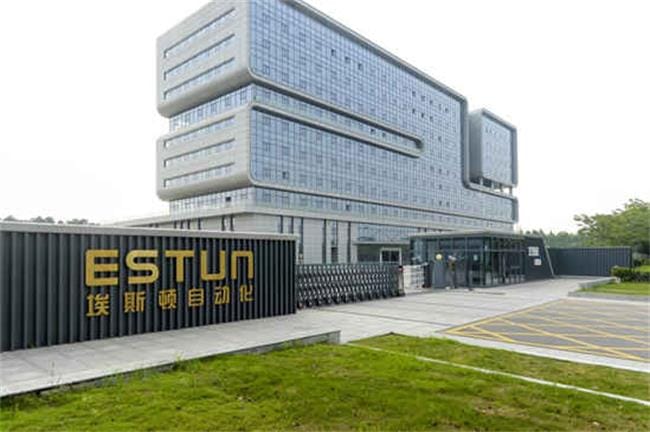
Estun, China's largest industrial robot supplier by shipment volume, has filed for an initial public offering in Hong Kong, positioning itself to become the first Chinese industrial robot manufacturer with dual A-share and H-share listings. The move reflects the company's strategic push to capitalize on its domestic market leadership while accelerating international expansion amid intensifying competition in global automation markets.
The IPO application comes after Estun overtook foreign rivals in domestic shipments during the first half of 2025, cementing its position as China's leading industrial robot solutions provider. The company reported revenue growth of 12.97% year-on-year in the first three quarters of 2025, with net profit returning to positive territory after previous challenges. Founder Wu Bo, a former university lecturer, controls over 40% of the company through direct and indirect holdings, making this his second IPO following Estun's 2015 A-share debut.
The Hong Kong listing is expected to attract significant investor attention given Estun's market position and strategic focus on technology self-sufficiency. The company has invested heavily in core component development and overseas acquisitions, building capabilities across the industrial automation value chain from servo systems to full robot manufacturing.
The IPO also signals broader momentum in China's high-tech manufacturing sector, where companies are pursuing dual-listing strategies to access international capital while maintaining domestic market advantages. For investors, Estun's offering provides exposure to China's push for advanced manufacturing independence and the global industrial automation market.
Three Decades From Components to Complete Systems
Estun's trajectory from component supplier to integrated robotics provider spans over 30 years. Founded in 1993 by Wu Bo, then a lecturer at Nanjing Forestry University, the company initially focused on servo systems, the critical motion control technology underlying industrial robots. By 1998, Estun had developed high-precision AC servo systems, enabling substitution of imported components that dominated the Chinese market.
The company launched its own AC servo system in 2003, breaking the grip of Japanese manufacturers and offering products at one-third the cost of imports. When Estun listed on the A-share market in 2015, automation core components generated 83.68% of total revenue, amounting to 404.3 million yuan ($56 million). The company's sustained R&D focus through multiple setbacks established a foundation for vertical integration across the robotics value chain.
Estun now maintains 100% in-house development of controllers, servo motors, and reducers, ensuring supply chain independence and cost optimization. This technological autonomy has proven critical as geopolitical tensions and trade restrictions have disrupted global supply chains in recent years.
Revenue Mix Shifts Toward Integrated Solutions
Industrial robots and intelligent manufacturing systems now dominate Estun's revenue structure, contributing 82.5% of total income in the first three quarters of 2025, or 3.138 billion yuan (US$434 million). Automation core components and motion control systems generated 662 million yuan (US$92 million), representing 17.4% of revenue. The shift reflects Estun's successful transition from component supplier to full-system integrator.
R&D investment reached 235 million yuan ($32 million) in the first half of 2025, representing 9.21% of revenue. The company's product portfolio spans robots with payloads from 3kg to 700kg, including six-axis, SCARA, and collaborative robots. Key end markets include automotive, new energy, electronics, and photovoltaic manufacturing.
Strategic acquisitions have strengthened Estun's capabilities in specialized applications. The purchase of Germany's Cloos Holding GmbH and other international targets brought advanced welding and flexible automation technologies. These deals enabled entry into high-barrier sectors such as automotive and heavy equipment manufacturing, where precision and reliability requirements are stringent.
Estun has also positioned for future growth through investments in emerging technologies. In 2022, the company established Nanjing Estun Kudro Technology Co., Ltd., focused on embodied intelligence and humanoid robots. The subsidiary secured 130 million yuan (US$18 million) from provincial and national industry funds. Another unit, Estun Intelligent Technology (Jiangsu) Co., Ltd., attracted 380 million yuan (US$53 million) from national strategic capital, underscoring official support for the company's innovation pipeline. International Operations Deliver Steady Contribution
Since 2016, Estun has pursued overseas expansion through four major acquisitions targeting advanced motion control, welding robotics, flexible automation, and collaborative robotics. Notable transactions include UK-based Trio Motion Technology and Germany's Cloos, providing access to established customer relationships and technical expertise in developed markets.
Overseas revenue has remained relatively stable, accounting for 33.8% to 34.3% of total revenue from 2022 to 2024, generating 1.312 billion yuan (US$182 million), 1.594 billion yuan (US$221 million), and 1.370 billion yuan (US$190 million) respectively. In the first three quarters of 2025, international income reached 1.118 billion yuan (US$155 million), or 29.4% of total revenue.
Europe has emerged as Estun's largest overseas market, with revenue of 1.069 billion yuan (US$148 million) in 2024, representing 26.7% of total overseas revenue. Revenue from Southeast Asia reached 880 million yuan (US$124 million), or 23.5% of overseas revenue. North America represents another growth driver, benefiting from demand in new energy and semiconductor equipment manufacturing.
The company has established R&D centers, production facilities, and sales subsidiaries in Germany, Italy, the UK, the US, India, and Vietnam, building what it describes as a "China R&D + global manufacturing + local service" operational model. This structure allows Estun to serve multinational customers while navigating trade restrictions and localizing production to meet regional requirements.
Estun holds dominant positions in specific niches, including above 50% global market share in photovoltaic robots and over 70% in domestic sheet metal bending robots. These specialized segments provide higher margins and defensible competitive positions compared to general-purpose industrial robots, where price competition remains intense.
Competitive Positioning and Market Dynamics
Estun's Hong Kong listing bid comes as Chinese robotics manufacturers gain ground against established foreign competitors. The company's success in overtaking international brands in domestic shipments during the first half of 2025 marks a significant milestone for China's industrial automation sector, which has long relied on imported technology.
The dual-listing strategy provides access to international capital while maintaining the benefits of domestic market presence. For investors, the offering represents exposure to China's advanced manufacturing push and the broader trend of import substitution in critical technologies. The company's financial turnaround, with net profit returning to positive territory in 2025 after previous challenges, demonstrates operational resilience.
However, Estun faces ongoing challenges including intense competition in core markets, execution risks in international expansion, and potential headwinds from global economic uncertainty. The company's ability to maintain technological leadership while scaling international operations will be critical to justifying investor confidence. The Hong Kong listing will provide a key test of market appetite for Chinese industrial automation companies seeking to compete on the global stage.