
EU Halts Funding for Huawei Solar Inverters Amid Grid Security Probe
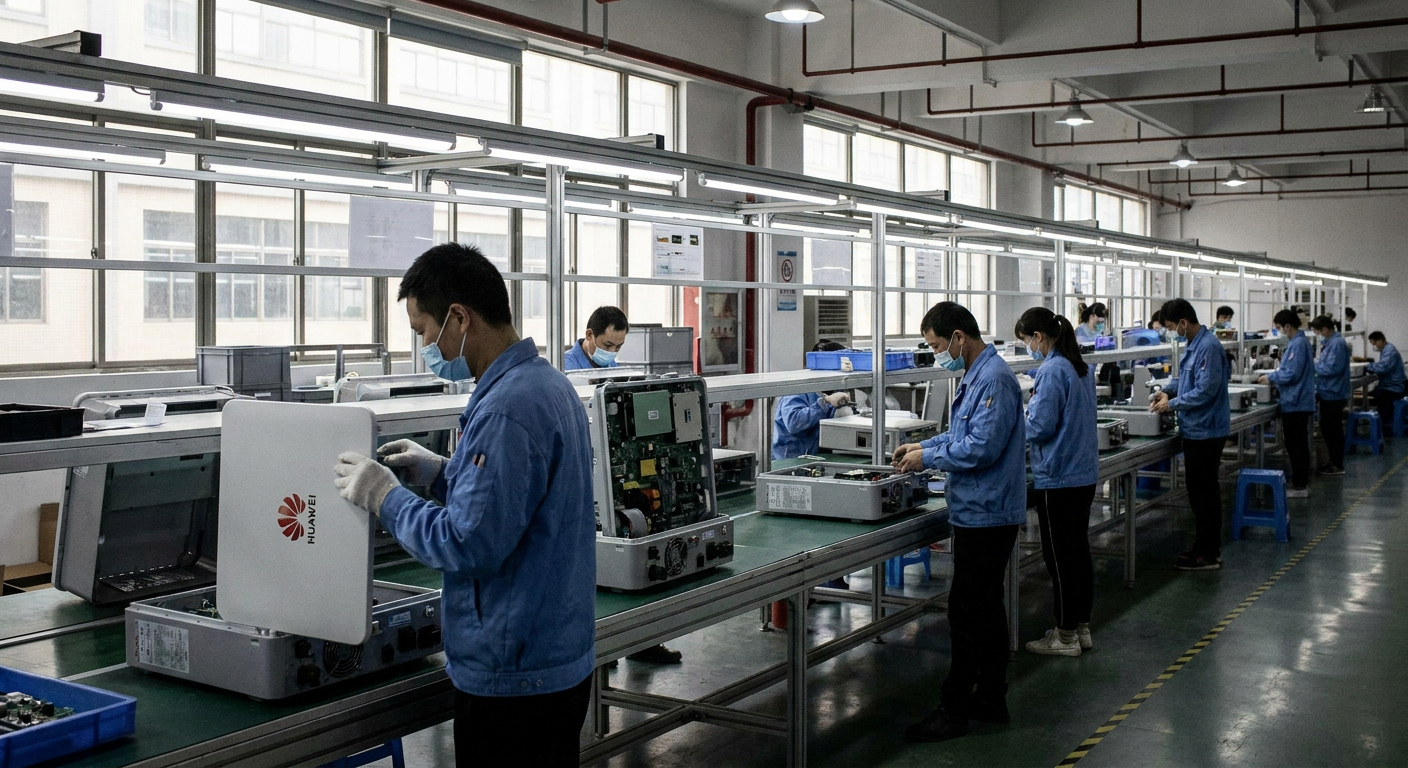
The European Commission has officially suspended financial support for solar inverter projects utilizing equipment from Huawei Technologies, signaling a major escalation in the bloc’s efforts to purge Chinese hardware from its critical energy infrastructure.
Announced Monday, the funding freeze restricts European grid operators from leveraging EU subsidies to procure solar technologies from suppliers deemed "high-risk," prominently including Huawei and ZTE Corp. A definitive regulatory ruling on whether to permanently restrict these deployments across member states is scheduled for November 1, 2026.
This policy expansion marks a strategic pivot for Brussels, shifting the geopolitical de-risking battleground from 5G telecommunications networks directly to renewable energy grids. Initial market feedback suggests potential supply chain bottlenecks for EU clean energy deployment targets, given that Chinese manufacturers currently command a staggering 80% share of the global solar inverter market.
Assessing Blackout Risks in Grid Management
Solar inverters function as the central nervous system of photovoltaic arrays, converting direct current into grid-compatible alternating current while managing power flow. Siobhan McGarry, a spokesperson for the European Commission, indicated that reliance on foreign entities for these critical data-linked components introduces unacceptable vulnerabilities to the EU's power grid.
According to the Commission's technical assessment, the deployment of Chinese clean energy networks poses distinct operational threats. These encompass the potential manipulation of electricity production parameters, unauthorized extraction of sensitive operational data, and the extreme tail-risk of remote system shutdowns capable of triggering localized or countrywide power blackouts.
Reshaping the Global Renewable Supply Chain
While the updated regulatory framework theoretically applies to suppliers from Russia, North Korea, and Iran, the practical commercial impact falls almost exclusively on Beijing. Huawei remains a dominant, highly integrated player in commercial and utility-scale solar installations across Europe, largely due to its advanced AI inference tech solutions and cost-effective manufacturing.
By restricting EU funding mechanisms, the Commission aims to artificially erode the price advantage of Chinese hardware, implicitly forcing European utilities to pivot toward costlier Western alternatives. As the November 1 deadline approaches, institutional investors will closely monitor whether European solar capacity growth can maintain its momentum without the capital efficiencies previously provided by Chinese Original Equipment Manufacturers (OEMs).