
From Huawei's 'Genius Youth' to $2 Billion Robot Empire: The Rise of AgiBot and its Founder
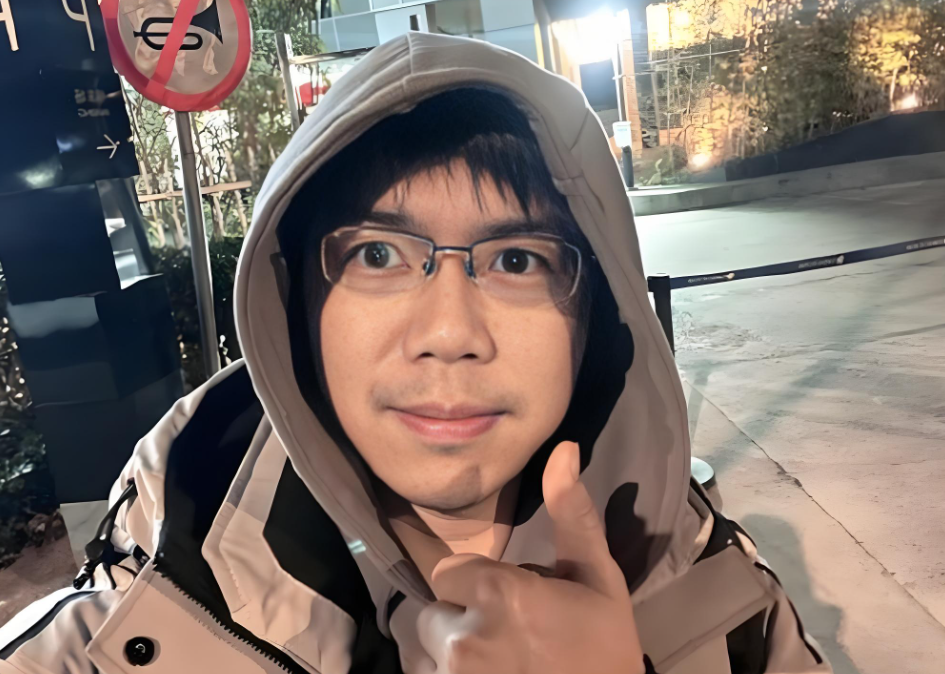
A former member of Huawei Technologies Co.’s elite "Genius Youth" program is at the center of a capital market frenzy, after his robotics startup engineered a reverse takeover that catapulted the valuation of his less-than-three-year-old firm to over RMB 15 billion (US$2.06 billion) and signaled China’s growing ambitions in embodied AI.
The startup, AGIBOT, co-founded by robotics prodigy and online influencer Peng Zhihui, triggered a spectacular stock rally this past July. Swancor Advanced Materials, a company listed on Shanghai's STAR Market, saw its shares soar 10.83 times after announcing a takeover by a platform controlled by AGIBOT and its core team. The deal, valued at RMB 2.1 billion, will make AGIBOT the listed entity's new controlling shareholder.
This reverse merger is the latest milestone for AGIBOT, which has sprinted to unicorn status faster than nearly any other embodied AI firm globally. The company, officially known as Zhiyuan Innovation (Shanghai) Technology Co., has attracted a string of blue-chip investors including Tencent Holdings Ltd., JD.com, Inc., and LG Electronics, completing 11 funding rounds since its inception in early 2023.
The market excitement reflects AGIBOT’s rapid transition from research to commercial reality. The company recently secured a landmark RMB 78 million (US$10.7 million) contract to supply humanoid robots to a subsidiary of China Mobile. Having already delivered over 2,000 robots, AGIBOT is moving into mass production, positioning itself as a key player in a sector racing to deploy intelligent machines in factories, stores, and eventually, homes.
The 'Wild Iron Man' Behind the Unicorn
At the heart of AGIBOT is Peng Zhihui, a 1993-born engineer who has cultivated a dual identity as a serious technologist and a celebrated online personality. Known on the Bilibili video platform as "Zhihui Jun" (稚晖君), Peng has amassed over 2.8 million followers with high-quality, technically dense videos of his DIY projects, including self-balancing and table tennis-playing robots. His infrequent but impressive posts earned him the affectionate nickname "Pigeon King" from fans, though he has said he prefers to be called a "Wild Iron Man."
Peng’s journey began with a childhood dream of building robots, inspired by his Game Boy. He honed his skills during seven years at the University of Electronic Science and Technology of China before a stint at Oppo. His talents ultimately led him to Huawei’s prestigious "Genius Youth" program, where he worked on the Ascend AI chip and algorithms and was personally praised by founder Ren Zhengfei for being a driver of the company’s innovation.
In late 2022, Peng departed the tech giant, stating he was ready "to do more challenging things." In February 2023, he co-founded AGIBOT as Chief Technology Officer, aiming to give AI a physical body. He has since assembled a powerhouse team, including his former boss at Huawei, Deng Taihua, who now serves as AGIBOT's legal representative. Deng, a former Huawei vice president, led the company's 5G strategy. The team also includes Chief Scientist Luo Jianlan, a former Google DeepMind researcher, and Yao Maoqing, a former Waymo and Nio Inc. executive who heads the embodied business unit.
An 'All-Stack' Ambition
Unlike competitors focusing on single components, AGIBOT has adopted an aggressive "full-stack" strategy, developing everything in-house—from the robot’s physical body and its underlying components to its "cerebellum" (motor control) and "brain" (AI models). This approach mirrors the vertically integrated models of Apple Inc. and Tesla, Inc.
“Only a full-stack company is qualified and capable of defining a completely new product form,” Peng explained in a media interview, framing general-purpose robotics as a "systems engineering" challenge, not a problem of isolated parts.
This philosophy is echoed by the company's leadership. "The winning path will definitely be a full-stack route with integrated hardware and software iteration," said Chief Scientist Luo Jianlan. The strategy is designed to ensure that the robot's physical form and sensor placement are tightly coupled with the data collection and model training processes. "This integration is why we must be full-stack," Peng noted. The company's product lines—the industrial 'Yuanzheng' series, commercial 'Jingling' series, and research-focused 'Lingxi' series—are all built on this principle.
Capital and Ecosystem Building
AGIBOT’s strategy extends beyond technology to capital and ecosystem construction. The company has not only welcomed investment from industry giants like BYD Co., Tencent, and South Korea’s Mirae Asset, but it is also actively investing to secure its supply chain. AGIBOT has backed over 10 upstream companies specializing in components like sensors and joint modules.
Simultaneously, AGIBOT is forging partnerships with downstream application providers by establishing joint ventures with listed companies such as Fulin Precision and Bozhong Precision. "Our investors are often partners in application scenarios, including automotive and consumer electronics," said Yao Maoqing, Partner and President of the Embodied Business Department.
This dual-pronged approach—securing its supply chain while embedding itself in key industries—is central to its goal of becoming the "Huawei of the embodied intelligence industry," a comparison Peng himself has embraced. Central to this effort is data. The company has built a 3,000-square-meter data collection facility and open-sourced AgiBot World, one of the world's largest datasets for embodied AI, to accelerate industry-wide progress.
From Demos to Deployment
With 2025 widely seen as the "year of commercialization" for humanoid robots, AGIBOT is pushing to move its products from the lab into the real world. "The industry has passed the phase of showing off demos; it’s now evolving toward creating a closed-loop industrial model," said Luo Jianlan.
The focus is on practical, reliable performance over flashy stunts. Luo argues that achieving near-100% success rates in tasks is more critical than a "ChatGPT moment" of generalized intelligence. "If a robot spills water every other time it tries to pour you a glass, it's not useful in the real world," he explained. The company prioritizes what it calls "PPT" capabilities—Pick, Place, and Transfer—essential for factory and logistics work.
AGIBOT is concentrating its initial commercial efforts on four B2B scenarios: industrial manufacturing, warehousing and logistics, power grid inspection, and interactive guidance. In a live demonstration, its 'Jingling G1' robot sorted e-commerce parcels at a rate of one every six seconds. The company has already begun deploying robots with partners, with plans for a significant number of commercial use cases to emerge over the next year. As Yao Maoqing stated, "Factories are just the first step. The next will be retail and services, and eventually, they will enter the home in a few years."