
Game On: J.P. Morgan Sees "Harvest Period" Supercycle For China’s Tech Giants
While Western markets grapple with stagnation in gaming monetization, a decisive shift is occurring in the East. According to a new research note from J.P. Morgan released on December 2, 2025, the Chinese digital entertainment sector has not just stabilized—it has entered a distinct "harvest period."
Led by Head of China Equity Research Alex Yao, the bank’s analysis suggests that the resurgence seen throughout 2025 is not a fleeting sentiment bounce driven by regulatory easing, but a structural, product-driven upcycle. For global investors tracking the smart money, the narrative has shifted from a "zero-sum game" in a saturated market to a period of high-quality supply driving new consumption.
The "Harvest Period" and The Cycle Turn
J.P. Morgan argues that the sector's recovery is underpinned by a robust pipeline from the industry's heaviest hitters. Tencent and NetEase have successfully navigated the transition into a new product launch phase.
"The significant recovery of the industry in 2025 is not a temporary emotional warming," the analysts write, "but a cyclical rebound driven by solid content releases."
For NetEase, the catalysts are twofold: a strong reserve of new titles and the resumption of its partnership with Blizzard, including the relaunch of World of Warcraft. Tencent, meanwhile, is reshaping its growth curve with the better-than-expected performance of titles like Delta Force. The bank notes that successful category breakthroughs—specifically in the "search-and-extract" genre—have driven a tangible rebound in user activity.
Monetizing "Loss Aversion": The Rise of Extraction Shooters
Perhaps the most fascinating insight from the report is the industrialization of behavioral economics in game design. The report identifies "Search-Loot-Extract" (or "Extraction Shooters") as the most significant innovation in the FPS genre since the Battle Royale craze.
By fusing tactical shooting with a "high risk/high reward" psychological mechanism, developers are tapping into "loss aversion." Players enter a match to scavenge resources but must successfully extract to keep them; failing means losing everything. This adrenaline loop is proving highly addictive and lucrative.
Tencent has aggressively integrated this mechanic into PUBG Mobile (via Metro Royale) and Delta Force, covering both hardcore and casual demographics. NetEase followed suit with similar modes in Naraka: Bladepoint. In contrast, Bilibili is taking a different approach with Escape from Tarkov-style games focused on PVE (Player vs. Environment) rather than the industry-standard PVP.
The High Cost of Moats in Strategy Games
While shooters provide the volume, Simulation/Strategy Games (SLG) provide the longevity. Top-tier titles in this genre boast lifecycles of 5–10 years and massive customer lifetime value (LTV). However, the report highlights that the moat around this castle is filling with cash—and sharks.
Barriers to entry have skyrocketed. J.P. Morgan notes that development costs for a single SLG title now exceed RMB hundreds of millions, requiring lengthy testing cycles. Furthermore, in the post-IDFA (Identifier for Advertisers) era, the cost of precision targeting for high-value "whales" has surged. Developers are now forced to pivot via "hybrid" marketing, using creative ads featuring tower defense or parkour mechanics to acquire users cheaply before funneling them into the core strategy gameplay.
From Mobile Addiction to Global AAA Powerhouses
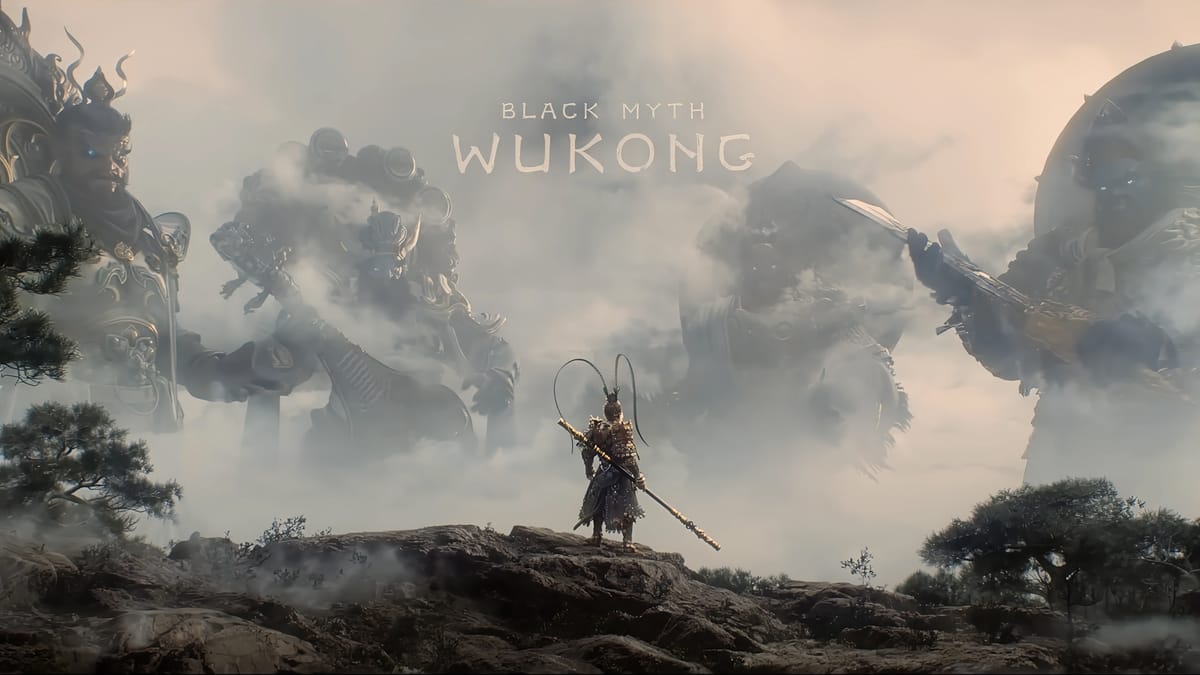
The most macro-critical trend identified is China’s pivot from mobile dominance to the PC/Console market. The massive success of Black Myth: Wukong serves as the undeniable proof of concept.
According to media reports cited by J.P. Morgan, Black Myth: Wukong has sold nearly 30 million copies. The economics are staggering: with a production cost of approximately RMB 540 million (US$74.3 million), the game generated profits of RMB 5.4 billion, reflecting a profound return on investment.
This success signals a strategic shift toward "Service-based AAA" games. The report suggests that Chinese developers utilize a hybrid model that Western studios struggle to replicate: combining high-fidelity AAA production values with deep "LiveOps" (Live Operations) capabilities. Leveraging a cost-effective, massive technical talent pool, firms like Tencent and NetEase are solving cross-platform technical challenges to bring the relentless monetization of online gaming to the prestige of console titles.
The Outlook
As 2025 draws to a close, the experts view the global casual and puzzle market as a remaining "blue ocean." Companies like Lemon Microfun are already capitalizing on this, with monthly turnovers exceeding RMB 500 million.
Ultimately, J.P. Morgan concludes that the industrial scale and cost advantages of Chinese developers position them to dominate high-barrier segments globally. They are no longer just copying mechanics; they are fusing the addictive service models of the East with the production fidelity of the West, creating a cash-generating hybrid that looks set to define the next era of digital interaction.