
Geely Touts AI and Global Strategy to Bridge Valuation Gap Amid Record Sales
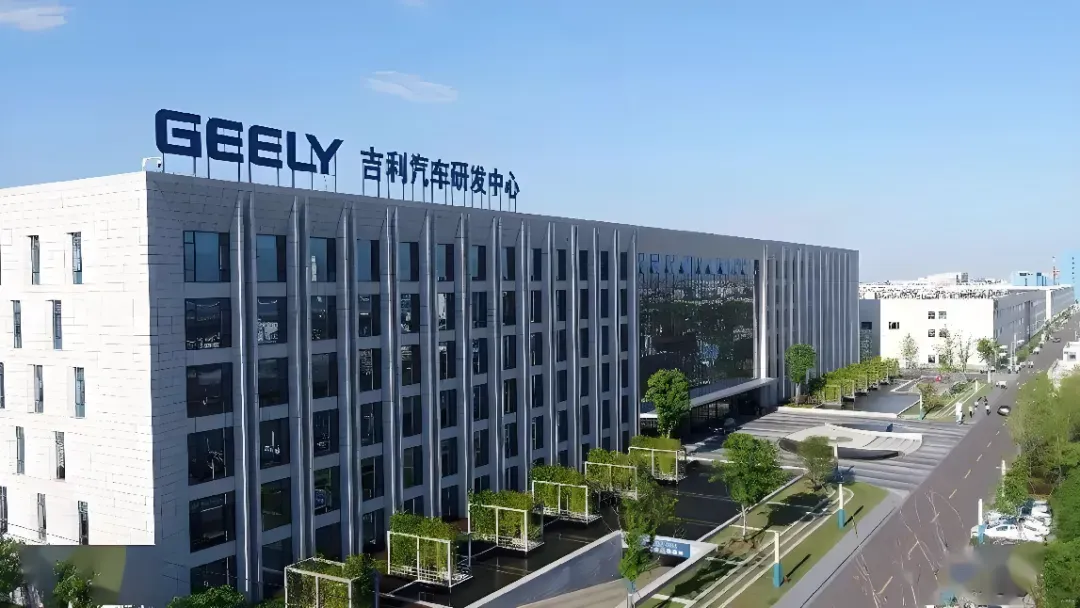
Geely Automobile is trading at a steep discount to its peers despite posting record sales, prompting the Chinese auto giant to highlight its deep investments in artificial intelligence and a deliberate global expansion strategy as key catalysts to unlock its market value.
Following the UK launch of its all-electric EX5 SUV, executives from Geely held an investor roadshow in London to make their case. The company is on track to sell 3 million vehicles in 2025, a roughly 40% year-over-year increase, after matching its full 2024 sales volume in just the first nine months of this year. This positions Geely as one of the fastest-growing mainstream Chinese automakers in a fiercely competitive market.
Despite this robust performance, Geely's Hong Kong-listed stock languishes with a market capitalization below HK$200 billion. This valuation is comparable to the newly listed Chery Automobile and significantly lags behind rival BYD Co., whose dynamic price-to-earnings ratio is double that of Geely. Among the world's top ten automakers by sales volume, Geely currently has the lowest market capitalization.
The valuation disconnect persists even as the company consolidates its operations under a "One Geely" strategy and recently announced a HK$ 2.3 billion share buyback program. Beyond its strong sales momentum and improving cost structures, Geely is betting that its two underappreciated strategic pillars—a comprehensive AI ecosystem and a sustainable approach to globalization—will eventually command a higher valuation from investors.
A Deep Valuation Disconnect
Geely's share price has remained subdued despite strategic moves aimed at streamlining the business, including the privatization and planned re-integration of its premium EV brand, Zeekr. The company's recent share repurchase plan, announced at a price above its then-current trading level, serves as a strong signal from management that it believes its stock is fundamentally undervalued relative to its production scale and growth prospects. The disparity is stark when compared to global peers, where Geely's market value fails to reflect its rank as a top-ten global producer.
Building an AI Powerhouse
Geely is positioning itself as an industry leader in artificial intelligence, arguing its efforts go far beyond superficial features. The company is one of only two major automakers, alongside Tesla, pursuing a full-stack AI strategy that deeply integrates the technology across its entire value chain, from research and development to manufacturing and sales. Bolstering this effort is an industry-leading computing power reserve of 23.5 EFLOPS, the largest of any Chinese automaker.
This AI-first approach is already yielding results. In partnership with Qianli Technology, Geely has developed proprietary large models for autonomous driving, in-cabin interaction, and world modeling, enabling it to maintain control over its core technology. Rather than focusing on marketing-driven functions, the company is using AI to achieve fundamental improvements in vehicle performance and cost efficiency, such as optimizing thermal management to enhance overall energy efficiency. This focus on systemic, foundational innovation mirrors the strategy that has historically driven Tesla's value. Geely's AI infrastructure also uniquely positions it to adopt embodied AI in its manufacturing processes, promising further efficiency gains.
A Calculated Approach to Globalization
While Geely's export volume growth has trailed some domestic rivals in recent years, the company asserts its international strategy is built for long-term, sustainable success rather than short-term gains. The company's overseas sales are now accelerating, with growth of 61% in Europe and over 90% in the Middle East and Africa in the first three quarters of 2025. However, Geely's core strategy, refined during its lengthy acquisition and integration of Volvo Cars, prioritizes deep localization over simply shipping cars.
Management believes that long-term success in global markets requires becoming a true international corporation that delivers tangible, sustainable benefits to host countries, including jobs, tax revenue, and supply chain development. This "win-win" model aims to avoid the vulnerabilities of a pure export strategy, which remains exposed to tariffs, regulatory hurdles, and political friction. By focusing on exporting manufacturing, technology standards, and ultimately integrating with local corporate cultures, Geely is building a foundation that it believes is more resilient and will provide greater long-term returns than the "inner-competition-to-outer-competition" model adopted by some peers. This patient, standards-led approach is expected to become a blueprint for the sustainable overseas expansion of China's auto industry.