
Global Automakers Ignite Aggressive Price War in China to Start 2026
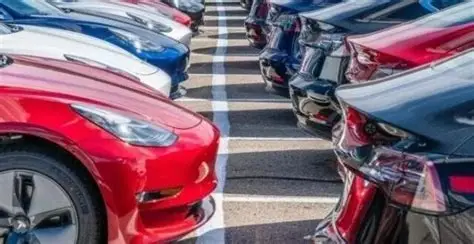
A fierce price war has erupted in China's automotive market in the first week of 2026, with major global manufacturers leading a wave of aggressive discounting to defend market share in the world's largest auto market. Unlike previous years where domestic electric vehicle startups initiated the volatility, this round is characterized by deep price cuts from legacy international brands seeking to stem sales erosion.
Over 14 automakers have announced price reductions or incentives covering more than 70 models within the first four days of the new year. The intensity of the cuts—reaching as high as RMB 301,000 (US$41,517) on specific luxury models—signals a shift in strategy as legacy automakers sacrifice margins to clear inventory and counter the dominance of local rivals.
This escalation places renewed pressure on industry profitability and aims to capture consumer demand ahead of the Lunar New Year sales window. The broad participation, ranging from luxury European marques to mass-market joint ventures, indicates that price competition remains the primary tool for volume generation in China's hyper-competitive landscape.
Foreign Brands Lead with Deep Discounts
European and American manufacturers have launched the most aggressive offensive in this latest cycle. BMW China, a unit of Bayerische Motoren Werke AG, adjusted the official guidance prices for 31 models immediately after the New Year holiday. The reductions affect both flagship and entry-level vehicles, with the BMW i7 M70L seeing the largest absolute drop of RMB 301,000 (US$41,517). The electric iX1 eDrive25L saw its guidance price lowered by 24% to RMB 228,000. In response to the market reaction, BMW China stated that while guidance prices were adjusted, final terminal prices remain at the discretion of dealers.
The joint venture FAW-Volkswagen Automobile Co. also moved aggressively, offering the Magotan 380 Luxury edition at a fixed price of RMB 129,900, representing a discount of nearly 40% from its original guidance price. Similarly, the Cadillac division of General Motors Co. introduced significant cuts, pricing the new XT5 SUV at RMB 229,900, a reduction of RMB 150,000 from the sticker price. The brand also lowered the entry price of its CT5 sedan to RMB 199,900.
Other international players, including Volvo Car AB and Mazda Motor Corp.’s joint venture, have joined the fray with purchase subsidies and tax offsets, though their incentives were generally smaller in scale compared to the direct price slashes from German and US competitors.
Domestic Players Leverage Tech and Financing
In contrast to the direct cash cuts favored by international brands, Chinese automakers are largely focusing on value-added services, financing subsidies, and technology upgrades to retain customers. Xiaomi Corp. (Xiaomi Corporation) announced new incentives for its automotive lineup, offering zero-interest financing for three years on its YU7 model. For the high-performance SU7 Ultra, the company is bundling carbon fiber interior upgrades and lifetime free usage of its advanced driver-assistance system (ADAS).
New entrants and established domestic giants are adopting similar tactics. The Firefly brand, associated with NIO Inc. (Weilai), introduced a "lock-in" package including smart driving subscriptions and charging hardware subsidies. Meanwhile, Shangjie (a brand under the Harmony Intelligent Mobility Alliance supported by Huawei Technologies Co.) offered benefits worth over RMB 54,000 for its H5 model. Traditional heavyweights like Chongqing Changan Automobile Co.(Changan Automobile) and Chery Automobile Co. also rolled out comprehensive trade-in subsidies and tax incentives across multiple product lines.
Strategic Push for Early 2026 Momentum
The timing of these coordinated price adjustments reflects a strategic urgency to secure sales momentum at the start of 2026. By lowering entry barriers during the pre-holiday shopping season, automakers are attempting to lock in orders and prevent inventory buildup.
While the price war offers immediate benefits to consumers through lower costs and increased access to advanced technology, it underscores the persistent structural challenges in the Chinese auto sector. With supply outstripping demand, the industry consolidation is likely to accelerate, forcing weaker players out of the market as margins across the board continue to compress.