
Global Smartwatch Market Shifts: Xiaomi Overtakes Samsung as Apple Ends Slump
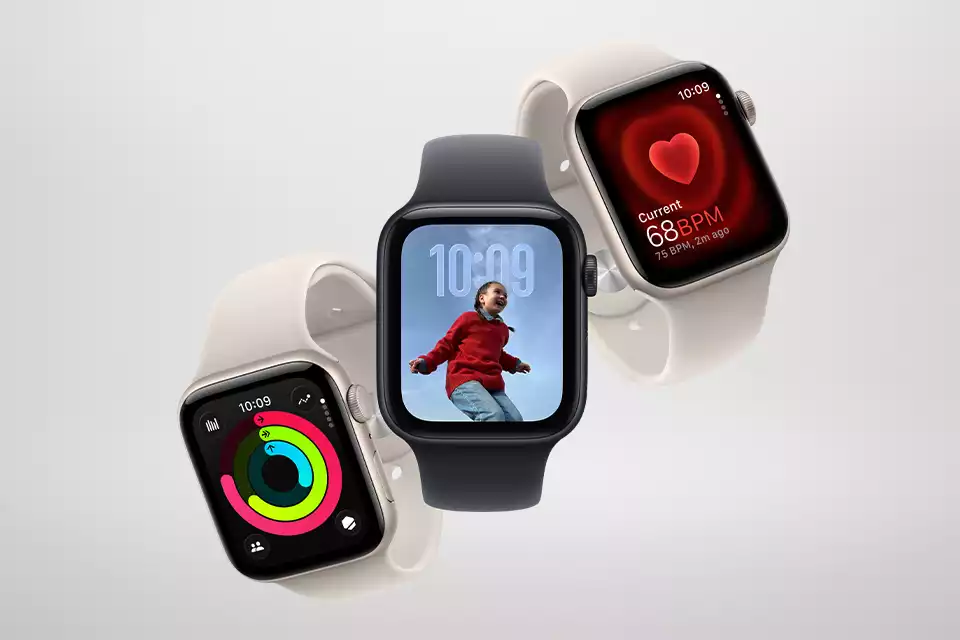
The global smartwatch industry is undergoing a significant structural realignment in 2025, characterized by a resurgence in shipment growth and a reshuffling of the competitive landscape among top manufacturers. A leading Chinese technology firm has successfully surpassed its Korean rival to enter the top three, while the US market leader has reversed a long-standing downward trend.
According to data from Counterpoint Research, global smartwatch shipments are projected to increase by 7% in 2025 following a slump in 2024.
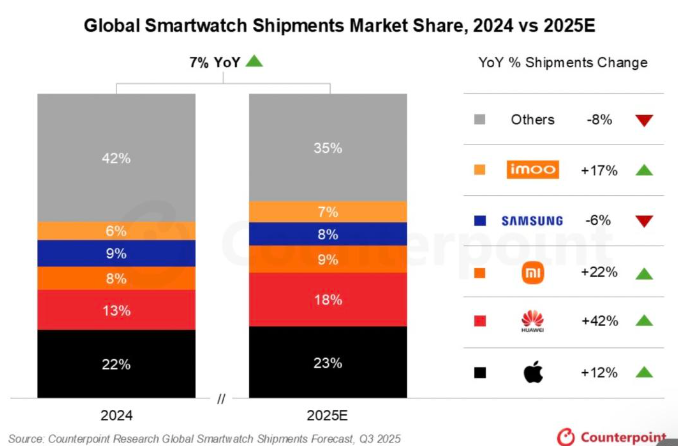
The data reveals a pivotal change in the rankings: Xiaomi has overtaken Samsung Electronics to secure the third position globally. Xiaomi achieved a 9% market share in the third quarter of 2025, driven by a 22% year-on-year increase in shipments. This growth is attributed to the company's dual strategy of aggressive expansion in the mass market and the enhancement of health monitoring features. Conversely, Samsung saw its market share dip to 8%, as its competitiveness in the mid-to-low-end segments faced increasing pressure.
At the top of the market, Apple Inc. has ended seven consecutive quarters of decline. Holding the first position with a 23% market share, Apple's third-quarter shipments grew by 12%. Analysts attribute this rebound to the launch of the cost-effective Watch SE 3 and the premium Watch Ultra 3, alongside the integration of 5G support, satellite communication, and hypertension alerts.
Meanwhile, Huawei emerged as the fastest-growing major brand. Its shipments surged 42% year-on-year, propelling its market share from 13% in 2024 to 18% in the third quarter of 2025, firmly establishing it as the world’s second-largest smartwatch vendor.
The report highlights that China has become the primary growth engine for the sector, with three of the top five global brands now originating from the country, including the kid-focused brand operated by Guangdong Xiao Genius. Bolstered by government subsidies and strong local ecosystems, China’s share of the global market is expected to rise to approximately 31% in 2025, up from 25% the previous year.
Industry analysts note that the market’s recovery is being driven by functional innovations rather than just price competition. Features such as Artificial Intelligence (AI) integration, next-generation health sensors, and MicroLED display technology are stimulating consumer updates. As manufacturers bring AI capabilities to even lower-priced models, the industry is poised for sustained value-driven growth throughout the coming year.