
Hithium’s Global Push Stumbles on IPO Failure, Lawsuit, and Client Bankruptcy
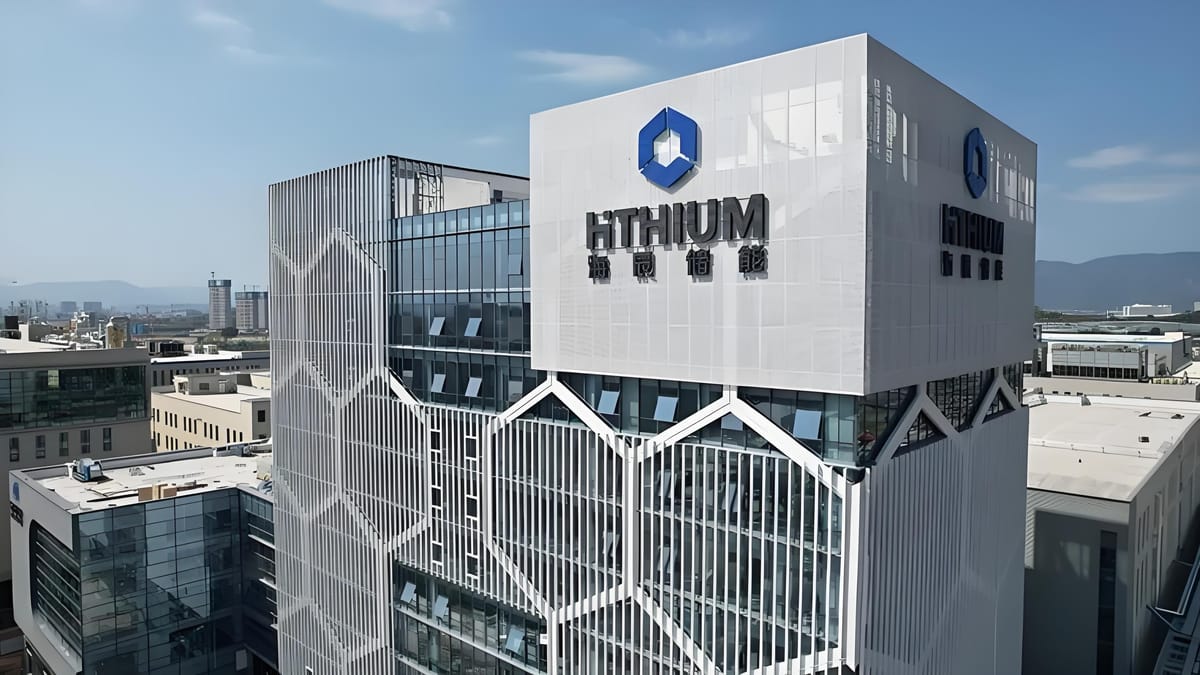
Chinese battery storage unicorn Hithium Energy Storage Technology is facing a severe test of its rapid global expansion strategy, encountering a confluence of setbacks that includes a lapsed Hong Kong IPO, a patent war with industry giant CATL, and the sudden collapse of a key U.S. client.
The latest blow came on Sept. 25, when the company’s application for a Hong Kong initial public offering expired, according to the exchange’s website. This follows a scuttled A-share listing attempt in 2023, highlighting investor caution in a crowded and fiercely competitive energy storage sector where nearly 20 firms vied for Hong Kong listings in the first half of 2025 alone.
Compounding its capital market woes, Hithium is embroiled in a high-stakes patent lawsuit with Contemporary Amperex Technology(CATL) and is reeling from the June bankruptcy of major U.S. customer Powin. The collapse of the American energy storage heavyweight has thrown Hithium’s ambitions in its most important overseas market into disarray.
These challenges cast a shadow over Hithium’s aggressive international push, which has relied on high-margin overseas sales to offset razor-thin profits in China's price-war-ridden domestic market. The events raise critical questions for investors about the sustainability of its business model and its ability to navigate an increasingly complex global landscape.
Overseas Profit Engine Sputters
Overseas markets have been the primary profit driver for Hithium amid intense domestic competition. While its domestic gross margin fell to a mere 8.1% in 2024—far below CATL’s 22.94% and EVE Energy 16.19%—its overseas business boasted a gross margin of 42.3%. International revenue surged 36-fold in 2024, accounting for 28.6% of the company’s total. The U.S. market has been pivotal, with two American customers contributing nearly 24% of total revenue.
However, this lucrative expansion has hit significant turbulence. The bankruptcy of Powin, the third-largest energy storage firm in the U.S., jeopardizes a 5GWh battery procurement agreement signed in 2024, which Hithium had expected to generate at least 1.5 billion yuan in revenue. The collapse also signals broader uncertainty in the U.S. market, which is further complicated by stricter localization requirements under the Inflation Reduction Act and the persistent threat of high tariffs on Chinese battery products. Meanwhile, Hithium recently had to publicly deny media reports of a planned battery factory in India with Reliance Industries, a rumor that had sparked concerns over potential technology transfer risks.
A Widening Price War Goes Global
As domestic profits shrink, Hithium has adopted an aggressive pricing strategy to capture global market share. In September 2025, the company secured two large-scale energy storage projects in Saudi Arabia with an ultra-low bid of 73–73–75 per kWh, a price point that approaches the cost limit for many Chinese manufacturers and sets a new low for the overseas market.
This "price-for-volume" approach is seen by some industry observers as a risky gamble. They warn that exporting China’s domestic price war could prematurely erode the profitability of nascent overseas markets, turning a "blue ocean" opportunity into another "red ocean" battleground. In contrast, key rival CATL has pursued a partnership-driven strategy, forging alliances with major international players like NextEra Energy, Rolls-Royce, and BHP to integrate its technology into established ecosystems.
Patent Battle With an Industry Titan
Hithium’s challenges are not just commercial but also legal. In August 2025, at a critical juncture in its IPO process, CATL filed a lawsuit against Hithium for alleged unfair competition, seeking RMB 150 million yuan (US$20.8 million) in damages. The dispute centers on Hithium’s new 587Ah energy storage cell, which CATL claims heavily overlaps with its own patented technology, with an energy density deviation of just 4.4%—well below the 10% threshold typically considered a generational leap.
Hithium has countered that its product is fundamentally different, focusing on a "low-cost, long-life" approach compared to CATL's "high-cost, high-performance" cell. The legal fight underscores a fierce race for market dominance, as 500Ah+ large-capacity cells have become the strategic high ground for the next generation of energy storage systems. The conflict is intensified by the fact that Hithium’s founder, Wu Zuyu, and several of its core executives are former CATL employees. Wu previously lost a lawsuit filed by CATL for breaching a non-compete agreement, ending in a 1-million-yuan settlement.
The Weight of "Paper Wealth"
Underpinning these external pressures is a precarious financial position. While Hithium’s revenue grew to 12.92 billion yuan in 2024, its accounts receivable ballooned to 8.31 billion yuan, or 64.3% of its total revenue. This indicates that the majority of its sales remain uncollected "paper wealth," stretching its accounts receivable turnover days from 11.8 to 185.7 between 2022 and 2024.
The cash crunch is further evident in its balance sheet. As of the end of 2024, Hithium’s total liabilities stood at 10.12 billion yuan, with a debt-to-asset ratio of 73.1%, significantly higher than the industry warning line of 60%. In 2024, its net cash flow turned negative for the first time, with a net outflow of 990 million yuan, forcing the company to rely heavily on new borrowing to sustain operations. This high dependency on external financing explains the urgency behind its repeated IPO attempts.
Forging a Path to Sustainability
Despite the headwinds, Hithium has demonstrated market traction, climbing to become the world's second-largest supplier of energy storage batteries by shipment volume in the first half of 2025. The company is actively seeking to pivot toward higher-value applications, such as its recently unveiled "sodium-lithium synergy" storage solution tailored for the demanding power needs of AI data centers. Furthermore, it achieved a key milestone in September 2025 with the mass production and first delivery of its flagship ∞Cell 587Ah battery.
As the global energy storage industry shifts from a phase of pure growth to one that prioritizes differentiation and quality, Hithium's long-term success will hinge on its ability to resolve its financial vulnerabilities and build a sustainable competitive advantage. For Chinese firms, the key to winning the next phase of global competition may lie not just in exporting products, but in embedding themselves within local markets through technological innovation and strategic partnerships.