
Honor and Pop Mart Launch Limited-Edition Smartphone as Tech-Toy Crossover Tests New Revenue Streams
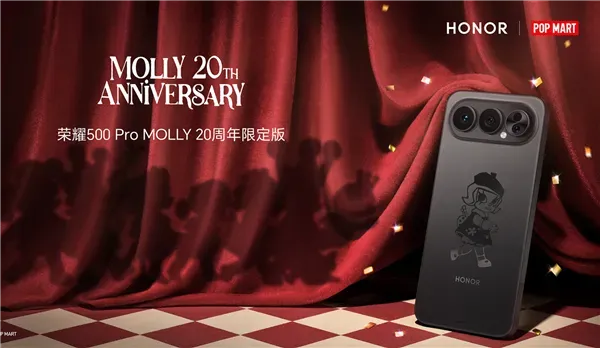
Honor and Pop Mart launched a co-branded smartphone on January 25, 2026, marking a strategic pivot for both companies as they navigate slowing growth in their respective markets. The Honor 500 Pro MOLLY 20th Anniversary Limited Edition, priced at 4,499 yuan (US$644) or 3,999 yuan (US$573) with government subsidies, represents the first fully customized toy-branded smartphone collaboration between a major Chinese handset maker and a collectible toy company.
The market responded immediately to the partnership announcement. Pop Mart's stock surged 8.52% on January 20, following the product reveal on January 19, with intraday gains reaching over 8%. The collaboration targets Generation Z consumers and female users, demographics both companies are prioritizing as they face structural challenges in their core businesses.
The limited-edition device integrates Pop Mart's MOLLY character across hardware design and software interface, including customized themes, wallpapers, charging animations, and camera watermarks. The package includes collector-focused accessories such as a light-up travel case-inspired gift box, invitation cards, phone cases, and refrigerator magnets. Pre-orders showed female customer orders surging 400% compared to standard Honor models.
The partnership comes as Honor struggles to maintain market position while Pop Mart seeks to expand its intellectual property beyond traditional collectible figurines into higher-frequency consumer electronics categories.
Honor Faces Market Share Pressure
Honor ranked among China's top five smartphone vendors in the third and fourth quarters of 2025 but occupied the bottom position in that tier, according to IDC data. The company's shipments declined 1.5% year-over-year in Q3 and 6.1% in Q4 2025, with flagship models underperforming competitors.
The Honor Magic 8 series recorded only 541,000 units sold through the second week of 2026, representing less than 20% of Xiaomi's competing model 17 series sales. This performance gap underscores Honor's challenge in differentiating premium products amid intensifying competition and product homogenization across the industry.
IDC forecasts a significant contraction in China's smartphone market for 2026, compounded by rising memory component costs. Against this backdrop, Honor's digital series has shown shifting user demographics, with female users aged 25-35 increasing 40% year-over-year, aligning closely with Pop Mart's core customer base.
The collaboration represents Honor's attempt to capture niche segments through differentiated products rather than competing directly on specifications in an increasingly commoditized market.
Pop Mart Expands Beyond Collectibles
Pop Mart reported total revenue growth of 245%-250% year-over-year in Q3 2025, with overseas markets expanding 365%-370%. Despite strong topline growth, the company faces the strategic imperative of diversifying revenue streams beyond blind box figurines.
The Honor partnership extends Pop Mart's IP licensing strategy into consumer electronics, following previous collaborations with Uniqlo in fashion and Luckin Coffee in food and beverage. Unlike static collectibles, smartphones offer daily user engagement and visibility, potentially amplifying brand exposure.
For Pop Mart, the licensing model provides asset-light revenue without research and development or manufacturing costs. The company receives fees for IP authorization and design collaboration while leveraging Honor's distribution network to reach consumers outside traditional collectible toy channels.
The collaboration tests whether Pop Mart's character IP can command premium pricing in functional technology products, a critical question as the company pursues international expansion and multi-category penetration.
Deep Integration Beyond Surface Branding
The limited-edition device features comprehensive customization distinguishing it from typical co-branding exercises. The obsidian black handset displays the MOLLY Little Artist character on the rear panel, accompanied by camera-shaped phone cases and themed accessories designed to enhance unboxing ritual experiences valued by Generation Z consumers.
System-level integration includes proprietary themes, dynamic charging indicators, and photo watermarks, transforming the device into a wearable expression of collectible toy culture. According to CBNData research, Generation Z accounts for 40% of China's consumer market, with purchasing decisions increasingly driven by emotional value and social media shareability rather than purely functional considerations.
The 16GB RAM/512GB storage configuration uses Qualcomm's Snapdragon 8 Elite processor, an 8,000mAh battery, 80W wired charging, 50W wireless charging, and a 200-megapixel AI main camera. Honor positioned the device as the industry's only model offering live portrait beautification and bokeh effects on both front and rear cameras.
The government subsidy reducing the effective price to 3,999 yuan ($552) lowers barriers for collectors and younger consumers, particularly during the Lunar New Year shopping season. This pricing strategy balances collectible premium with mass-market accessibility within Honor's mid-range digital series positioning.
Market Risks and Industry Implications
The collaboration presents opportunities for both IP licensing expansion and niche market cultivation, but carries execution risks tied to broader industry headwinds and consumer acceptance uncertainty.
Pop Mart must manage IP dilution risks as licensing frequency increases. Excessive collaborations without innovation could trigger consumer fatigue, diminishing brand value. The company's previous partnerships succeeded through careful brand alignment and experience design rather than simple logo placement.
Honor confronts systemic market contraction that single product collaborations cannot reverse. The company's overall shipment trajectory remains pressured by intensifying competition from established players and component cost inflation affecting industry margins.
Sales performance during the Lunar New Year period will provide the first substantive indicator of whether the toy-tech fusion resonates with target demographics. Underperformance could damage both brands' reputations and dampen future cross-category collaboration appetite.
The partnership reflects broader strategic imperatives for companies facing growth constraints in maturing markets. As smartphone differentiation increasingly relies on software, services, and cultural positioning rather than hardware specifications alone, collaborations with lifestyle and entertainment brands may become more prevalent. Similarly, collectible toy companies with strong IP portfolios face pressure to demonstrate monetization potential beyond physical merchandise as investor expectations evolve.
Whether this model proves commercially viable will influence how technology and lifestyle brands approach cross-category partnerships in China's competitive consumer markets.