
Honor Launches Ultra-Slim Magic 8 Pro Air to Challenge Apple's iPhone Air
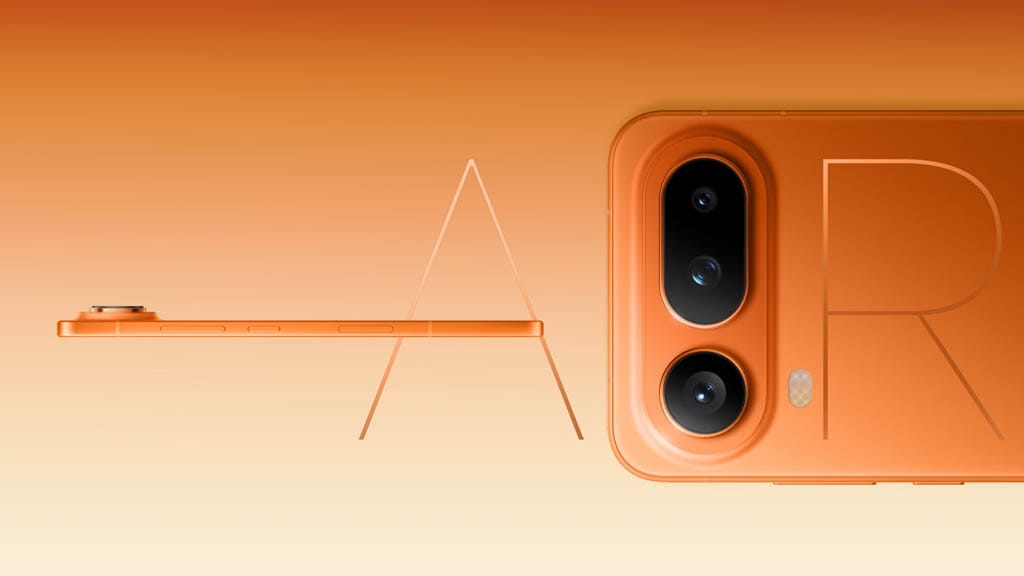
Honor Technology unveiled its Magic 8 Pro Air smartphone on January 19, 2026, positioning the 6.1mm-thick device as a direct competitor to Apple 's iPhone Air with advanced camera technology and a larger battery capacity packed into a lightweight 155-gram frame.
The device will hit stores on January 23 with pricing starting at 4,999 yuan ($714), undercutting premium flagship positioning while offering specifications that include a 5,500mAh battery—substantially larger than typical ultra-thin smartphones—and what Honor claims is the industry's first ultra-thin high-definition zoom camera system with CIPA 5.0-level image stabilization.
Honor equipped the Magic 8 Pro Air with MediaTek Inc.'s Dimensity 9500 processor and a triple-camera setup featuring a 50-megapixel main sensor, 50MP ultrawide lens, and 64MP periscope telephoto with 3.2x optical zoom. The device supports 80W wired and 50W wireless charging, addressing battery life concerns that have historically plagued thin-profile smartphones.
The launch intensifies competition in the premium smartphone segment as Chinese manufacturers push into the high-end market with devices that emphasize both design and technical specifications. Honor's integration of aerospace-grade aluminum construction and IP68/69 water resistance ratings targets consumers seeking durability alongside slim aesthetics.
Technical Specifications Target Premium Segment
The Magic 8 Pro Air features a 6.31-inch OLED display with 2640 x 1216 pixel resolution, 120Hz refresh rate, and 6,000 nits peak brightness. Honor incorporated 1.08mm ultra-narrow bezels and support for P3 wide color gamut with HDR display capability.
MediaTek's Dimensity 9500 octa-core chipset powers the device with a 1 x 4.21GHz C1-Ultra core, 3 x 3.5GHz C1-Premium cores, and 4 x 2.7GHz C1-Pro cores, paired with Mali G1-Ultra MC12 graphics processing. The phone ships with MagicOS 10 operating system and comes in four memory configurations ranging from 12GB RAM with 256GB storage to 16GB RAM with 1TB storage.
The device measures 150.5 x 71.9 x 6.1mm and will be available in four colors: Light Orange, Fairy Purple, Feather White, and Shadow Black. Honor also included connectivity features such as dual-band WiFi, Bluetooth 6.0, and became the company's first smartphone to support both physical SIM and eSIM functionality.
Camera System Emphasizes AI-Powered Features
Honor's camera implementation centers on a 50MP main camera with a 1/1.3-inch sensor, f/1.6 aperture, optical image stabilization, and 23mm focal length producing 2.4µm large pixel output through 4-in-1 binning. The 50MP ultrawide camera offers 112-degree field of view with f/2.2 aperture and 16mm focal length, while the 64MP periscope telephoto provides 3.2x optical zoom.
The company developed what it describes as an AI zoom array flash system delivering 200 lux brightness for night photography across all focal lengths. The front-facing camera uses a 50MP sensor with multiple shooting modes.
Honor integrated several AI-powered photography features including AI flashing for skin tone enhancement, AI Hair Light for adding shine to hair, AI reflector for facial lighting adjustment, and AI French soft light for portrait effects. An AI color tracking function applies color grading presets ranging from classic to cinematic styles.
Pricing and Market Positioning
The Magic 8 Pro Air's four configurations are priced at 4,999 yuan (US$714) for 12GB/256GB, 5,299 yuan (US$757) for 12GB/512GB, 5,599 yuan (US$800) for 16GB/512GB, and 5,999 yuan (US$857) for 16GB/1TB. Sales begin January 23.
Honor constructed the frame using what it describes as aerospace-grade aluminum unibody design intended to provide drop and water protection while maintaining a slim profile. The device carries IP68 and IP69 ratings for dust and water resistance.
Additional features include a 3D ultrasonic fingerprint sensor, gravity sensor, infrared sensor, gyroscope, compass, ambient light sensor, proximity sensor, and accelerometer. The company also upgraded its YOYO voice assistant with capabilities for health features and travel planning.
The device supports reverse wireless charging alongside its 80W wired and 50W wireless charging capabilities, addressing use cases where the phone serves as a power source for accessories or other devices.