
Honor's Comeback Depends on Winning China's Channel War
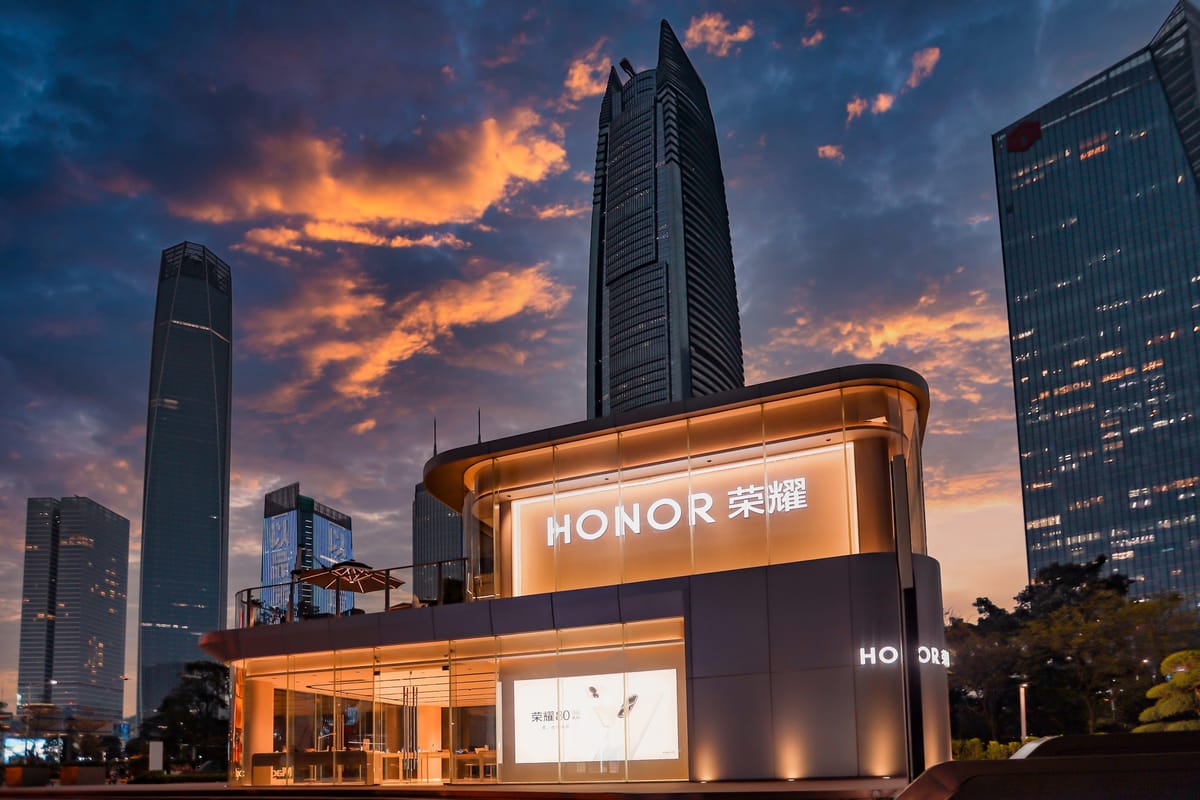
Honor is deploying a deliberately restrictive distribution playbook for its new 600-series flagship — a calculated bet that channel quality, not volume, is the variable that will determine whether the brand can claw back relevance in a Chinese smartphone market where product differentiation alone no longer wins wars.
The 600 series, which went on sale in late May, was initially allocated only to a curated list of authorized retailers and high-loyalty distributors in key provinces, including Zhejiang — a deliberate departure from the industry-standard full-channel saturation launch. The move signals that Honor's leadership, reshuffled in early 2025, has internalized a painful lesson: uncontrolled distribution erodes pricing integrity, alienates quality dealers, and ultimately destroys the brand equity that mid-to-high-end margins depend on.
The strategy is already producing measurable results. After falling out of IDC's China smartphone top-five rankings entirely in 2024 — relegated to the "others" category — Honor returned to the top five in Q1 2026. Yet the gap to its stated target of re-entering the top three remains substantial, and the competitive forces bearing down on the company show no sign of easing.
How Honor's Market Share Collapsed — Then Partially Recovered
Honor's trajectory over the past six years reads as a case study in the volatility of distribution-driven growth. Spun off from Huawei in late 2020, the brand initially benefited from a near-perfect storm of tailwinds: Huawei's retreat from the consumer market following U.S. sanctions, a perception among some buyers of Honor as a value-equivalent substitute, and an aggressive channel expansion that rapidly pushed market share from a trough of roughly 3% to the top position in China.
That ascent proved unsustainable. As Huawei staged its comeback — anchored by the Mate 60 Pro's surprise 2023 launch and accelerating its push into the mid-range and lower-tier segments through the Changxiang 90 and iterating nova series in 2025-2026 — Honor found itself squeezed from the premium end. Simultaneously, OPPO and vivo leveraged structural channel advantages built over years to recapture ground in the volume segments.
The channel arithmetic was stark. In certain eastern provinces, OPPO and vivo's combined in-store promoter headcount exceeded Honor's equivalent "consultant" force by a ratio of at least 1.5-to-1. Some independent mom-and-pop retailers had formalized commercial ties with OPPO or vivo — including social insurance arrangements for co-employed staff — that created switching costs no promotional incentive from Honor could easily overcome. At the telecom carrier-store level, staff confirmed that Huawei-branded devices commanded the tightest sales-tracking attention, reflecting a priority hierarchy that directly influences floor-level sell-through.
Executing the "Three Controls, One Allocation" Playbook
Honor's current channel architecture is best understood as a tiered system rather than a simple wide-or-narrow binary. For entry-level and budget SKUs, the brand maintains an open-access model: willing distributors can order freely through Honor's procurement platform after an initial structured allocation window, prioritizing scale and geographic coverage. For mid-to-high-end lines — specifically the numeric series (400, 500, 600) and the Magic flagship range — the company applies what insiders describe as a "three controls, one allocation" framework: controlling the dealer roster, controlling point-of-sale locations, controlling retail pricing, and executing precision inventory allocation.
The commercial logic is straightforward. Distributor margins in China's mainstream handset channel currently sit between 10% and 25% depending on brand and SKU, before accounting for manufacturer rebates, promotional bonuses, and government trade-in subsidies. Flooding the channel with high-profile mid-range devices compresses those margins as product bleeds into secondary markets, which in turn reduces the incentive for quality dealers to prioritize floor space and promoter effort for Honor over rivals that offer more predictable economics.
Honor has reinforced this with a blacklist mechanism — dealers flagged for grey-market diversion or price disruption are systematically excluded from allocation for new launches. The approach echoes practices long used by Apple Inc. and Samsung Electronics Co. in managing authorized reseller networks, adapted for China's more fragmented distribution landscape.
Stripping Out a Distributor Layer Reshapes Cost Structure
The most structurally significant channel move came in September 2025, when Honor initiated a pilot reform across 10 provinces, eliminating the national first-tier distributor layer entirely. Five provinces — Heilongjiang, Jilin, Yunnan, Guizhou, and Xinjiang — shifted to direct factory supply. Five commercially important markets — Zhejiang, Beijing, Shanghai, Tianjin, and Shenzhen — were consolidated under Shenzhen Aisidi as their designated regional distributor.
Removing one distribution tier in high-volume provinces has an unambiguous cost benefit: fewer margin extractions between factory and retail shelf. The tradeoff is execution risk. Provincial distributors absorbing expanded territory must demonstrate the operational capability — store management, promoter deployment, inventory logistics — to replace functions previously performed by national intermediaries. Industry observers note that this capability gap remains an open question, particularly in lower-tier cities where Huawei's accelerating penetration into township-level retail is intensifying competition precisely where Honor's reformed channel structure is least tested.
Brand Stores Emerge as the New Competitive Moat
Beyond distributor mechanics, Honor is investing in a physical retail format that functions as brand infrastructure rather than pure sales channel. The company opened its first "Alpha" flagship store in Shenzhen in 2025, positioning it as an AI terminal and smart-life experience hub — a direct response to Huawei's dense network of experience stores that serve simultaneously as product showcases, service centers, and ecosystem activation points.
The gap in branded store coverage remains a competitive liability. In multiple prefecture-level cities, Honor's authorized experience store count trails Huawei's footprint by a measurable margin. Xiaomi, which has aggressively expanded its Mi Home retail network while leveraging a broader consumer electronics and smart-home ecosystem, compounds the pressure by offering distributors ecosystem-driven incremental revenue streams that Honor currently cannot match at scale.
The strategic implication is that the channel contest in China's smartphone market has evolved beyond handset distribution into a broader retail real estate and ecosystem-monetization competition. Brands with stronger positions in adjacent categories — automotive, PC, wearables, smart home — can offer distributors a more compelling total profit pool, tilting dealer loyalty in ways that individual handset margin structures cannot fully offset.
The Competitive Arithmetic Facing Honor Through 2026
Honor's path back to the top three in China requires navigating three simultaneous pressures. Huawei's brand authority and channel control remain formidable — key regional distributors (FDKA-tier accounts) in some markets allocate 30% to 40% of volume to Huawei, with outliers reaching 70% to 80%. OPPO and vivo's roots in sub-tier city retail are structurally entrenched and actively being reinforced. Xiaomi's price-to-specification positioning and ecosystem revenue model give it a differentiated value proposition that appeals to both consumers and the distributor community.
Against this backdrop, Honor's channel reforms — narrowing allocation for premium SKUs, eliminating distributor layers, expanding branded stores, enforcing dealer discipline — represent a coherent if incomplete response. The Q1 2026 return to the IDC top five confirms the strategy is gaining traction. Whether it can generate the sustained share momentum needed to reach the top three will depend on whether product competitiveness, brand investment, and channel execution can compound simultaneously — a combination that has proven elusive for the brand since its independence.
The channel war in China's 1.4-billion-person smartphone market, as one veteran industry participant put it, is a protracted campaign. Honor has stabilized its position. Winning it back is a different proposition entirely.
Related Coverage:
Honor Pivots to Hardware-Heavy AI ‘RobotPhone’ to Arrest Market Slide and Salvage Stalled IPO