
How the 'Nvidia of China' Dethroned a Liquor Giant and Minted a $22 Billion Fortune.
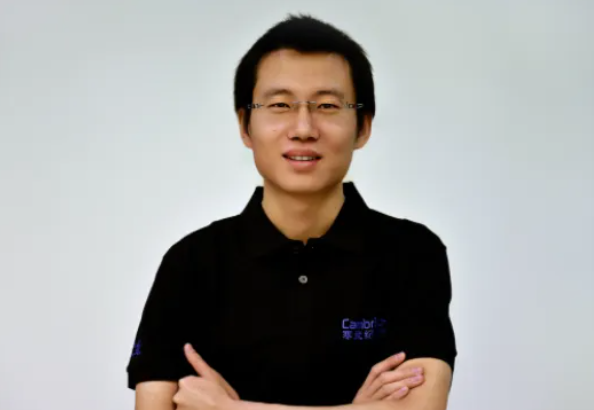
An artificial intelligence chip designer has unseated liquor giant Kweichow Moutai to become China’s most expensive stock, a seismic market event that has minted a new technology billionaire and signals investors’ growing confidence in the nation’s domestic semiconductor ambitions. The surge has catapulted the net worth of Chen Tianshi, the post-80s founder of Cambricon Technologies Corp. Ltd. , to RMB 160 billion yuan (US$22.4 billion), making him the wealthiest person in his home province of Jiangxi.
In a landmark moment for China’s A-share market, Cambricon’s stock price surged nearly 10% on Wednesday, August 27, to hit RMB 1,464. The move pushed its valuation past that of Kweichow Moutai Co., the long-reigning spirits maker that has traditionally been a bellwether for China’s consumer market.
The rally marks a stunning turnaround for Cambricon, a company that has weathered years of heavy losses and US sanctions. Its ascent reflects a broader market pivot towards strategic technology sectors as China accelerates its push for self-sufficiency in critical areas like AI and semiconductors. The market is betting on Cambricon, sometimes dubbed the "Nvidia of China," to lead the charge in developing homegrown alternatives to foreign technology.
Founded in 2016 by Chen and his brother, Cambricon listed on Shanghai’s tech-focused STAR Market in 2020. After its IPO, the company endured a painful three-year slump, with its share price plummeting below RMB 50. Its journey from a sanctioned entity to market leader encapsulates both the challenges and the towering ambitions of China’s technology industry.
From Sanctions to Surge
Cambricon's path has been anything but smooth. In December 2022, the U.S. government added the company and nearly a dozen of its affiliates to its export-control "Entity List," citing national security concerns. The move was part of a broader effort to stymie China's technological development in AI and chips, effectively cutting Cambricon off from U.S. technology and severely impacting its supply chain.
Despite the immense pressure, the company doubled down on its R&D efforts. The bet began to pay off in 2023, when its stock embarked on a meteoric rise from under RMB 50 to over RMB 1,400 per share, an increase of more than 2,500%. By the end of 2024, it was crowned the top-performing A-share with an annual gain of 387%.
The rally was initially met with skepticism, as the company had been consistently unprofitable, accumulating over RMB 5 billion in losses since its inception. However, it silenced doubters in August 2025 with a stellar semi-annual report. Cambricon posted revenue of RMB 28.81 billion for the first half of the year, a staggering 4,347.82% increase year-on-year, and achieved its first-ever semi-annual net profit of RMB 1.038 billion.
The Genius Brothers
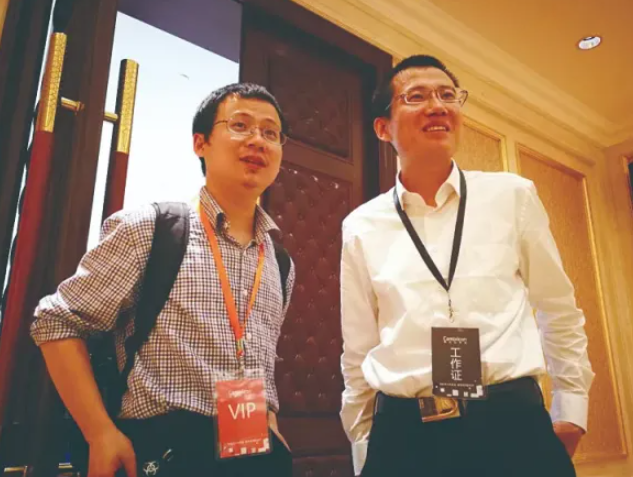
At the heart of Cambricon are two brothers, Chen Tianshi and Chen Yunji, both celebrated alumni of the University of Science and Technology of China’s elite "Special Class for the Gifted Young." Hailing from Nanchang, Jiangxi, they were raised in an academic household by an engineer father and a history teacher mother.
The younger brother, Tianshi, serves as Chairman and CEO, steering the company’s strategic direction. Yunji, two years his senior, acts as Chief Scientist, leading the company’s core research from behind the scenes. Their collaboration began while they were both at the Chinese Academy of Sciences (CAS), where Yunji was working on China's Loongson CPU project. The idea to build a dedicated AI chip emerged from their discussions on using AI to solve complex computational problems.
An Idea Born in 'Darkness'
The concept of an AI-specific processor was radical in the early 2010s, a time before the AI boom went mainstream. The brothers' initial research proposal was so niche it failed to secure even a modest RMB 200,000 in funding and was dismissed as a "three-nos" project: no funding, no papers, and no interest. "We were moving forward alone in darkness in a cold, interdisciplinary field," Chen Yunji recalled of that period.
Their breakthrough came in 2014 when they published two seminal papers, "DianNao" and "DaDianNao," which won best paper awards at top international architecture conferences and were hailed as foundational works in the AI accelerator field. With this academic validation and support from CAS leadership, they fabricated their first successful chip in 2015. A year later, backed by venture capital, they founded Cambricon—named after the Cambrian Period, an era of explosive evolutionary progress—with the hope of kickstarting a new age of artificial intelligence.
Heavy R&D Pays Off
Cambricon's long-standing losses were a direct result of its aggressive and unwavering commitment to research and development. In 2023, for instance, the company’s R&D expenditure reached RMB 1.18 billion, far exceeding its revenue of RMB 709 million for the same year. Chen Tianshi justified the cash burn as a necessary investment in the future. "The mission of our generation of entrepreneurs is to warm up the cold bench," he once said, emphasizing the need for patience and deep-seated effort.
This long-term strategy is now bearing fruit. The company’s early work led to a pivotal partnership with Huawei Technologies Co., which integrated Cambricon’s 1A processor into its Kirin 970 chip in 2017, putting AI capabilities into millions of smartphones. Today, its sustained R&D investment is enabling it to capture a rapidly growing market for domestic AI solutions, as reflected in its recent financial turnaround. Chen remains confident and ambitious, stating, "If the intelligent era truly arrives, new giants will surely be born. I don't shy away from saying that Cambricon wants to be that general."