
Huawei Bets on Active Cooling: Mate 80 Pro Max Leaks Suggest Radical Thermal Shift
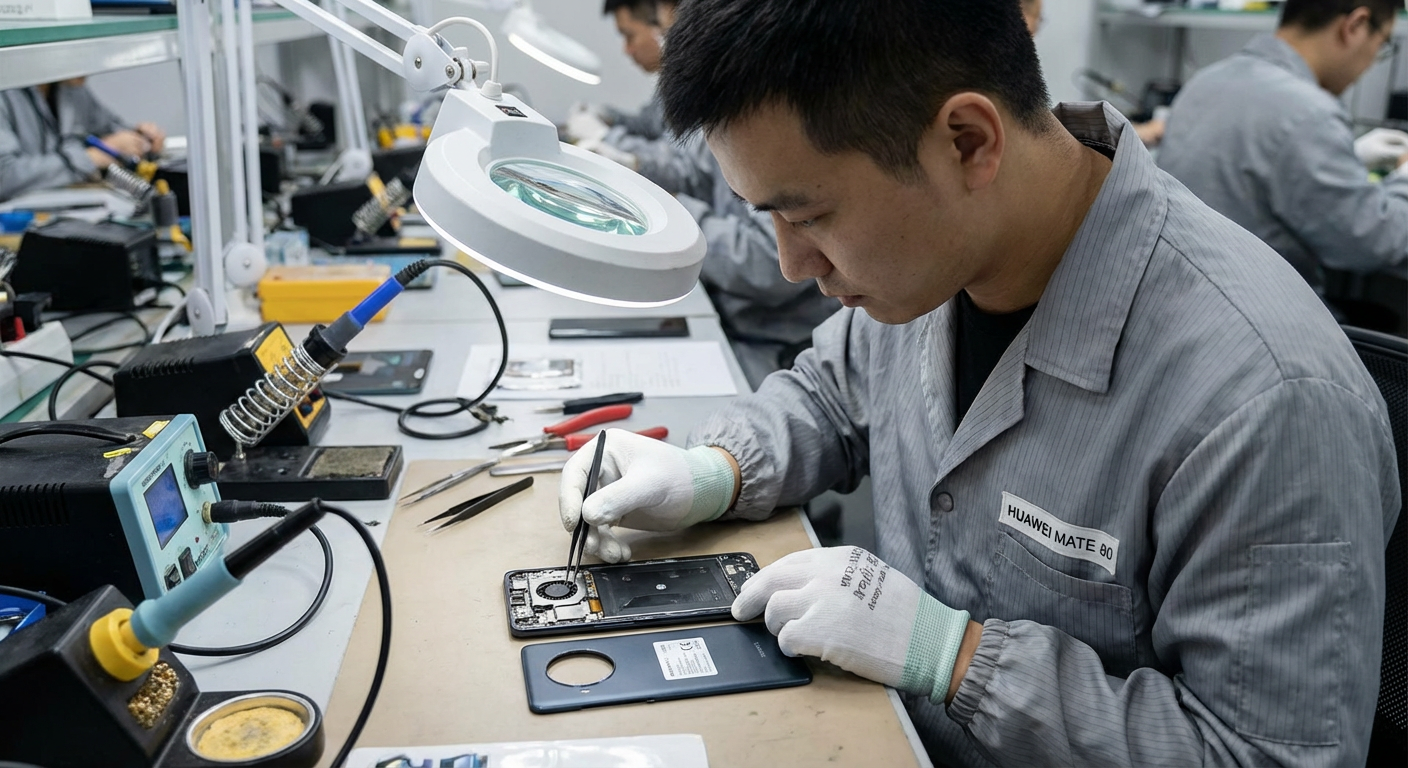
Huawei appears poised to break a longstanding smartphone design taboo with its upcoming flagship, reportedly integrating active cooling mechanisms to push performance boundaries. Leaked schematics and supply chain chatter surrounding the purported "Mate 80 Pro Max" indicate a strategic pivot toward gaming-grade thermals in a mass-market device, signaling the company's aggressive bid to maximize the output of its proprietary Kirin silicon in 2026.
The potential inclusion of an internal fan mechanism—a feature historically reserved for niche gaming handsets—suggests Huawei is prioritizing sustained peak performance over ultra-slim aesthetics. This hardware evolution likely addresses the thermal throttling challenges inherent in high-frequency mobile processing, positioning the Mate 80 series as a direct challenger to Apple's latest iPhone lineup in the high-end computational photography and gaming sectors.
Escalating the Thermal Arms Race
For years, the smartphone industry has relied on passive cooling solutions—vapor chambers and graphite sheets—to manage heat dissipation. If rumors hold true, Huawei's integration of a miniaturized fan represents a significant engineering departure. This move implies that the forthcoming iteration of the Kirin chipset may operate at higher voltage thresholds, necessitating active airflow to maintain stability during intensive tasks such as 8K video recording or on-device AI model processing.
Analysts suggest this design choice reflects the constraints and opportunities within China's domestic semiconductor manufacturing. As Huawei continues to refine its chip architecture under restricted access to global extreme ultraviolet (EUV) lithography, maximizing the efficiency of existing nodes through superior thermal management becomes a critical competitive lever. By keeping the silicon cooler, Huawei can extract higher clock speeds without the degradation typically seen in passively cooled devices.
Redefining Flagship Differentiation
The "Pro Max" nomenclature, while borrowing from competitors, points to a distinct market segmentation strategy. By reserving the active cooling feature for the top-tier model, Huawei creates a clear upsell path for power users. This aligns with broader market trends in 2026, where hardware differentiation has shifted from simple megapixel counts to sustained performance metrics and on-device AI capabilities.
Supply chain sources hint that the cooling system will be acoustically managed to remain imperceptible during standard use, activating only under heavy loads. This engineering challenge—balancing noise, battery consumption, and dust resistance—will be the litmus test for the device's commercial viability. If successful, it could force rivals like Xiaomi and OPPO Electronics Corp. (OPPO) to reconsider their thermal strategies in future flagship cycles.
Implications for the Premium Segment
The re-emergence of Huawei as a dominant player in the premium segment (priced above RMB 6,900 or US$1,000) has reshaped the competitive landscape in China. The Mate 80 series serves as a bellwether for consumer appetite regarding functional bulk versus aesthetic minimalism. While active cooling inevitably requires internal volume, early market sentiment suggests Chinese consumers are increasingly prioritizing raw performance and longevity over thinness.
Investors will be watching the launch closely to gauge whether this hardware gamble translates into market share gains against the iPhone. A successful implementation of active cooling could establish a new performance standard for general-purpose flagships, proving that Huawei's vertically integrated hardware stack remains resilient despite external supply chain pressures.