
Huawei Expands “China Car Content,” Turning Driver-Assist Into Standard, Pressuring Partner Margins
Huawei Technologies is scaling its automotive playbook across a widening set of co-branded models, but the same move that accelerates volume is also turning its once-differentiating smart cockpit and driver-assist stack into an industry baseline—forcing partner automakers to fight on old-school attributes like chassis tuning, cabin space and interior execution.
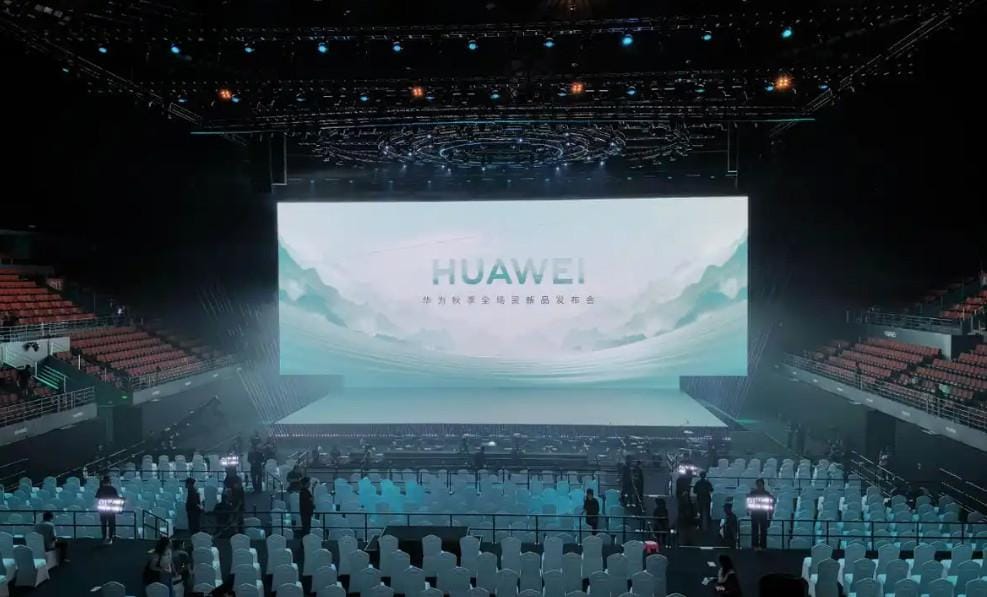
At a spring product event in Changsha, Huawei showcased a dense lineup spanning roughly RMB 200,000–500,000 (US$27,800–69,400), featuring multiple “-Jie” nameplates—Aito, Luxeed, Stelato, and Shangjie—plus the broader “Three Realms” series. The near-simultaneous push into overlapping price bands raises a key market question for 2026: can Huawei continue to command a premium for “Huawei inside” as replication spreads across the supply chain?
Early consumer feedback, reflected in on-site messaging and product positioning, signals a pivot from “who has NOA” to “who makes fewer mistakes without driver takeover,” a shift that places hardware choices—and cost structures—back at the center of competition.
Standardizing Software Forces Brands to Re-differentiate
Huawei’s core modules—Qiankun intelligent driving, HarmonyOS cockpit and a unified sensor-and-compute bundle—now appear across multiple partners and price points, reducing perceived distance between models that sit in different showrooms.
For buyers, that standardization compresses the decision premium once attached to Huawei’s software-led experience. When automated parking and city NOA deliver similar “headline capabilities” across several vehicles, purchase criteria tend to revert to traditional dimensions—ride comfort, cabin packaging, materials and long-term quality—areas where OEMs must prove independent brand value rather than outsource it.
For automakers, the strategic risk is not technological—it is commercial. If Huawei’s stack becomes a “must-have” rather than a “nice-to-have,” it behaves like infrastructure: it lifts the category but dilutes brand identity, intensifying price competition in the most contested RMB 200,000–300,000 (US$27,800–41,700) segment.
Re-weighting Hardware Builds a New Barrier—And a New Cost Base
Huawei is responding to that dilution by raising the hardware ceiling. The company is promoting an “896-line” dual-optical-path lidar as a centerpiece upgrade, positioning it as a way to extend detection range—“buying time” for the system to react—especially for small objects at around 120 meters and beyond.
The timing reflects a broader 2026 industry recalibration: as testing and compliance pressures rise, enthusiasm for “pure vision” approaches is cooling in scenarios where lidar-free systems struggle to pass stringent edge-case trials. Huawei’s argument is straightforward: algorithms can iterate, but physics constrains cameras under strong backlight, low-light and complex reflection environments—conditions that define the safety envelope for stronger L2+ execution and the pathway toward L3-ready stacks.
Huawei cited test demonstrations showing obstacle avoidance at 95 km/h for a fixed tire and emergency braking/avoidance at 80 km/h for a suddenly appearing dummy under occlusion, underscoring a marketing shift from feature breadth to failure-rate reduction.
The tradeoff is financial. As higher-spec sensing migrates from option to expectation, partner OEMs face incremental bill-of-materials pressure at precisely the moment the market is pushing advanced driver-assist down into lower price tiers. That squeezes gross margin unless automakers offset costs through platform scale, supplier renegotiation or reduced discounting—difficult in a crowded channel.
Overlapping Lineups Test Channel Discipline and Partner Incentives
Huawei’s expanding portfolio increasingly resembles a multi-brand “super parent” model, but the structure also creates internal competition. In the RMB 200,000–300,000 battlefield, vehicles positioned for different user profiles can still converge on the same showroom traffic: young buyers who anchor their purchase on smart driving capability.
That dynamic raises execution risk across three layers:
- Channel clarity: Sales staff must explain differences that are no longer anchored by distinct “Huawei vs non-Huawei” capability gaps.
- Supply-chain allocation: Higher-spec lidar and compute content tightens component planning and inventory strategy across multiple launches.
- Partner alignment: Aito’s earlier success benefited from a compressed decision chain and heavy resource commitment—conditions that may not replicate across every OEM collaboration with different cadence, governance and profit targets.
As “Huawei inside” becomes less scarce, bargaining becomes more explicit. Automakers will press for better economics and clearer segmentation; Huawei must balance scale with brand partitioning to avoid cannibalization and to keep its technology from becoming a commoditized checkbox.
Related Coverage:
Huawei Aggressively Prices Band 11 Series to Corner China’s Entry-Level Wearable Market