
Huawei Targets Premium Market with Mate 80 Series and New Kirin Chip
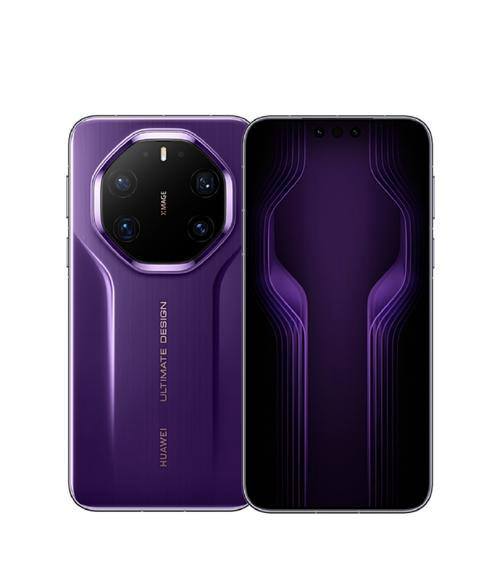
Huawei is scheduled to unveil its latest flagship smartphones and computing devices on November 25, marking a significant expansion of its high-end product portfolio for 2025. The launch event will feature the debut of the Mate 80 smartphone series, the next-generation Mate X7 foldable device, and a new hybrid tablet, all underpinned by the company's proprietary semiconductor and software advancements. This release represents Huawei’s annual "finale," aimed at consolidating its position in the premium electronics market against fierce competition.
Central to the technical specifications of the new devices is the introduction of the Kirin 9030 chipset. Reportedly utilizing an N+2 process technology equivalent to 5nm standards, the new silicon features a transistor density increase of 30% compared to its predecessor. With a self-developed Taishan V3 architecture and a peak frequency of 3.2GHz, the chipset claims performance metrics comparable to current leading processors from competitors like Apple and Qualcomm, signaling Huawei's continued resilience in semiconductor development despite external trade restrictions.
The upcoming lineup also reflects a strategic shift in product branding and form factors. The Mate 80 series will introduce a "Pro Max" model, replacing the previous "Pro+" designation. While the company suggests the change aims to improve product identification and reduce confusion caused by special characters in typesetting, the adoption of nomenclature similar to that of Apple has sparked debate among consumers regarding brand differentiation. Additionally, Huawei is deepening its ecosystem integration with the MatePad Edge, a 2-in-1 device designed to bridge mobile and PC workflows through its HarmonyOS platform.
Despite these hardware strides, Huawei acknowledges that its software ecosystem remains a work in progress. while the top 5,000 mainstream applications have been fully adapted for the native HarmonyOS, the company faces the ongoing challenge of finalizing support for long-tail applications and the gaming sector. The November 25 event serves not only as a hardware showcase but as a critical progress report on Huawei’s ambition to build a fully self-sufficient "all-scenario" smart ecosystem by the end of 2025.
Strategic Rebranding and Silicon Advances
The Mate 80 series will anchor the new release, comprising the Mate 80, Mate 80 Pro, the newly named Mate 80 Pro Max, and the high-spec Mate 80 RS. The top-tier RS model is expected to feature exclusive memory configurations of up to 20GB RAM. The shift to the "Pro Max" naming convention has drawn mixed reactions from the brand's fanbase, with some expressing concern over the perceived alignment with competitors' naming strategies. The move even prompted social media engagement from an executive at Xiaomi, highlighting the competitive scrutiny in the Chinese smartphone market.
Technically, the Mate 80 series introduces significant upgrades beyond the processor. All models will reportedly feature 3D face recognition as standard. The camera systems are expected to utilize ultra-high dynamic range sensors with LOFIC technology, while the Pro Max model tests a new "dual periscope telephoto" solution to enhance zoom capabilities. Design renders reveal a flat-edge structure and a prominent circular magnetic ring on the back, suggesting the launch of a new proprietary magnetic accessory ecosystem intended to link smartphones, tablets, and computers.
Foldable Durability and Imaging
Huawei creates further differentiation in the ultra-premium segment with the Mate X7 foldable phone. The device introduces the "Super Reliable Xuanwu Architecture," bringing enhanced water, drop, and impact resistance. Promotional materials indicate the device has undergone extreme durability testing, including 80°C hot water sprays and steel ball impact tests. The Mate X7 will also share the Kirin 9030 chipset, potentially in a performance-enhanced configuration, ensuring consistent processing power across flagship lines.
The foldable device features a redesigned elliptical camera module and a cloud brocade (Yunjin) back panel to elevate its luxury appeal. Display specifications include a 7.95-inch inner screen with 2K resolution and UTG flexible glass, paired with a 6.45-inch OLED outer screen protected by third-generation Xuanwu tempered Kunlun glass. On the imaging front, the Mate X7 is positioned as a dominant photography tool in the foldable category, incorporating second-generation "Red Maple" imaging technology with large-sensor main cameras.
Harmonizing the Software Ecosystem
Expanding beyond smartphones, Huawei will release the MatePad Edge, a hybrid device blurring the line between tablets and laptops. Announced on November 19 for the upcoming launch, the device features a dual-mode capability that allows users to switch between PC and tablet versions of HarmonyOS via a simple gesture, without interrupting background processes. This functionality builds upon the company’s "all-scenario" strategy, which accelerated earlier in 2025 with the launch of the Pura 80 series and other wearables.
The MatePad Edge adopts a design philosophy similar to previous 2-in-1 hybrids but focuses heavily on software continuity. It supports a segmented folding keyboard accessory, positioning it as a productivity tool capable of handling office tasks alongside media consumption. This release underscores Huawei's broader objective for 2025: to create a unified user experience across office, health, and entertainment sectors, reducing reliance on foreign operating systems and hardware standards.