
Hype vs. Reality: Inside China's Booming, Yet Flawed, AI Glasses Market
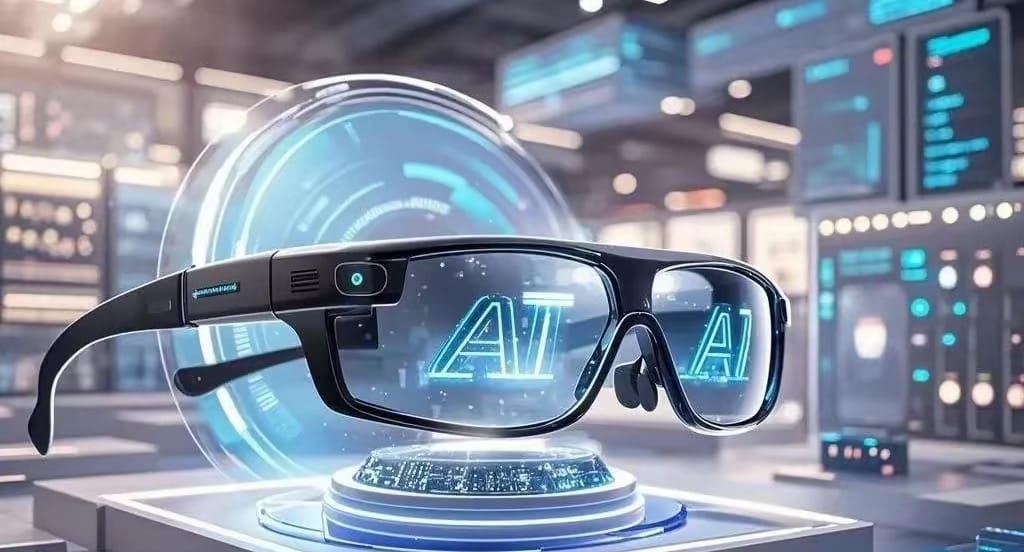
China’s technology sector is pouring resources into artificial intelligence glasses, fueling a market boom in 2025 that has attracted giants from smartphone makers to e-commerce platforms. However, this surge in investment and consumer interest is being met with a wave of early adopter complaints and high product return rates, raising questions about whether the nascent category can overcome the technical hurdles that plagued its predecessors.
The market is showing explosive growth, with major product launches from companies including Xiaomi Corp. and China Telecom Corp. Ltd. spurring consumer intrigue. Global smart glasses shipments surged 82.3% year-over-year in the first quarter of 2025, with China’s market growing even faster at 116.1%, according to data from IDC. The research firm forecasts global shipments will reach 14.5 million units for the full year.
Despite the initial excitement, the user experience is falling short of expectations. Early sales data for some of the most anticipated models show a sharp decline after launch day, and industry media reports indicate average return rates for AI glasses on popular platforms like Douyin are as high as 40% to 50%. Consumers have voiced frustration over issues ranging from poor battery life and slow performance to bugs that prevent core functions from working as advertised.
This disconnect between marketing promises and real-world performance puts the industry at a critical juncture. For investors and companies betting on AI glasses as the next major computing platform, the challenge is not just to capture market share, but to solve fundamental hardware and software problems that have persisted for over a decade, threatening to stall momentum before it can truly build.
A Crowded Field of Contenders
Tech giants have been aggressively entering the AI glasses space throughout 2025. In June, Xiaomi Corp. launched its first AI glasses, priced from 1,999 yuan (about $275), which sold over 10,000 units within 12 hours of its release. The device is powered by Qualcomm’s Snapdragon AR1 chip and offers features such as photography, real-time translation, and mobile payments.
In July, at the World Artificial Intelligence Conference (WAIC), Alibaba Group Holding Ltd. unveiled progress on its Quark AI glasses. The device aims to deeply integrate with Alibaba’s ecosystem, including its Alipay payment service, Amap for navigation, and the Tongyi Qianwen large language model. China Telecom also used WAIC to launch its Tianyï AI glasses, priced at 1,999 yuan and featuring a 12-megapixel camera and advanced imaging technology.
The field includes a diverse set of players. HTC Corp. released its VIVE Eagle glasses in August for NT$15,600 (approximately 3,739 yuan). Other confirmed or rumored entrants include 360 Security Technology Inc. and electric vehicle maker Li Auto Inc., which is reportedly co-developing a device with the manufacturer Goertek Inc.. China’s other major telecom operators, China Mobile and China Unicom, are also developing their own product lines.
Under the Hood: A Supply Chain Battle
The performance and cost of AI glasses are heavily dictated by a complex and competitive supply chain. According to industry insiders, the core system-on-a-chip (SoC) accounts for 30% to 40% of the total product cost, determining the device’s processing power, AI capabilities, and imaging performance. Current solutions range from high-performance SoCs like Qualcomm’s AR1 for flagship products to more power-efficient dual-chip architectures for balancing performance and battery life.
The industry’s central challenge is managing the conflict between rising computing demands for AI features and the power consumption constraints of a small, all-day wearable device. To address this, chipmakers are turning to more advanced manufacturing processes, such as 4nm and 6nm nodes, and power management techniques like Dynamic Voltage and Frequency Scaling (DVFS).
Other key components are also battlegrounds for innovation and market share:
Image Sensors: Sony’s IMX681 has been the dominant choice for its compact size, low power use, and compatibility with Qualcomm’s platform. However, Chinese manufacturers like OmniVision and Smartsens Technology (Shanghai) Co., Ltd. are gaining traction by offering cost-effective and customizable alternatives.
Manufacturing (OEM/ODM): Established electronics manufacturers such as Luxshare Precision Industry Co., Ltd. and Huaqin Technology Co., Ltd. are leveraging their experience in wearables to offer brands a faster path to market.
Flexible Printed Circuits (FPC): The need to integrate over 20 sensors and power management systems into a lightweight frame weighing as little as 50 grams is driving a revolution in FPC design. These components must be highly dense, durable enough to withstand over 100,000 bends, and capable of handling high-frequency signals, presenting a significant opportunity for specialized suppliers.
Déjà Vu: Early Adopters Report Familiar Flaws
Despite the technological advancements, early user feedback reflects a sense of déjà vu, echoing the problems that led to the failure of earlier smart glasses. The initial sales spike for Xiaomi’s AI glasses on Douyin, for instance, quickly faded. Daily sales fell from a peak of 5,000-7,500 units on launch day to just 100-250 units by mid-August. Its return rate on the platform is reportedly around 40%.
User complaints are consistent across various brands, including products from Ray-Ban Meta and Rokid. The most common criticisms center on:
Poor Battery Life: Devices often fail to last a full day with moderate to heavy use, contrary to the "all-day wear" marketing.
Slow Performance: Users report lags in voice command recognition and camera response.
Software Bugs: Issues such as photos and videos failing to appear in the companion app are common.
Low Image Quality: Camera performance often does not meet consumer expectations.
These issues are strikingly similar to those that doomed Google’s Project Glass, which was shelved for consumers in 2015 due to high cost, discomfort, and inadequate battery life. Microsoft’s HoloLens faced a similar fate in the consumer market. A decade later, manufacturers are still grappling with the same fundamental trade-offs between functionality, form factor, and usability.
The Path to Mainstream Adoption
For AI glasses to transition from a niche gadget to a mainstream platform, the industry must address both hardware limitations and the absence of a "killer application." According to an iResearch survey, the top consumer concerns are high prices, subpar performance, and data privacy. The most desired features include advanced AI interaction, real-time translation, and high-quality photo and video capabilities.
Success will require not only deeper collaboration across the supply chain but also a rethinking of the user experience. Some experts argue that AI glasses are better suited for quick, contextual interactions via "Agents" rather than running full-fledged apps found on smartphones.
While the market is undeniably hot, its long-term viability remains uncertain. Which of the dozens of companies currently competing in the "battle of the hundred glasses" will survive to see the industry mature is an open question. For now, the tech world is watching closely as the next chapter for wearable computing unfolds.