
Insta360 Margins Plunge 94% on Chip Costs and AI Pivot
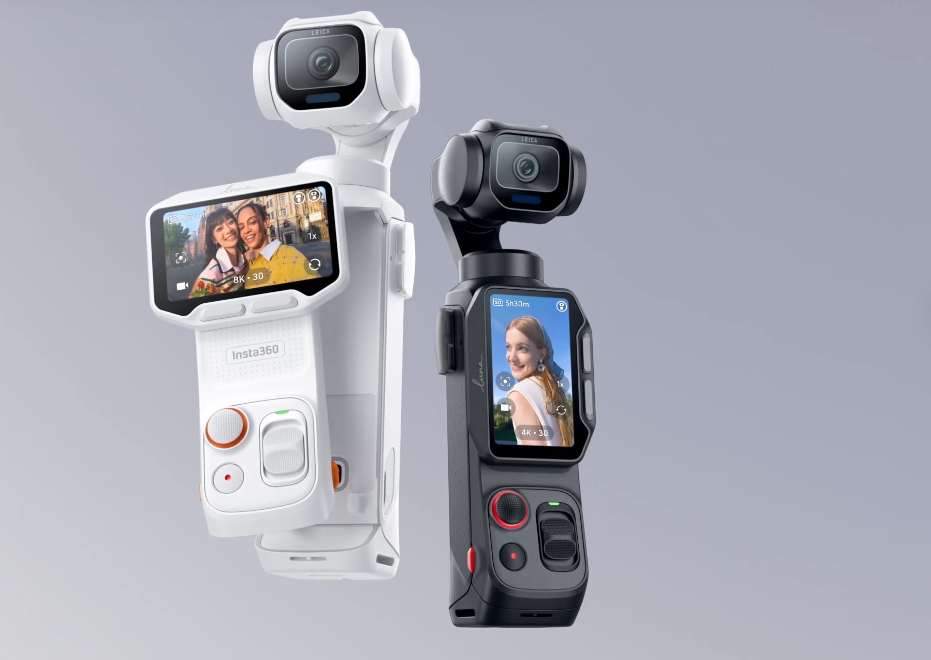
A 94% collapse in first-half net profit at Insta360 underscores the escalating capital requirements for hardware makers navigating surging memory chip costs and aggressive artificial intelligence transitions in 2026.
The Shenzhen-based imaging technology firm reported a 50% year-on-year revenue surge to RMB 5.516 billion (US$799.4 million) for the first half of 2026. However, net income plummeted to just RMB 30.4 million (US$4.4 million). The stark divergence reflects a deliberate corporate strategy: absorbing severe supply chain shocks via massive inventory stockpiling while aggressively funding capital-intensive drone expansions and AI ecosystem integrations.
Spiking Memory Prices Prompt Strategic Stockpiling
Global supply chain volatility severely compressed hardware margins across the electronics sector this year. Contract prices for general DRAM surged 58% to 63% sequentially in the second quarter, while NAND flash prices jumped 70% to 77%. To hedge against sustained component inflation, Insta360 executed forward strategic procurement of memory chips, deploying nearly RMB 2 billion (US$289.8 million) in cash during the first half.
This front-loaded inventory buildup significantly drained operating cash flow but secured long-term component supply and cost stability, providing a vital buffer for the company's upcoming product cycles amid a tightening semiconductor market.
R&D Spending Accelerates AI and Drone Pivot
Beyond raw materials, a structural shift in capital allocation drove the profit contraction. The company poured over RMB 1 billion (US$144.9 million) into research and development, representing an 80% year-on-year increase and consuming nearly 20% of its total revenue. This capital funded the market education, research, and production line build-out for its newly introduced panoramic drone segment—a category that has yet to achieve economies of scale.
The heavy R&D outlay is yielding direct product-level integration with leading large language models. In August 2026, the company integrated Alibaba Group Holding Ltd.'s Qwen and Google Gemini into its Go Ultra thumb camera. Concurrently, the newly launched X6 panoramic camera utilizes the proprietary PanoMind AI model—trained on over 10,000 hours of spatial data—to automate editing and generate 3D Gaussian splatting environments.
These integrations position the hardware manufacturer as an emerging node in spatial intelligence, evidenced by its recent strategic partnerships with embodied AI developers Agibot and Qiyuan Robotics.
Global Retail Expansion Secures Top-Line Growth
The company's top-line momentum relies heavily on aggressive international retail penetration, with overseas markets now accounting for 63.4% of total revenue. Following the opening of a Tokyo flagship store that drew widespread consumer queuing, Insta360 is scheduled to launch its first direct flagship store outside Asia in New York's Times Square this September. The brand now operates over 10,000 retail experience locations and 300 flagship stores globally.
The physical footprint expansion coincides with a major hardware milestone: surpassing 10 million total camera shipments. New flagship releases generated immediate market volume. The X6 camera, equipped with dual 1/1.1-inch sensors, topped category sales on JD.com, Tmall, and Amazon within three days of its August 12 release. To consolidate mainstream retail channels, Insta360 finalized an agreement in July 2026 to distribute its core lineup across more than 500 Apple Inc. authorized stores in China, alongside long-term distribution agreements with Costco, Best Buy, and Sam's Club.
Software Monetization Indicates Ecosystem Shift
While hardware margins remain under cyclical pressure, operational metrics indicate an evolving, high-margin software monetization model. Monthly active user volume for the Insta360 application increased 67% year-on-year by June 2026, with total file exports surging 126%.
More critically, the volume of paying cloud storage subscribers jumped 124%, driven by the utility of the "Time Pro" automated editing feature, which reached a 60% export utilization rate in the second quarter. The data reveals a calculated transition: sacrificing short-term hardware profitability to capture market share, lock in recurring software revenue, and establish a formidable AI-driven imaging ecosystem.