
Insta360 Revenue Hits $1.4B Amid Aggressive AI Expansion
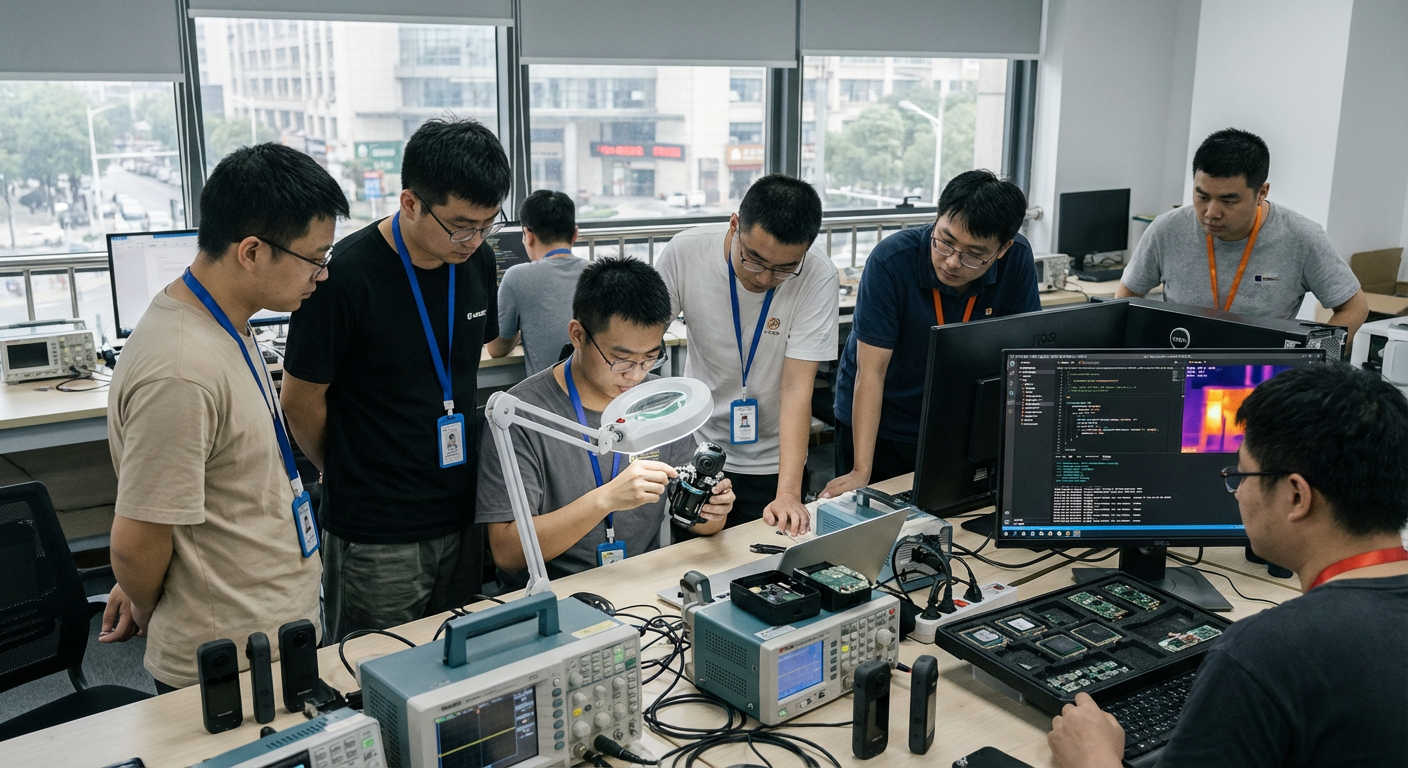
Insta360 reported a 74.7% surge in 2025 full-year revenue to RMB 9.74 billion (US$1.41 billion), reflecting robust global demand for specialty imaging hardware even as aggressive investments in artificial intelligence and custom silicon compress short-term profitability.
The Shenzhen-based camera manufacturer maintained its hyper-growth trajectory into early 2026, posting first-quarter revenue of RMB 2.48 billion, an 83.1% year-on-year increase. The three-year compound annual growth rate now exceeds 63%, driven by the company's transition from a niche action camera manufacturer to a broader imaging ecosystem provider.
Despite the top-line expansion, core profit metrics contracted. The margin compression stems from a confluence of strategic R&D expenditures, intensified sector competition, and rising costs for memory components. Founder Liu Jingkang framed the profit decline as a calculated recalibration to secure long-term structural advantages.
Sacrificing Margins Fuels Hardware Ecosystem Expansion
The deliberate profit sacrifice is directly linked to an unprecedented capital allocation toward research and development. R&D spending nearly doubled in 2025 to RMB 1.53 billion and accelerated further in the first quarter of 2026, jumping 101% to RMB 465 million.
This capital is funding a rapid product line diversification. Insta360 is concurrently developing two drone models—including the recently launched global-first 360-degree drone, "Shadow Plume A1"—alongside gimbal cameras, wireless lavalier microphones, and three undisclosed new product categories. Crucially, the company is also absorbing the high upfront costs of custom-developing three proprietary chips to reduce future reliance on third-party silicon.
According to IDC data for 2025, Insta360 controls 66% of the global 360-degree camera market and 57% of the thumb camera segment. Original niche categories developed over the past seven years now generate more than 60% of the company's total revenue.
Pivoting Operations Toward Embodied AI
Beyond traditional hardware, Insta360 is repositioning itself within the robotics supply chain. The company outlined a long-term technical roadmap to create "photography robots." Having matured the hardware "torso"—encompassing camera optics, imaging algorithms, drones, and gimbals—management is now allocating resources to build an "AI brain."
The company is currently partnering with multiple embodied AI enterprises, leveraging its spatial imaging data to assist in the training and development of physical AI models. Internally, AI integration has already restructured operating costs. Generative AI now writes 43% of the company's application code and manages over 50% of online customer service inquiries, saving the firm over RMB 10 million annually.
The macro environment supports this aggressive expansion. Global broad-definition action camera sales grew 72% in 2025. In China, online consumer action camera sales recently spiked 232% year-on-year, with Insta360 capturing a 70% share of that domestic growth. To capture this demand, the company has expanded its physical retail footprint to nearly 300 offline stores, culminating in a global flagship store that opened in Shenzhen in March 2026, driving a 50% increase in per-store sales while reducing per-unit marketing costs by 10%.
Related Coverage:
Insta360 Launches Pogacar-Limited GO Ultra at RMB 3,598 for Sports Fans
Insta360 Luna Ultra Leak Signals Escalating 2026 Pocket Camera Hardware War