
J.P. Morgan Says Insta360 Faces a Fork: AI Ambition vs. Margin Pressure
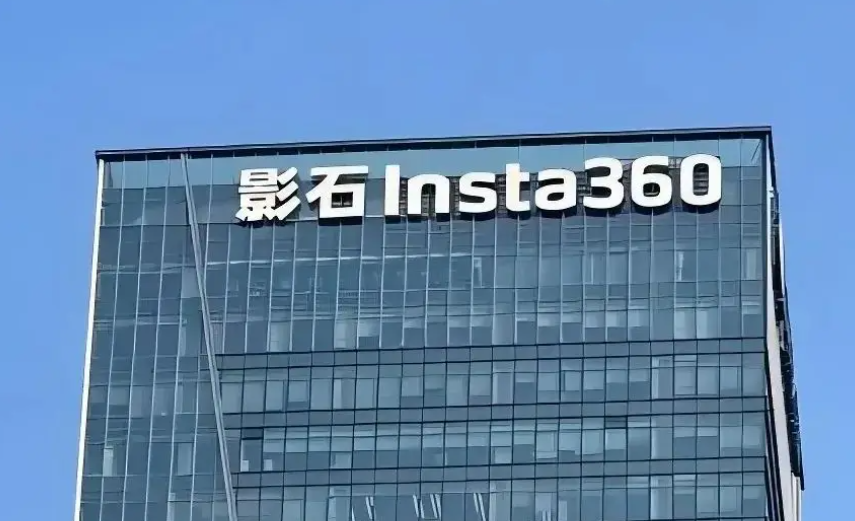
Insta360, the STAR Board-listed 360-camera pioneer that posted RMB 9.741 billion (US$1.35 billion) in 2025 revenue — up 74.76% year-on-year — faces a binary valuation outcome by 2030 that J.P. Morgan analysts say the current 35x forward earnings multiple does not adequately price in, prompting the bank to initiate coverage at Neutral with a June 2027 price target of RMB 150, implying roughly 10% downside from the June 3 close of RMB 166.95.
The initiation, published June 4, 2026, arrives at a structurally awkward moment: DJI — the Shenzhen-based drone and imaging giant whose revenue and profit run nearly 10x Insta360's — has entered the 360-camera segment and captured approximately 35% market share within a single quarter, pricing 20–30% below comparable Insta360 SKUs. Simultaneously, DRAM spot prices have surged more than 500% year-on-year, threatening gross margins that have already compressed toward 40% in FY2026E from above 50% in FY2024. A third catalyst lands imminently: 56.5% of outstanding shares unlock on June 11 against what analysts describe as a thin free float, creating acute near-term supply overhang.
Three Risks Converging Simultaneously to Pressure the Stock
J.P. Morgan's Neutral call is explicitly a timing and valuation judgment, not a franchise critique. Analysts DS Kim, Selina Li, Lindsey Qian, and Yibo Wu state they "have deep respect for the franchise" and forecast revenue to roughly triple from approximately RMB 10 billion today to approximately RMB 30 billion by 2028E, with growth vectors expanding into gimbal cameras and drones.
The problem is sequencing. The bank identifies three risks that are not merely concurrent but potentially self-reinforcing. DJI's pricing aggression compresses Insta360's revenue quality precisely when DRAM cost inflation is flowing through the bill-of-materials — J.P. Morgan's internal technology team does not forecast a DRAM price peak until mid-2027E at the earliest. That margin squeeze arrives just as the lock-up expiry removes a structural floor under the share price. In consumer hardware, where sentiment can shift faster than fundamentals, the combination creates what analysts call a "crowded risk" window over the next three to six months.
Q1 2026 data illustrates the profit-revenue divergence already under way. Revenue hit RMB 2.481 billion (US$344.6 million), up 83.11% year-on-year — yet net profit attributable to the parent collapsed to RMB 84.62 million, down sharply from the RMB 929 million reported for full-year 2025. Chairman Jingkang Liu's April 27 shareholder letter frames this explicitly as a deliberate trade: strategic R&D investment in the first quarter alone reached RMB 262 million, equivalent to approximately 300% of that quarter's net profit, directed at two drone platforms, gimbal cameras, wireless lavalier microphones, and three custom silicon projects.
Bull Case Demands Category Expansion from Niche to Mass Utility
For Insta360 to reach a market capitalisation above US$20 billion by 2030 — roughly double its current implied valuation — J.P. Morgan sets out three conditions that must resolve simultaneously.
First, the DJI competitive dynamic must shift from conquest to coexistence. Analysts argue that Insta360 needs to retain 50%-plus share in 360 cameras and build a credible second-place position of 25–35% in handheld gimbal cameras by 2030, while establishing a niche drone franchise. The precondition is that Insta360's software moat — stitching algorithms, auto-editing AI achieving approximately 50% clip export rates without human intervention, and six-plus years of proprietary spatial data from millions of deployed cameras — proves durable enough that DJI cannot replicate it through hardware price undercutting alone.
Second, the total addressable market must expand from the current combined 8.5 million-plus units per year (2.5 million for 360 cameras, 6 million-plus for handheld gimbal cameras) to 15–20 million units by 2030. Chairman Liu's shareholder letter describes the mechanism as a "photography robot": an autonomous system integrating optical modules ("eyes"), drone and gimbal hardware ("body"), and AI auto-editing ("brain") that enables ordinary consumers to capture and preserve memories without technical friction — the way Kodak once industrialised family photography not by selling cameras to enthusiasts but by selling memory preservation to everyone. J.P. Morgan notes that Apple and Meta's spatial computing platforms could create downstream demand for 360-degree content, positioning Insta360 as a quasi-default input device for an emerging ecosystem.
Third, gross profit margins must recover to 45–50%. That requires the DRAM cycle to peak and reverse, custom chips to deliver meaningful bill-of-materials savings by displacing off-the-shelf components, and new product categories — gimbal cameras, drones, microphones — to carry accretive margins relative to the core 360 business.
Bear Case Requires Nothing Dramatic — Just the Status Quo Persisting
The US$10 billion path, which J.P. Morgan treats as roughly consistent with its fair value estimate, requires no dramatic deterioration. It simply requires the current trajectory to continue and the optionality embedded in today's price to not materialise within the investment horizon.
In this scenario, DJI sustains pricing aggression through 2027, eroding Insta360's 360-camera share from approximately 65% toward 45–50%, while ecosystem advantages in accessories, software compatibility, and drone cross-sell prevent the Luna gimbal camera series from scaling beyond 10–20% global share. The category itself stays niche: 360-camera unit volumes grow modestly from 2.5 million to 4–5 million units by 2030 but never achieve the 6–8 million-unit leap the bull case requires. Mainstream consumers continue to rely on smartphones for over 90% of capture needs.
Under this scenario, gross margins dip below 40% in 2027 and remain in the low 40s through 2028–2029, never recovering to the 50%-plus levels of 2024. The stock de-rates from its current 35x 2027E price-to-earnings multiple toward mid-teens as investors reprice Insta360 from a high-growth compounder to a consumer hardware company earning consumer hardware margins. Market capitalisation stagnates around US$10 billion even as the underlying business grows. "Capital has opportunity cost in this scenario," analysts write.
One Unresolved Question Separates Both Paths
J.P. Morgan frames the entire investment thesis around a single pivot variable: whether Insta360's software and AI moat compounds over time — analogous to Apple's ecosystem lock-in — or gets commoditised as generative AI democratises auto-editing, scene understanding, and smart composition capabilities that any hardware manufacturer can license from foundation model providers.
Chairman Liu argues the former, pointing to custom silicon development, proprietary AI models, and a spatial data library accumulated over more than six years as structural advantages that widen annually. The counter-argument is that the history of consumer hardware is "littered with companies whose software moats proved thinner than their founders believed." If the "brain" layer of the photography robot commoditises, Insta360's competitive advantage narrows back to optics and form factor — terrain where DJI competes on equal or superior terms.
J.P. Morgan's valuation anchors the RMB 150 price target at 30x FY2027E earnings, approximately 50% above listed Japanese imaging hardware peers that are growing at low single digits on Bloomberg consensus — a premium the bank says is earned by Insta360's category leadership, founder-led execution, and materially stronger growth profile, but not sufficient to justify the current 35x multiple given unresolved competitive and margin risks.
Upside risks that could force a rating revision include faster-than-expected adoption of the Luna gimbal camera series — particularly if a reported U.S. Federal Communications Commission approval freeze on DJI products extends Insta360's window to gain share in North America — de-escalation of DJI competition potentially facilitated by China's "anti-involution" policy framework, and an earlier-than-expected DRAM price correction. Downside risks include DJI competition proving more severe or persistent than modelled, DRAM prices remaining elevated beyond the mid-2027E peak assumption, and disorderly lock-up selling beginning June 11.
In Q1 2026, 43% of Insta360's code was AI-generated, and over 50% of online customer service volume in 2025 was handled by AI, saving the company more than RMB 10 million (US$1.4 million). Offline retail stores expanded from 36 at the start of 2025 to nearly 300 by the time of the shareholder letter, with same-store sales rising nearly 50% year-on-year. Per-unit global marketing cost declined approximately 10% year-on-year in Q1 2026 versus Q1 2025 — evidence of operational efficiency gains even under full-scale competitive pressure. Whether those gains compound fast enough to offset the three converging headwinds arriving this month is the question J.P. Morgan, for now, declines to answer with a buy.
Related Coverage:
Insta360 Hits RMB 9.7B Revenue—But Its Core Market Is Only a RMB 6B Pond