
JD.com Founder Liu Qiangdong Bets RMB 5 Billion on Yachts, Targeting China's Untapped Mass Market
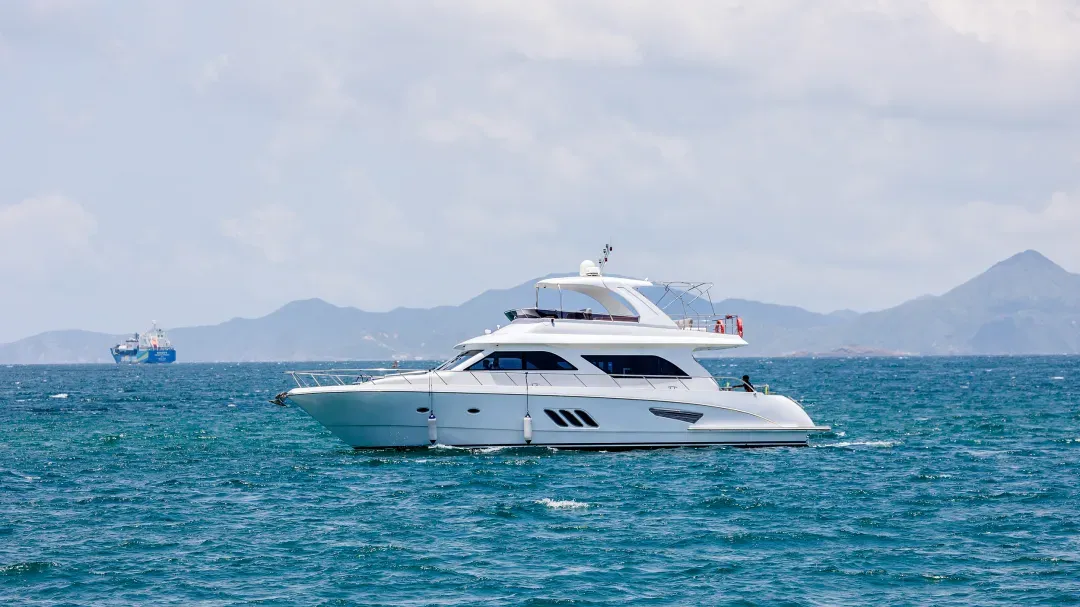
JD.com's billionaire founder is making a bold personal wager that China's yacht industry — long the preserve of the ultra-wealthy — is on the cusp of a mass-market transformation, pledging a RMB 5 billion yuan (US$690 million) investment in a new smart electric yacht brand and staking out an ambition that could reshape one of the country's most underdeveloped consumer sectors.
Liu Qiangdong, chairman of JD.com, announced on Feb. 24 the establishment of Sea Expandary, an independent yacht brand that will pursue full-chain coverage across research and development, manufacturing, sales, operations, leasing, brokerage and after-sales services. The investment is personal, Liu said, and he will not be directly involved in day-to-day management. Sea Expandary signed strategic cooperation agreements with the governments of Shenzhen and Zhuhai on the same day, with plans to build a manufacturing base in Zhuhai and establish its China headquarters in Shenzhen, while participating in the construction and operation of multiple marina facilities in the city.
The announcement lands at a moment when China's service consumption growth is decelerating sharply — from a 20% year-on-year expansion in 2023 to roughly 5.1% by August 2025 — intensifying the search for new demand engines. With China's yacht ownership estimated at just 45,000 vessels compared with 11.67 million in the United States, the structural gap is stark, and Liu's move signals that serious capital is now aligning with policy ambitions to close it.
A Mass-Market Vision in a Premium Industry
The most striking element of Liu's announcement was not the scale of investment but its declared social ambition: he expressed hope that the industry would eventually produce yachts priced at RMB 100,000 — a figure that would represent an 80% to 90% discount to the RMB 500,000–1,000,000 range that currently defines the mid-tier small yacht market. The goal, Liu said, is to make yachts accessible to ordinary salaried workers.
Whether that price target is commercially realistic in the near term remains an open question. Current yacht pricing reflects the complexity of composite materials, precision instruments, navigation and communication systems, and high-end interior design — the very supply chain that Sea Expandary says it intends to develop. However, the aspiration itself carries strategic weight: it positions the brand not as a luxury entrant competing at the top of the market, but as a potential category disruptor aiming to replicate the volume-driven playbook that has defined Chinese consumer electronics and electric vehicles.
Sea Expandary will focus on new-energy, intelligent yachts — a segment where early momentum is already visible. According to data disclosed at the Asia Yacht Show, the penetration rate of new-energy yachts in China exceeded 20% in 2025, a threshold that in other industries has historically preceded rapid mainstream adoption.
China's Shipbuilding Strength Meets Yacht Ambition
Liu's bet is underpinned by a manufacturing foundation that few countries can match. China's shipbuilding industry completed a sweep of the three core global metrics in 2024 — completions, new orders, and order backlog — for the 15th consecutive year, commanding market shares of 55.7%, 74.1%, and 63.1% respectively. The industry has already navigated a technology upgrade cycle from bulk carriers to high-value-added vessels such as LNG carriers.
The transition from commercial shipping dominance to consumer yacht leadership, however, is not automatic. JD.com's chief economist Shen Jianghong argued that yacht manufacturing represents a qualitatively different industrial challenge — one that demands integration of composite materials, precision instruments, navigation communications, and interior design, and that will drive collaborative development across multiple high-end sectors. "Yacht manufacturing will become a direction for the development of new productive forces," Shen said.
China Shipbuilding Group's (中国船舶集团) proprietary "Smart Yacht No. 1" has already demonstrated that the technical capability exists domestically, integrating intelligent navigation, security monitoring, and equipment maintenance into a unified system that has become an industry benchmark.
Policy Architecture Accelerates the Opportunity
Sea Expandary is entering a market where the regulatory and policy environment has shifted decisively in its favor. In 2022, five ministries led by the Ministry of Industry and Information Technology jointly issued implementation guidelines that for the first time established "promoting the popularization of yacht consumption" as a national-level policy objective.
At the provincial level, Guangdong — where Sea Expandary is concentrating its investment — published a high-quality development action plan for the yacht industry covering 2024 to 2027, targeting a combined yacht and related-industry scale exceeding RMB 100 billion by 2027. The Guangdong-Hong Kong-Macao yacht free-travel pilot has already been operationalized, with six entry-exit ports including Guangzhou Nansha and Shenzhen Shekou implementing dual-registration management and guarantee-free policy innovations that have materially reduced transit friction.
Hainan Free Trade Port has leveraged its zero-tariff import regime to accelerate consumption: in the first half of 2025, yacht arrivals and departures in Hainan reached 132,000 port calls, receiving 971,000 tourists. Tianjin has separately committed to establishing a comprehensive yacht management framework by the end of 2026.
Market Gap as Investment Thesis
The investment thesis rests on a gap that is both quantitative and qualitative. China's 45,000 registered yachts — a figure that includes unregistered fishing boats and sailboats — against 15,000 berths reflects an industry at an embryonic stage relative to the country's economic scale and coastal geography. The United States' 11.67 million vessels provide a reference point for what mature market penetration looks like, though direct comparison requires accounting for differences in income distribution, regulatory history, and cultural familiarity with recreational boating.
The deceleration in China's service retail growth provides the macroeconomic urgency. Identifying new vectors for service consumption expansion has become a policy priority, and the yacht economy — with its downstream linkages into tourism, education, financial services, and professional training — presents a high-multiplier opportunity that aligns with both consumption stimulus goals and industrial upgrading objectives.
For Liu Qiangdong, the move represents a calculated diversification beyond his e-commerce empire into a sector where first-mover advantages in brand, manufacturing scale, and distribution infrastructure could prove durable — provided the mass-market price points he envisions can be engineered into reality.