
JPM: How Chinese Firms Are Set To Conquer The "Supply-Constrained" US Power Grid Market
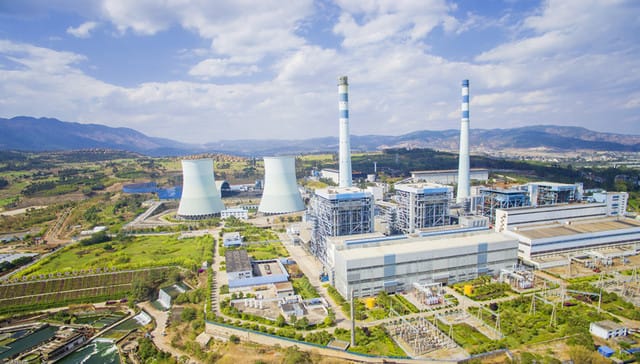
Just as the market was beginning to question if the blistering rally in power equipment stocks had run its course, J.P. Morgan has dropped a bombshell of a report. In a November 18, 2025, note titled "Super-cycle: A beginning or an end?", the bank argues that far from being over, the global power equipment super-cycle is merely in its "early-to-mid" stages. The driver? An insatiable, AI-led demand for electricity that is pushing the grid in developed markets to its breaking point.
While investors have piled into the theme, JPM contends that the market is still failing to price in several critical factors. Most notably, the bank highlights the explosive potential for Chinese industrial giants to successfully penetrate the lucrative and severely supply-constrained US market, a development that could reshape the competitive landscape for years to come.
AI's Insatiable Thirst Creates a "Key Bottleneck"
The core of JPM's thesis is the unprecedented strain on global power infrastructure, directly fueled by the AI revolution. The bank's analysts lay out the stark reality: the explosive growth of data centers is creating a chasm between power demand and available supply.
As the report states, "Our U.S. team forecasts ~100GW of new generation required to support data center power demand... until 28E, yet base-load power is tight (almost flattish growth, per EIA)." This has created a logistical nightmare, with "inter-connection queues for DCs reaching 3-7 years in certain DC clusters."
This structural deficit has granted immense pricing power to equipment manufacturers. Prices for essential components like transformers have surged over 60% since 2021 with "no signs of a plateau." The supply-demand imbalance is so severe that leading Asian players now boast order backlogs equivalent to 2.5 to 2.8 times their annual revenue, providing unparalleled earnings visibility well into 2028.
What The Market Hasn't Priced In: The China Factor
While the market has woken up to the general supply tightness, J.P. Morgan argues that several key catalysts remain underappreciated. The bank lists five "unpriced-in" factors, but one stands out for its geopolitical and economic implications: "Chinese companies successfully breaking into the US market."
For all the rhetoric about decoupling, the physical reality of grid construction may force a different outcome. With domestic US and European capacity expansion struggling to keep pace, the report implicitly suggests that American utilities and data center operators may have no choice but to look to high-quality, cost-competitive Chinese suppliers to meet their urgent needs.
JPM's analysts are putting their money where their mouth is, issuing a massive upgrade on a key Chinese player. They raised their price target on Sieyuan Electric by a stunning 50%, from RMB 120 to RMB 180. The rationale is explicit:
"We are raising our 2026–28E earnings estimates by ~10% on average, reflecting our expectation that the company’s exports will benefit over the longer term from the global power equipment supercycle, a potential ramp-up in U.S./datacenter market penetration, and sustained market share gains in China."
Sieyuan is not an isolated case. The bank also hiked its targets for other Chinese power equipment names, including Huaming Power Equipment and Nari Technology, signaling a broad-based conviction in their international prospects. The potential for these firms to capture even a small slice of the desperate US market represents a significant, and largely overlooked, source of upside.
A New Valuation Framework for a Long-Term Super-Cycle
Confronting the lofty valuations across the sector, JPM defends the multiples by proposing a new framework. The analysts argue that the extraordinary level of earnings security warrants looking far beyond traditional next-twelve-month metrics.
"With order backlog/revenue reaching 2.5-2.8x for leading Asian players, we see earnings visibility until 27-28E and hence we now benchmark 27E EPS in our valuation," the report explains.
This shift in perspective recasts power equipment from a cyclical industry into a long-duration secular growth story, much like the tech stocks it now enables. The AI boom cannot exist without a staggering amount of new power infrastructure, and building it will take the better part of a decade. JPM's analysis projects Sieyuan's revenue alone to grow from an estimated RMB 20.2 billion yuan (US$2.8 billion) in 2025 to over RMB 31.7 billion by 2027.
While Korean firms like HD Hyundai Electric have been the darlings of the rally so far, J.P. Morgan's latest report suggests the next leg of the super-cycle could be driven by the very companies Washington has sought to contain. As the US scrambles to build the electrical backbone for its AI ambitions, it may find that the most viable path runs through China.