
Laopu Gold’s Pricing Power Test: Decoupling from China’s Retail Malaise via Heritage Margins
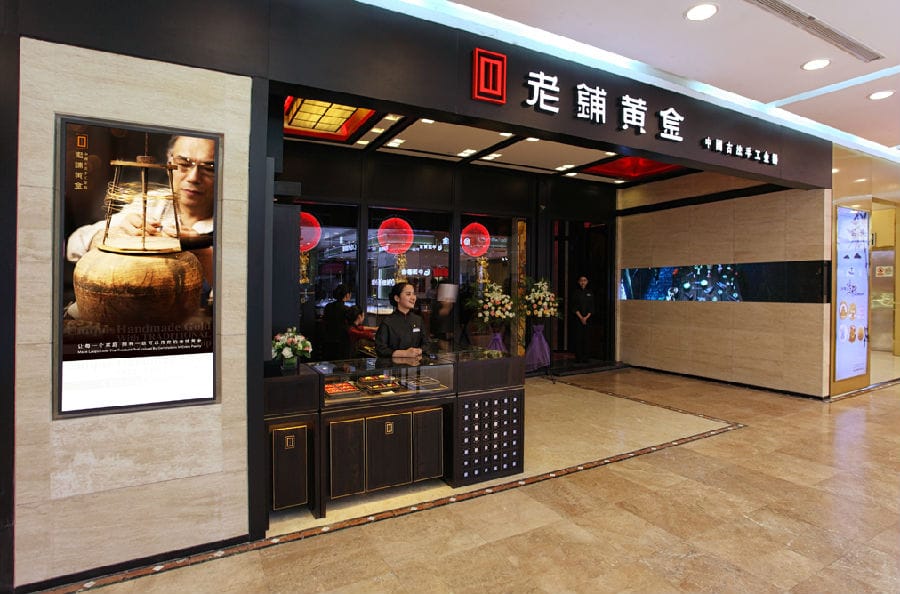
Laopu Gold (6181.HK) has signaled a critical divergence from China’s broader luxury slowdown, utilizing a successful absorption of October price hikes to project aggressive margin expansion through 2026. By effectively passing on rising spot gold costs to consumers without dampening demand, the "heritage gold" retailer has validated its high-premium, fixed-price business model ahead of the pivotal Lunar New Year sales window. This operational resilience suggests a structural shift in elite Chinese consumption behavior, where asset-heavy craftsmanship is increasingly favored over pure brand equity during periods of economic uncertainty.
Digesting the Premium: Consumer Acceptance Validates the Fixed-Price Pivot
The immediate market signal triggering Citi’s "30-Day Positive Catalyst Watch" is not merely the seasonal sales bump, but the confirmation of inelastic demand among Laopu’s clientele. Following a significant price adjustment in late October 2025, channel checks during the Christmas and New Year holidays indicated a full recovery in queue lengths and transaction volumes. This data point is critical: it demonstrates that the brand’s consumer base has digested the new pricing structure, allowing Gross Profit Margins (GPM) to recover above the 40% threshold in November and December.
This margin resilience provides a buffer against the volatility of raw material costs. Unlike mass-market peers that rely heavily on weight-based pricing, Laopu’s reliance on a fixed-price model for its "heritage" pieces allows for distinct pricing power. With revenue projected to hit RMB 27.6 billion in 2025—a staggering 224% year-over-year increase—the company is effectively converting inventory turnover into accelerated profitability. The expectation that demand will sustain momentum into the Chinese New Year (CNY) suggests that the "consumption trade-down" narrative affecting broader Chinese retail applies less severely to the hard-luxury segment where products are perceived as stores of value.
Monetizing Heritage: Operating Leverage Against a Volatile Gold Spot
Laopu’s performance must be contextualized within a shifting industry landscape. Major competitors, including Chow Tai Fook and Luk Fook, also initiated price adjustments for fixed-price gold products in December. This industry-wide move normalized higher price points, inadvertently supporting Laopu’s positioning. However, Laopu’s distinct advantage lies in its store economics. The brand commands leading per-store sales exceeding RMB 500 million annually, driven by high average ticket sizes north of RMB 50,000.
This unit economics advantage translates directly to the bottom line as the company scales. Citi’s revised outlook models a Net Profit growth of 224% in 2025 (to RMB 4.8bn) and a further 47% growth in 2026 (to RMB 7.0bn). The operational leverage is evident: as revenue scales, the improved GPM of roughly 38.5% forecasted for 2026 creates a compounding effect on earnings. The ability to execute 2-3 price adjustments annually allows management to offset rolling average gold purchase costs and VAT policy changes, maintaining a spread that pure-play bullion retailers struggle to match.
Valuation Disconnect and the 2026 Expansion Trajectory
Despite the robust fundamental metrics, a valuation disconnect persists. Laopu Gold currently trades at approximately 14.1x 2026E P/E, a sharp discount compared to global luxury peers trading closer to 26x. This gap implies that the market has priced in significant execution risk regarding China’s macroeconomic recovery, potentially overlooking Laopu’s specific growth vectors.
Citi’s target price of HK$1,119 suggests an upside of nearly 80%, predicated on the belief that elevated profitability is sustainable through 2026. The thesis rests on a dual engine: 10% Same Store Sales Growth (SSSG) combined with aggressive footprint expansion. By moving beyond its boutique origins into a broader network, Laopu is testing the scalability of the "scholar’s study" retail concept. If the brand can maintain its 40%+ gross margins while expanding its physical presence, the stock is poised for a re-rating that aligns it more closely with luxury houses rather than traditional jewelry retailers.
Liquidity Risks and the Sustainability of the 'Safe Haven' Premium
While the short-term catalyst is potent, the long-term investment case faces structural headwinds. The model relies heavily on the continued perception of "heritage gold" as an investable asset class. Should gold prices plateau or decline rapidly, the psychological urgency for consumers to "buy now" may dissipate, exposing the high fixed premiums to scrutiny. Furthermore, the brand’s aggressive 224% revenue growth assumption for 2025 creates a high base effect; any deceleration in the Chinese property or equity markets could curtail the discretionary spending power of the High Net Worth Individuals (HNWIs) that constitute Laopu’s core demographic. The risk is not just operational but macro-prudential: if the "guilt-free" consumption of gold jewelry loses its luster amid a deeper deflationary spiral, Laopu’s high inventory levels could turn from assets into liabilities.
By ChinaBiz Insider Analysis Desk