
Leapmotor Leads November Deliveries as XPeng, NIO Slip and Li Auto Gains
China’s new‑energy vehicle start‑ups posted another record month in November, underscoring a deepening split between market leaders and laggards as Leapmotor Technology extended its lead and Zeekr Intelligent Technology emerged as the standout growth story.
Leapmotor delivered 70,327 vehicles in November, its second straight month above the 70,000 mark and more than 75% higher than a year earlier, cementing its position at the top of the new‑EV maker ranking. The company has now recorded nine consecutive months of strong growth and on November 15 said its cumulative sales this year had exceeded 500,000 units, reaching its 2025 volume target ahead of schedule.
The performance divergence among the traditional trio of XPeng, NIO and Li Auto widened. XPeng’s November deliveries fell 12.6% from October to 36,728 units, while NIO’s slipped 10.2% to 36,275, even as both maintained robust year‑on‑year growth. Li Auto bucked the trend with a 4.5% month‑on‑month increase to 33,181 units.
Zeekr’s deliveries jumped 34.6% from October to a record 28,843 units, the fastest growth among mid‑tier players and the sharpest sequential gain on the list. The surge was fueled by the high‑end Zeekr 9X and the volume‑oriented Zeekr 001, helping Zeekr Intelligent Technology push combined Zeekr and Lynk & Co monthly deliveries above 60,000 units.
Among other brands, Voyah broke through the 20,000‑unit barrier for the first time with 20,005 deliveries, up 16.2% from October and 84% from a year earlier. Avatr and IM Motors also set new monthly records with 14,057 and 13,577 units respectively, though their sequential growth remained modest.
Leapmotor targets one million‑unit push
Leapmotor’s November strength was matched by improving financial metrics. In the third quarter, the company reported revenue of RMB 19.45 billion (US$2.7 billion), up 97.3% from the same period a year earlier, with gross margin rising to 14.5%. Operating and free cash flow remained positive, signaling improving scale efficiency in a market defined by intense price competition.
Chairman and CEO Zhu Jiangming said Leapmotor will “go all out” to challenge one million annual sales in 2026, effectively aiming to double volumes again within about two years. Hitting that target would move the company closer to the industry’s first tier by scale in China’s crowded EV market.
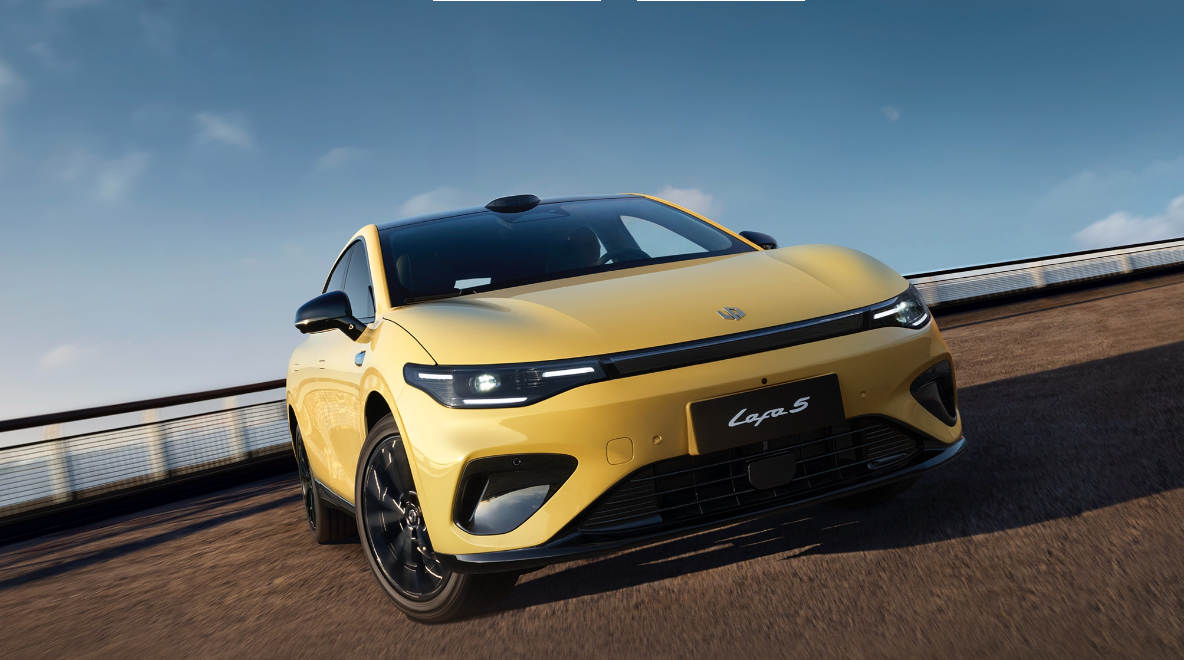
On the product side, the Leapmotor A10 made its debut at the Guangzhou auto show on November 21, rounding out the company’s A, B, C and D series lineup. A week later, the brand launched its Lafa5 “sporty fastback” model with a limited‑time starting price of RMB 92,800 through December 31, pushing more aggressively into the mass market with sub‑RMB 100,000 pricing.
XPeng, NIO soften on a monthly basis, Li Auto edges higher
XPeng’s 36,728 November deliveries were still 19% higher than a year earlier, and its January‑to‑November total reached 391,937 units, up 156% year on year. But the 12.6% month‑on‑month drop illustrates the volatility of demand at a time when competitors are stepping up promotions ahead of year‑end.
The MPV‑style XPeng X9 was a rare bright spot, with deliveries surging 161% from October. The newly launched X9 Super Range‑Extended version, priced from RMB 309,800, set a new single‑day order record for the model within an hour of launch, with northern China accounting for more than half of new orders. XPeng is offering a purchase‑tax subsidy of up to RMB 15,000 on orders placed by December 31 to pull demand forward.
XPeng’s MONA M03 remained the top‑selling A‑segment pure electric sedan in November, while the new XPeng P7 has been particularly popular among owners of the first‑generation model. The company plans to upgrade its signature gold badge from 18K to 24K gold and start distribution to qualifying users on November 25, 2025, in a bid to reinforce brand loyalty.
NIO delivered 36,275 vehicles in November, a 76.3% year‑on‑year rise, with the main NIO brand, the mass‑market Onvo (乐道) and the compact Firefly (萤火虫) contributing 18,393, 11,794 and 6,088 units respectively. The company’s cumulative deliveries have reached 949,457 units, putting it on the cusp of the one‑million‑vehicle milestone. Management is targeting more than 120,000 deliveries in the fourth quarter, which would mark a new record.
The revamped ES8 SUV has been a standout for the core NIO brand, reaching 20,000 deliveries just 70 days after hand‑over began on September 21 and setting the fastest pace for any pure EV priced above RMB 400,000 to cross that level. Production and deliveries of the new ES8 are set to ramp up further in December.
Onvo, supported by the L90 SUV, delivered 11,794 units in November, up 132.1% from a year earlier, lifting the brand’s average transaction price to around RMB 260,000 and placing it firmly in the first tier of new‑EV brands by pricing.
The limited‑run Onvo L90 Black Knight edition, capped at 999 units and offered in both six‑ and seven‑seat layouts, is priced at RMB 306,800 for outright purchase, or RMB 220,800 with NIO’s battery‑as‑a‑service model. Deliveries are due to start in early December.
Firefly’s 6,088 November deliveries marked its fourth straight monthly record and pushed it past the 30,000‑unit cumulative mark, reinforcing its position in China’s premium small‑car segment.
Li Auto delivered 33,181 vehicles in November, bringing its historical cumulative deliveries to 1,495,969 by November 30 and underscoring its position as one of the few new‑energy start‑ups with over one million vehicles on the road. CEO Li Xiang said combined orders for the pure‑electric Li L6 and Li L8 SUVs have surpassed 100,000 units.
To address production bottlenecks, Li Auto has introduced a dual‑supplier strategy for Li L6 battery packs and expects monthly production capacity for the model to reach 20,000 units early next year, which would give it room to grow volumes by roughly 60% from current levels if demand holds.
A new software update, OTA 8.1, is scheduled for early December and will enhance the company’s VLA driving model, in‑car AI assistant and charging and climate‑control functions, as Li Auto leans on software to differentiate in a crowded SUV segment.
Zeekr’s two‑car push reshapes mid‑tier competition
Zeekr’s November jump to 28,843 deliveries marked its best month yet and the strongest sequential growth rate among the mid‑pack brands. The flagship Zeekr 9X, with a starting price of RMB 465,900, delivered more than 10,000 units in its first month on the market and achieved an average selling price of RMB 538,000, placing it firmly in the upper tier of China’s premium new‑energy segment.
The Zeekr 001 continued to act as the brand’s volume backbone, sustaining leadership in the mid‑to‑large pure‑electric sedan category. Together, the two models underpinned Zeekr Technology Group’s “premium plus mainstream” dual‑brand strategy with Lynk & Co, which pushed combined deliveries above 60,000 vehicles in November and illustrated growing market acceptance of its high‑low portfolio.
Voyah breaks 20,000 mark as state‑backed brands gain traction
Voyah’s 20,005 November deliveries made it the first state‑owned high‑end new‑energy brand in China to cross 300,000 cumulative sales, according to Chairman and General Manager Lu Fang. The company’s latest performance suggests its repositioning and channel overhaul are starting to gain traction after a prolonged period of slow growth.
Sales of the new Voyah FREE and the Voyah Dreamer MPV drove much of the recent momentum. The brand is also expanding its premium line‑up, with the Voyah Taishan drawing strong orders at launch, the Dreamer Shanhe edition pushing four‑seat premium MPVs further up‑market, and the Voyah Chasing Light L sedan, due to be officially launched on December 10, set to target the luxury sedan segment.
Avatr delivered 14,057 vehicles in November, a 4.1% rise from October and a 21% increase from a year earlier, while IM achieved 13,577 deliveries, up 3.2% month on month. Both brands set new records despite relatively modest sequential gains, suggesting a gradual but steady consolidation of their customer base in the high‑end and technology‑focused niches.
Across the segment, leading new‑energy brands leveraged scale and broader product line‑ups to capture a larger share of November demand, pushing market concentration higher. Mid‑tier players, particularly Zeekr and Voyah, used sharper product positioning and differentiated models to accelerate their catch‑up, effectively executing “overtaking on the curve” in select sub‑segments.
December is set to be a decisive month as manufacturers move to close the books on 2025. Many are expected to step up marketing campaigns and increase terminal discounts to hit full‑year volume targets, which could fuel another short‑term spike in registrations but also keep pricing pressure elevated heading into the new year.
For investors, the latest data highlight an increasingly polarized landscape, where a handful of scale players and agile mid‑tier challengers look better positioned to absorb the cost of aggressive promotions and sustain growth into 2026.