
Li Auto's Margin Collapse Exposes Strategic Overreach as EV Price War Deepens
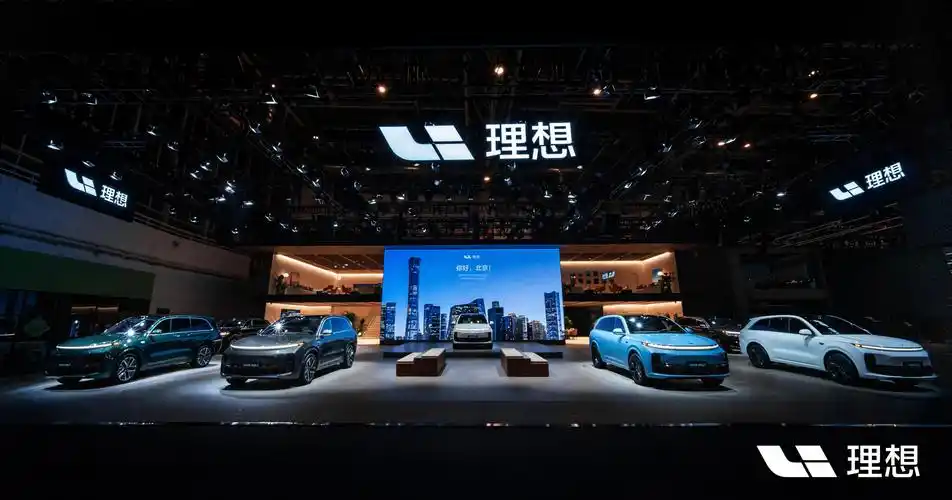
Li Auto posted its worst vehicle gross margin in years during Q1 2026, swinging to a RMB 3 billion (US$417 million) operating loss as a brutal combination of ASP erosion and rising unit costs overwhelmed cost-cutting efforts — raising pointed questions about whether the company's simultaneous bets on humanoid robotics and AI can be sustained while its core car business hemorrhages cash.
The results, disclosed on May 28 after Hong Kong market close, landed broadly in line with management's pre-warned guidance but still managed to disappoint on nearly every forward-looking metric. Q2 delivery guidance of 95,000–100,000 units came in 7–12% below the 108,000-unit consensus, implying average monthly sales of just 30,500–33,000 units in May and June — a sequential decline from April's 34,000 deliveries despite the May 15 launch of the flagship new-generation L9. The market read the sub-consensus guidance as a tacit admission that the refreshed L9 is generating tepid order momentum, and that the backlog for the bestselling i6 electric model is being consumed faster than new demand is materializing.
Margin Cliff Reveals the True Cost of Chasing Volume
The headline number that shook investors: vehicle gross margin collapsed 10.7 percentage points quarter-on-quarter to just 6.1% in Q1 2026, down from 16.8% in Q4 2025. Management had pre-guided approximately 5%, so the 6.1% print was technically a 1-point beat — but the directional severity remains stark for a company that once comfortably operated above a self-described "healthy" 20% vehicle margin threshold.
The margin implosion was a double squeeze. On the revenue side, average selling price (ASP) fell a further RMB 24,000 quarter-on-quarter to RMB 226,000 (US$31,400) — missing the RMB 234,000 consensus by RMB 8,000. Two structural forces drove the ASP decline: the low-priced Li i6 pure-electric SUV surged to roughly 60% of total deliveries from a much lower base, while the high-ticket Mega MPV shrank to approximately 1.4% of the mix. Simultaneously, Li Auto widened discounts on its L-series extended-range lineup — L6 at RMB 36,000 off, L7/L8 at RMB 45,000 off, and L9 at RMB 50,000 off — to defend market share against a wave of competing large extended-range SUVs targeting the RMB 250,000–350,000 segment.
On the cost side, unit cost rose RMB 5,000 sequentially to RMB 213,000 despite the higher share of lower-priced i6 units. Three factors compounded: a 13% sequential volume decline to 95,142 units reduced scale leverage and lifted per-unit depreciation and amortization; upstream NAND flash and battery raw material prices increased, management estimated a roughly 3-percentage-point drag on i6 gross margin alone; and Li Auto absorbed approximately RMB 15,000 per qualifying i6 unit in purchase-tax subsidy top-ups for customers who locked orders before October 31, 2025 and took delivery in 2026. The net result: gross profit per vehicle fell to approximately RMB 14,000 (US$1,944) — near a historical low — versus RMB 42,000 in Q4 2025.
Operating Loss Deepens as Volume Leverage Fails to Activate
Total Q1 revenue came in at RMB 23.0 billion (US$3.19 billion), down 11.4% year-on-year from RMB 26.0 billion in the prior-year period. Other revenue — charging network, accessories and services — grew 16% year-on-year to RMB 1.45 billion, a relative bright spot underpinned by a rising installed base.
Operating loss widened to negative RMB 3.0 billion (US$417 million), representing a RMB 2.55 billion sequential deterioration. Free cash flow turned sharply negative at RMB -7.4 billion (US$1.03 billion), driven by operating losses and a reduction in accounts payable.
Management exercised some discipline on operating expenses: R&D spending fell RMB 300 million sequentially to RMB 2.72 billion (US$378 million), while selling, general and administrative (SG&A) expenses declined RMB 600 million to RMB 2.05 billion (US$285 million), aided by the closure of 31 retail centers, 9 service centers, and a roughly 15% reduction in frontline sales headcount. However, these savings were insufficient to offset the deterioration in revenue and margins.
Q2 Guidance Signals Recovery Remains Partial, Not Structural
Management guided Q2 vehicle revenue at RMB 24.1–25.4 billion (US$3.35–3.53 billion), implying an implied ASP of approximately RMB 238,000 — a RMB 12,000 sequential recovery but still RMB 7,000 below the RMB 245,000 consensus. The gap suggests the new L9, priced from RMB 459,800 for the Ultra trim and RMB 509,800 for the Livis flagship variant, has not yet generated sufficient order density to meaningfully lift the company-wide average price.
The more constructive signal is on margin: management guided Q2 vehicle gross margin to recover to approximately 10% as new L9 deliveries ramp and old-model clearance costs fade. That would represent meaningful sequential improvement, but would still leave the company operating at half its historical 20% benchmark. Full recovery to that level appears unlikely before 2027 under any base-case scenario.
Product Refresh Cycle Bets on "More Config, Same Price" Logic
Li Auto's 2026 product strategy rests on a "value-add without proportional price increase" framework across the L-series. The new L9 exemplifies the approach: standard fitment of a 72.7 kWh 5C fast-charge battery pack (CLTC pure-EV range of 420 km, up 50% versus the outgoing model), a third-generation in-house extended-range generator reducing WLTC fuel consumption to 6.3 L/100 km from 7.6 L, and — most strategically significant — the debut of the proprietary Mach M100 chip built on a 5nm process node, delivering 2,560 TOPS of compute in a dual-chip configuration. The L9 Livis also debuts the Mach VLA (Vision-Language-Action) large model and a fully drive-by-wire active chassis integrating steer-by-wire, rear-wheel steering, 800V active suspension and electromechanical braking.
The remaining L-series refresh follows in sequence: a new L8 five-seat flagship targeting Q3 delivery with a 115 kW generator and 72.7 kWh battery; the L7 large six-seater positioned at approximately RMB 300,000 shortly after; the L6 large five-seater in Q4 adding a 51 kWh battery option; and the i9 full-size pure-electric SUV flagship in H2 2026 as the brand's technological showcase. SKU consolidation — from four product lines to two (flagship and premium) — aims to reduce internal cannibalization and improve configurability at entry price points.
AI Ambition Stretches Balance Sheet as Core Business Bleeds
Li Auto guided full-year 2026 R&D spending of approximately RMB 12 billion (US$1.67 billion), up about 6% from RMB 11.3 billion in 2025. Roughly 60% of AI spend targets infrastructure (foundation models, proprietary inference chips, operating systems, cloud and in-vehicle compute clusters); the remaining 40% funds productization including the "Li Tongxue" AI assistant, multimodal agents, intelligent manufacturing and autonomous driving.
The company has set a target of matching Tesla FSD v14's U.S. performance by H2 2026 and achieving L4 autonomous driving no later than 2028. It is also extending its research perimeter into spatial/humanoid robotics, though management acknowledged that mass commercial deployment of humanoid robots comparable to the early NEV ramp of 2010–2015 remains at least three years away.
The strategic tension is visible in the numbers. Li Auto ended Q1 with RMB 91.7 billion (US12.7 billion) in cash and equivalents (net cash: RMB 84.3 billion), providing a substantial liquidity buffer. But with free cash flow running at negative RMB 7.4 billion in a single quarter and the company simultaneously funding vehicle R&D, AI infrastructure, robotics exploration and a US1 billion share buyback program (US$139.7 million completed as of May 26), the runway for sustained losses is finite. Analyst consensus, including Dolphin Research, projects full-year 2026 deliveries at 447,000–467,000 units — a 10–15% year-on-year increase — meaningfully below management's official target of more than 20% growth (approximately 480,000 units).
At the mid-point of that consensus range, full-year revenue is estimated at RMB 113.7–118.5 billion (US$15.8–16.5 billion), with a blended ASP of RMB 230,000–245,000. Analysts note that current market capitalization already prices in much of the optionality from AI and robotics, leaving limited upside until the core vehicle business demonstrates a durable margin recovery.
Competitive Pressure Shows No Sign of Abating
The broader context is unforgiving. The RMB 250,000–350,000 extended-range SUV segment — Li Auto's historical stronghold — is now a crowded battlefield, with Huawei-backed AITO, SERES, Changan, Dongfeng and others all fielding large extended-range models. L-series sales fell approximately 64% year-on-year to roughly 32,000 units in Q1, with the i6 providing the volume bridge to keep total deliveries positive. That dynamic — a volume-sustaining but margin-diluting lower-priced model propping up a premium lineup under structural pressure — is not a stable equilibrium.
Unlike NIO and XPeng, which were forced into painful organizational and supply-chain restructuring by cash constraints, Li Auto's relatively comfortable balance sheet has, paradoxically, reduced the urgency of hard internal reform. The risk, as analysts have noted, is that financial resilience becomes a substitute for strategic discipline — enabling the company to expand into robots and AI before it has resolved the fundamental competitive dynamics in its core business.
Related Coverage:
Li Auto's Margin Slump Triggers Strategic Pivot Toward AI Chips and Robotics