
Low Margins, High Volume: How Leapmotor Built a Growth Engine Against China’s EV Headwinds
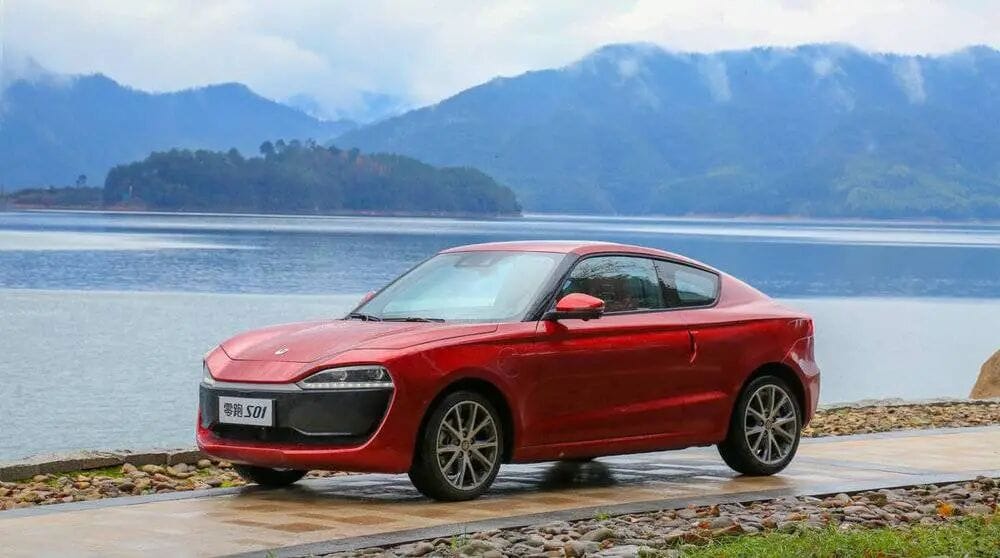
As China’s electric vehicle (EV) industry grapples with slowing demand growth and shrinking margins, Leapmotor has emerged as a notable outlier. In a year marked by intense competition and mounting pressure across the sector, the Hangzhou-based automaker has delivered robust sales growth while maintaining profitability—without resorting to aggressive price cuts or high-profile marketing battles.
This article is based on an in-depth interview conducted by Huxiu Auto with Zhu Jiangming, founder and chairman of Leapmotor, as the company marks its 10th anniversary in 2025. The discussion offers a rare look into Leapmotor’s long-term strategy, its emphasis on cost-based pricing and integrated innovation, and how these choices have shaped its performance amid China’s fiercely competitive EV market.
Leapmotor: Demystifying the EV Industry Through Value and Integration
At the end of 2025, as previously summarized by Huxiu Automotive, the failure of car companies to meet annual sales targets is more prevalent than ever, and industry profits have dropped to their lowest levels.
Under this immense pressure, Leapmotor—an EV startup that began a decade ago—has achieved results this year that command respect:
- Market Position: Cumulative deliveries from January to November reached 536,000 units. As a single brand, it ranks fifth in the industry, trailing only "Big Auto" brands like BYD, Geely Galaxy, SAIC-GM-Wuling, and Tesla.
- Consistent Growth: Monthly deliveries have grown steadily. Except for February (impacted by the Spring Festival), every month saw positive month-on-month growth. November deliveries surged to 70,327 units, with a cumulative year-on-year increase of 92% for the first 11 months.
- Balanced Portfolio: Most models maintained year-on-year growth in 2025, showing a "synchronized advancement" across the lineup.
- Financial Health: Leapmotor turned net profit positive in the first half of 2025 and achieved consecutive quarterly profits in Q3. This year’s massive sales growth will inevitably drive further increases in both gross and net margins.
Remarkably, Leapmotor paid almost no "extra price" for this volume. Unlike peers who faced backlash for "sacrificing price for volume" or engaged in public disputes with competitors, Leapmotor has maintained a low-profile, "silent success" posture, spending far less on marketing than its rivals.
Leapmotor attributes its "anti-trend" performance to two factors: a "high-spec, low-price" competitive strategy and technical innovation driven by "Full-Domain Self-Research" for cost control. While these reasons align with basic manufacturing principles, they leave a deeper question: why is Leapmotor the only one willing to execute such a "plain" strategy in China's white-hot market?
On the 10th anniversary of Leapmotor’s founding, Huxiu Automotive interviewed founder Zhu Jiangming. In his view, Leapmotor’s current operational certainty stems from strategic choices made a decade ago:
- Mass Market Focus: Targeting the broadest consumer base rather than pursuing a niche, high-end brand status.
- Cost-Based Pricing: Selling with low margins to gain competitiveness in the mass market.
- Integrated Innovation: Controlling costs and ensuring performance through self-developed components and platform-based architectures.
This creates a flywheel: Low Cost → Competitive Pricing → High Volume → Scale Economies for Further Cost Control.
A rare kind of"predictability"
Huxiu:You previously said that you would give Leapmotor an 8 out of 10 for 2024.What score would you give for 2025?
Zhu Jiangming:Then I might add a little, maybe 8.5 points.
Huxiu:Where is this 0.5 point added?
Zhu Jiangming:More"predictable".
By the end of 2024,I dared to say that sales would double to 500,000 this year.Now, my foresight for 2026 is also growing stronger;I aim for 1 million.This isn't based on luck or optimism, but on genuine calculations and thorough preparation in all aspects—from product development to market positioning.This certainty is the most valuable asset.
Huxiu:When do you think this kind of"predictability"in business began to emerge?
Zhu Jiangming:That was indeed starting from 2025.Looking back now,when we looked at the forecast for 2024, we probably didn't feel that much certainty.
Huxiu:For an entrepreneur, this feeling is quite comfortable;you not only have a blueprint in mind, but also a clear roadmap.
Zhu Jiangming:The final route is still uncertain.When we went public in 2022,I said,"We have reached northern Shaanxi."Now it's like the end of the eight-year War of Resistance against Japan.
Huxiu:Having"predictability"is actually a result, but if we want to trace the cause, where does it come from?
Zhu Jiangming:If we're going to attribute the cause, we have to start from when Leapmotor was founded in 2015.We have consistently implemented some of the strategies we set in the early days, such as self-developed products across all areas, cost-based pricing, and product positioning that is"good but not expensive"and targets the mass market...
Huxiu:So Leapmotor's product strategy for electric vehicles is very similar to Xiaomi's entry into the mobile phone market?
Zhu Jiangming:In terms of cost-effectiveness, we seem to be about the same, but in the back-end chain, we do not rely on contract manufacturing.We hope to build a complete industrial chain of parts and vehicles, from raw materials to vehicle manufacturing.
I've studied many industries, and Uniqlo also focuses on design and sales, while other supply chains are external.But we want to integrate design, manufacturing, and supply chain into a complete, end-to-end system, without separating the two ends, and avoid relying on third-party OEMs.This will improve efficiency and reduce costs.
Huxiu:But Leapmotor also encountered some major setbacks and operational pressures in 2019 and in 2022 when you went public.At that time,you never doubted the path you set at the beginning of your business.
Zhu Jiangming:No.There were difficulties;Leapmotor has experienced difficult periods before.If we were to change our strategy or route,we should have cut those departments that directly conduct research and development around 2019,such as those related to batteries and cockpits.
But we persisted.Because only by consistently doing this can you possibly succeed.Toyota,the world's best traditional gasoline-powered car manufacturer,does exactly the same thing we do now.Almost everything in a Toyota car is made in-house;nothing is sourced externally,right?
If you easily change or adjust your strategy when faced with difficulties,you'll truly lose sight of the overall strategy.Instead of changing the strategy,adjust the pace.If sales are poor,slow down the pace,improve cost control,and strengthen product promotion.
But the path I initially envisioned has never wavered.This isn't a doubt about the route, just adjustments to the process.But if you ask if it was painful then, it certainly was,because you were facing the possibility that the startup might fail along the way.
Huxiu:At that time,you saw some shortcomings in Leapmotor and its team,right?
Zhu Jiangming:Our entire startup team originally had virtually no connection to cars(Note from Huxiu:The core founding members were basically brought out by Zhu Jiangming from Dahua Technology).Our senior management team has about 10 people,and only three of them had automotive backgrounds before Leapmotor(the heads of finance,operations,and supply chain,respectively).The rest—whether it's the heads of R&D or sales—are not in the automotive industry.
The automotive industry does have its own set of rules,both in terms of product and market,which we need to follow.We all come from B2B backgrounds and don't know how to do B2C.When we launched our first car,the marketing manager we hired wasn't originally from the automotive industry either.
(For our first car)We spent tens of millions of yuan to hold a launch event at the Water Cube,and then we didn't do any promotion.At the time,it wasn't that we didn't have the money,but that we had absolutely no experience and didn't know we needed to promote it.
However,excessive success for the first model might not be a good thing.It can easily lead to complacency and a false sense of invincibility.On the contrary,experiencing some setbacks in the early stages can help us to be more cautious and attentive in subsequent product planning,marketing,and pricing strategies.
This is why,starting with the T03,every model we've released has achieved considerable success.In terms of marketing,while we started at a lower level than many other emerging manufacturers in terms of understanding of automobiles,market grasp,and personal influence among users,we were already at a disadvantage compared to Leapmotor from the outset.
Huxiu:In the current C-end business,how would you rate your business capabilities?
Zhu Jiangming:It's still relatively basic,but I think I should be able to pass the minimum requirement now.
"Integrated innovation"is Leapmotor's killer feature
Huxiu:After ten years of entrepreneurship,Leapmotor has achieved annual sales of over 500,000 vehicles and sustained quarterly profitability,which can be considered a stage of success.In the fiercely competitive automotive industry,what"non-consensus"do you think Leapmotor has found to achieve this?
Zhu Jiangming:I think it's probably because I'm an engineer myself,so I use an engineer's mindset to look at products,product innovation,and judge industry trends.
Some of the emerging forces I just mentioned may have a stronger internet mindset,while I have a stronger traditional industry mindset.By traditional industry mindset,I mean that I place more emphasis on the"product".
Huxiu:But which emerging company wouldn't say it values"product"?Li Xiang,for example,is widely recognized as an outstanding"product manager"among emerging companies.
Zhu Jiangming:Yes,they are all talking about"products".They may emphasize"user experience"more,while I emphasize the"architecture"of the product.
Huxiu:How exactly do you mean it?
Zhu Jiangming:What Leapmotor values and excels at is"integrated innovation."Many car companies are now buying Leapmotor's cars to take them apart and see how we can achieve this price and still make a profit.
The main reason is that we have more integration than others."Integrated innovation"is not about making entirely new inventions,but about making products more effective through integration and optimization.
For example,the 8155 chip in our car was originally just a chip responsible for the cockpit.But we made it not only to support the three screens in the cockpit,but also to be responsible for the 360-degree surround view outside the car,and even used the DSP part in the 8155 to optimize the cockpit's sound tuning.We completely made the most of this chip.
We are now making good use of the 8295 automotive chip,because it has 20 TOPS of AI computing power.We are putting it into practice.The reason why Leapmotor has low costs is because of these small,meticulous efforts.
In the past,a vehicle typically contained multiple controller modules. Today,we are gradually reducing the number of these modules.We believe that the control system of future vehicles will be divided into two main parts:the upper layer is the"brain,"responsible for cockpit and intelligent driving control;the lower layer integrates all high-voltage and power-related functions,including electric drive,power supply,and thermal management systems.In the future,these functions will inevitably be integrated into a single whole.
Besides integrated innovation,another key advantage is our faster speed.Our fully self-developed,platform-based architecture allows us to quickly bring a technology to market.
Let me give you an example.For instance,800V silicon carbide high voltage(Note from Huxiu:800V silicon carbide high voltage,also known as 800VSiC,is an important technological trend in the field of new energy vehicles,which increases the working voltage of the entire vehicle's electrical system,providing faster charging speeds,higher system efficiency,smaller system size,and lighter wiring harnesses).This year,we have applied this technology to all our C-series products.
However,many other automakers,having used external technology and suppliers,would find it difficult to switch to 800V SiC.Switching to 800V involves many components:the battery pack,electric drive,compressor,and power supply all need to be replaced with 800V.If you have 10 models and all 10 need this change,the workload is enormous,and you'll have to deal with numerous suppliers.But we can replace all the components with 800V overnight.
Huxiu:Can't other automakers do this kind of integrated innovation?
Zhu Jiangming:It's very difficult.Why do I say that?Because it involves multiple professional fields.A company needs to master compressor technology,thermal management systems,power supply technology,and electric drive technology...There aren't many companies that can do all of these well at the same time.If you don't have the necessary capabilities,it's very difficult to truly make such a product.
Huxiu:What are the challenges or risks of adopting an integrated innovation model?
Zhu Jiangming:First of all,can you make your own products better in quality and at a lower cost than others?Can all your components be made sufficiently reliable?Your competitors are component companies in the market.They are all top performers who have emerged from the market and have so many car company customers.If you are only using them for your own purposes,then you are inherently inferior in terms of scale.This also means that you need to achieve a sufficient scale before your component costs can be on par with those of the suppliers in the market.
Secondly,you need to have sufficient production capacity reserves,right?If you have excess capacity,your overall costs may be higher;if you have insufficient capacity,you won't be able to supply complete vehicles.Managing the production capacity of all these components is a very big challenge.
Huxiu:Just to address the first point,how can Leapmotor compete with suppliers in the market?You don't have their scale,so how can you produce at the same cost as them?
Zhu Jiangming:Fortunately,we don't make traditional gasoline-powered vehicles.In 2015,the production and sales volume of new energy vehicles was only tens of thousands of units.Everyone was at a very basic level,the supplier system had not yet reached a certain scale,and the industrial chain was not yet complete.We started developing our own parts in sync with them,which made it possible for us to compete with them.
Huxiu:So how were you able to quickly go from being a complete novice in the automotive industry to being able to develop most of the parts yourself?
Zhu Jiangming:This is what I just mentioned.For the past 10 years,we have been doing this all along.Since 2015,the heads of our battery team,electric drive team,and electronics team have never changed.
Overall,the roles these managers play at Leapmotor are somewhat related to their previous experience at Dahua Technology.For example,the head of electric drive previously worked in the field of air conditioning compressors,which we now also manufacture;the head of battery previously focused on energy storage;and the head of vehicle assembly was formerly the head of industrial design at Dahua…
Design,materials,engineering,manufacturing,management…these are all things present in the security industry,and they also exist in the automotive industry.It's difficult for manufacturing to"step outside this framework."The automotive industry is often seen as a culmination of industrial achievements because it encompasses almost all related professional fields.
Moreover,for the team,switching industries has an advantage:the industry is like a blank sheet of paper for you,like a child.Your mindset is not easily solidified,you can think of anything,and you can come up with many unique ideas.
Dahua's development and Leapmotor's development share the same underlying logic:revolutionary transformation.Dahua's entry into the security industry was a revolution—from magnetic tape to hard disk,from the era of video recorders to the network era.Now,the automotive industry is also undergoing a revolution—from gasoline to electric.
In an era of revolutionary transformation,newcomers actually have opportunities.Established companies carry too heavy a historical burden.Over a century of accumulation and a century of brand recognition are both assets and liabilities.When the rules of the game change,sometimes"knowing everything"becomes a liability.
Huxiu:I understand.From our perspective as liberal arts students,security and automobiles are completely different industries.But from your perspective as engineers,from an engineering and product standpoint,they are not entirely unrelated.There is no insurmountable gap between them.
Zhu Jiangming:When we started Dahua,we were also building from scratch.It's all about making products.If I were to make athletic shoes today,I think I could probably succeed.Design, materials, engineering, manufacturing, management—all products are the same;you can't escape these fundamental elements.But what we need to improve is our understanding and insight into users and the market.
Can you achieve better quality than your competitors at the optimal cost?This capability transcends boundaries.
Huxiu:What are the similarities or differences between Leapmotor's integrated innovation and the vertical integration of traditional independent car companies(such as BYD)?
Zhu Jiangming:What we have in common is that everyone is developing and manufacturing many components.The difference is that Leapmotor will do more integration work,putting many things together,such as our Clover Central Integrated Electronic and Electrical Architecture,to achieve more extreme integration.
Huxiu:You have done a lot of self-developed and component manufacturing,and you are also exporting this capability to other manufacturers.Will technical services become the second growth curve for Leapmotor?
Zhu Jiangming:Currently,the scale of our business in this area is limited.One of our future plans is to export parts,including providing parts and technical support to our shareholders,partners,and strategic collaborators such as FAW.However,this is only a supplementary business;our core focus remains on expanding our vehicle production scale based on our own products.
Huxiu:So Leapmotor will always be a vehicle manufacturer,rather than transforming into a technology platform company?
Zhu Jiangming:Yes,we will always focus on the complete vehicle business,which is the foundation of our development.
Where does the high ROI of R&D come from?
Huxiu:How large is Leapmotor's R&D team now?
Zhu Jiangming:In 2024,when we had 5,000 R&D personnel,we took a group photo.Now we have more than 6,000 R&D personnel.Last year,we invested 3 billion yuan in R&D,and this year it may be 4 to 5 billion yuan.
Huxiu:Considering your self-developed R&D across the entire domain and your insistence on doing everything yourself,the ROI of this R&D is very high.How is Leapmotor able to achieve this?
Zhu Jiangming:I think there are a few points.First,as I just mentioned,we have persisted in accumulating knowledge day by day.Our direction has not changed in the past 10 years,and the entire management team is very stable.Second,we have always maintained a firm grasp on technology and have never taken any detours or made any unnecessary changes.That's why we have been able to achieve the current results with relatively little money.
Huxiu:But when you're walking,how do you know if it's a straight road or a winding road?
Zhu Jiangming:This relies on experience.The quality of electric vehicles mainly depends on the overall electronic and electrical architecture, software architecture, and platform architecture.Our team has accumulated a lot of experience in these areas.
Dahua has so many products;it looks like a hardware company,but behind it all is software.We have nearly 500 hardware engineers,but the software control team likely numbers 8,000 or more.Therefore,the capabilities we've accumulated can be quickly replicated and transferred.I believe this is a major reason why our R&D efforts at Leapmotor required less investment and yielded faster results.
Since its establishment in 1993,Dahua has been continuously developing embedded software for over thirty years.These products are not simply software or hardware,but rather the result of a close integration of software and hardware,covering communication devices,DVRs,and cameras,all of which are composed of architecture,hardware,and embedded software.
Taking a camera as an example,its front end consists of various embedded hardware and software,while the back end requires overall platform management.Essentially,a car is an embedded system with added wheels,drive system,or battery;the underlying technical logic is highly similar.
Huxiu:How much of Leapmotor's technological innovation was contributed by you personally?
Zhu Jiangming:I was mainly responsible for providing suggestions,including the previous CTC electronic chassis and the 8155,while they were responsible for implementation.
Huxiu:Have you come up with any exciting new ideas recently?
Zhu Jiangming:When I went to Munich,Germany two months ago,I had just come up with an idea about electric drive.I was so excited that I couldn't sleep all night,and the next morning I met with the person in charge of electric drive for breakfast and shared this idea with him.I think it's a very innovative idea,and we plan to achieve mass production by the end of next year.It will be a breakthrough technology.But I can't reveal the specifics yet.
I still prefer thinking about these things(laughs).
Huxiu:Does thinking about these specific engineering or technical matters have an impact on your higher-level strategic thinking?
Zhu Jiangming:The two are not contradictory.It is precisely because we have clarified our strategic goals for overseas markets,including plans for next year and a ten-year plan,that specific business needs arose.I am very familiar with all the solutions,which is why I was able to come up with the idea.
Huxiu:Leapmotor is driven by engineers or an engineering culture as a whole.
Zhu Jiangming:Yes,we emphasize numerical logic and quantifiable systems.It's important to emphasize that we don't use a traditional R&D model,but rather end-to-end product management.
Our company primarily employs a two-stage management approach:end-to-end product management and marketing management.End-to-end product management refers to the entire process from product planning to final delivery,including planning,R&D,engineering,and manufacturing,all overseen by a single responsible person.The marketing segment manages the entire product lifecycle,from marketing planning and product launch to delivery.The marketing team is involved from the product planning stage and uses the IPMS system(consistent with Huawei's processes)to ensure alignment across all stages.
Huxiu:What is the development process for each product?
Zhu Jiangming:We have a product planning department that is responsible for product planning.We will combine four major factors—macroeconomic factors,competitors'factors,our own factors,and technology—to position the product.Product planning will take 3-6 months to complete the preliminary positioning work before the product project is officially launched.
After the project is approved,it takes about 18 months to finally deliver the product to the user,with the complete cycle taking about 24 months.
Huxiu:Besides two-stage management and end-to-end product management,what other special management mechanisms does Leapmotor have to ensure efficiency?
Zhu Jiangming:We implement an annual mandatory elimination system for cadres(excluding grassroots employees),with an annual elimination rate of 10%.Currently,the system affects approximately four to five hundred people,covering all levels and departments,and requires cadres who manage more than ten people to be included.Elimination is not direct dismissal,but rather a demotion.Some eliminated cadres still have the opportunity to return to their positions after gaining experience.
This system has been implemented for three to four years,drawing on Huawei's management experience.Managers must be at the forefront,putting personal enjoyment last.Those who choose to assume managerial positions must strictly adhere to the company's requirements.
"In intelligent driving R&D,there is no first-mover advantage."
Huxiu:Do you think China's new energy vehicle industry will enter the"second half"by 2025?
Zhu Jiangming:The second half has begun.The penetration rate in November has exceeded 60%,which is faster than I expected.
Opinions differ regarding the upper limit of market penetration.Some believe it will stabilize at 70%or 80%,but I think there's a greater than 90%probability that it will approach 100%.
To clarify,I am not asserting that gasoline-powered cars will completely disappear in three years—such a statement would be taken out of context.I am emphasizing the trend in new user choices:the proportion of new energy vehicle purchases will increase significantly,as their product advantages have gained widespread recognition.
Furthermore,it should be noted that new energy vehicles refer not only to pure electric vehicles,but also to the two mainstream technologies of plug-in hybrid and range-extended electric vehicles.Traditional vehicles that rely entirely on gasoline and lack electric drive are expected to significantly reduce their proportion of new car purchases in three years.
Of course,phasing out existing gasoline-powered vehicles will take longer,possibly eight to ten years to complete gradually.This is a gradual process.The reduction in pure gasoline-powered vehicles will further accelerate the electrification process.
Huxiu:You seemed to have previously stated that"the second half will mainly depend on intelligentization."
Zhu Jiangming:Intelligentization is an important direction for future development,but it is not the only focus.Starting in 2024,we have significantly increased our resource investment.
Huxiu:Other manufacturers have been talking about investing in intelligent driving for years,so why did you only start to increase your investment significantly in 2024?
Zhu Jiangming:Because the technical roadmap was not clear at the time.The intelligent driving technology roadmap has evolved from high-precision maps to map-free solutions,and then to end-to-end models,and has now entered the VLA or world-wide model stage.Through the accumulation of each stage,the level and usability of support technology have continued to improve,but there is still a gap from the ideal state.
In this process,Leapmotor has been quite restrained.Our strategy is to pursue the highest return on investment,and to make the intelligent driving system"basically easy to use and basically usable".The investment and return in intelligent driving can be directly reflected in business returns.
However,we have been paying close attention to technological development.By 2024,the technological roadmap was almost clear,and end-to-end integration should be the main direction of current development.Only then did we begin to systematically promote intelligent driving.
Huxiu:You're quite shrewd,letting the industry test it out before you step in.
Zhu Jiangming:We(our team)started working on AI very early.Dahua Technology started working on license plate recognition technology before 2008 or 2009,with an initial recognition rate of only 60%to 70%.It wasn't until 2012 or 2013,with the advent of deep learning technology,that it reached over 95%...So,we got involved early,but you don't know when it will truly be realized and applied.Similarly,I think intelligent driving for automobiles will also require a relatively long development process.
To give another example,Dahua wasn't the earliest entrant in the facial recognition field;the"Four Little Dragons"of AI performed much better back then.However,it was Dahua and Hikvision that ultimately achieved commercial success.This illustrates that a single algorithm or device is unlikely to succeed—the algorithm needs to be implemented in devices,the devices need to be integrated into solutions,and the solutions need to gain customer trust.This process is lengthy,and ultimately,those who succeed may not be the earliest adopters in terms of technology.
I think there are patterns to follow(from invention to implementation of technology).Ultimately,it all comes down to models.For a technology to be applied maturely,it's probably just a matter of breaking through that final layer of paper.
Huxiu:So you think there is no first-mover advantage in investing in intelligent driving?
Zhu Jiangming:Currently,intelligent driving systems can still occasionally differentiate between high and low performance(because the level changes too rapidly),but let's take mobile phones as an example.Major manufacturers often emphasize that their mobile phones have the best photo quality,even capable of photographing the moon and stars.However,if you put photos taken by flagship phones from different manufacturers side by side,it's difficult for the average person to distinguish the differences.
Similarly,in the next year or two,if different intelligent driving algorithms are installed on the same car,users will likely find it difficult to distinguish which manufacturer these algorithms come from while driving.
Huxiu:However,users can still perceive the differences in the level of intelligent assisted driving.
Zhu Jiangming:We are all still in the process of catching up.I said three months ago that the industry rankings were completely different from today;and in another three months,the rankings may be different again.
Therefore,I don't believe there is an absolute first-mover advantage in this field.Users may currently feel that certain products perform well,or even consider them the best,but the final result may not be so.Besides the model itself,different companies may differ in fundamental capabilities such as compliance and security controls,especially in terms of fallback mechanisms.These differences do exist,but in the long run,we believe they will not become decisive gaps.
Huxiu:So how do you assess the current level of Leapmotor's intelligent assisted driving?
Zhu Jiangming:Leapmotor's advantage lies in its balance.From the perspective of the overall solution,we cover the entire process from hardware,drivers,software to algorithms.This end-to-end capability is our most complete part.
We previously developed our own chips(Dahua),accumulating technical experience across the entire supply chain,which gives us a certain advantage.At the algorithm level,we are also rapidly approaching the level of the industry's top tier.
Huxiu:Are your new investments in intelligent driving mainly directed towards algorithms?
Zhu Jiangming:Yes.We are increasing our investment in manpower and computing power.In fact,our computing power in 2025 has already doubled compared to 2024.And by 2026,we plan to double it again based on all the computing power we had in 2025 and earlier,achieving exponential growth.
Huxiu:Has Leapmotor poached any top technical experts from the industry?
Zhu Jiangming:We still focus on self-growth.
Huxiu:Why not just poach top driving experts from outside?
Zhu Jiangming:We don't poach"top talents,"we poach"young talents,"or even"tiny talents"(laughs).I think we still need to cultivate them from scratch.It's a gradual process,not the final goal.The key is continuous follow-up.You don't know which of the"top talents"out there is the best,right?Today this one is good,tomorrow that one is good;there's no stable evaluation yet.So,when it comes to intelligent driving,we need to seize the moment when it truly becomes widespread and not miss that opportunity.
Huxiu:What are your thoughts on the impact of the continuous upgrading of intelligent driving technology on the automotive industry—what structural changes will occur in the whole vehicle industry and in the vehicle product itself?
Zhu Jiangming:I think that as autonomous driving technology matures,it will likely develop in two directions in the future:one is a shared mobility model like RoboTaxi,and the other is creating more fully functional mobile spaces.Currently,in-vehicle space is indeed limited.A true mobile space should have complete functionality.
Huxiu:Regarding the second point,haven't Chinese manufacturers already made"refrigerators,color TVs,and large sofas"?
Zhu Jiangming:The"house"you mentioned is still too small;it's more like an"affordable housing"unit.
Huxiu:So you're talking about a"luxury RV"?Could you describe the product you're thinking of in more detail?
Zhu Jiangming:Let's wait until our product comes out before we talk about it(laughs).At least it will be quite different from the product we see now.
Huxiu:So Leapmotor is already conducting preliminary research on related products?
Zhu Jiangming:We did conduct preliminary research.
Huxiu:What preparations has Leapmotor made to cope with the impact of L4 autonomous driving represented by Robotaxi?
Zhu Jiangming:There's no rush yet;this process will take a long time.The probability of achieving Level 4 autonomous driving(i.e.,Robotaxi)is very low;it's just one possible future form,not the whole picture.The entire development path is quite complex,especially globally,where many regions are still in the early stages of electrification.
"Building a high-premium brand is very difficult."
Huxiu:Even today,there are still new players pursuing the luxury market,but Leapmotor never tells such a story and resolutely chooses the mass market.What is the basis for this idea?
Zhu Jiangming:Taking the television market as an example,in the past,high-end brands like Sony were seen as status symbols,but now even wealthy families don't necessarily have to choose Sony;ordinary televisions can meet their needs just as well.A similar trend may emerge in the automotive industry in the future.As cars become increasingly similar to electronic products,the influence of brand premium on consumer decisions will weaken.
In the future,while some consumers may still choose high-end brands like Sony and be willing to spend tens of thousands of yuan,the proportion of this consumer group is expected to gradually decrease.This demand will likely only exist among a very small group of gamers.
Therefore,it will be very difficult to build a high-premium brand in the electric vehicle industry,and these things will gradually fade away in the future.
Huxiu:You once said that Leapmotor is"the Uniqlo of the automotive industry".Is this an accurate comparison or explanation?
Zhu Jiangming:Partially accurate.Our positioning is to ensure quality materials and components while catering to the mass market.However,the difference lies in the fact that Uniqlo currently lacks a higher-end product line,such as using premium fabrics costing two or three thousand yuan or providing higher-quality products.Our next goal is to introduce"high-end categories"similar to Zegna or Chanel into Uniqlo,but the prices will only be slightly higher than existing products,not reaching the high prices of luxury brands.
Huxiu:However,in the so-called high-end price range,for example,when consumers have a budget of over 300,000 yuan to buy a car,their consumption psychology and demands may have some other demands beyond the product itself,which are quite different from the psychology of consumers with a budget of 100,000 yuan.As you said,perhaps in the long run,everyone's intelligent driving experience will be similar.At that time,will manufacturers with brand premium capabilities have an advantage?
Zhu Jiangming:That might have been the case before,but gradually...like the TV example I gave,now even people with a little spending power can't afford to spend ten or twenty thousand yuan on a TV.Some people might still be willing to spend tens of thousands of yuan on a Sony,but that proportion is getting smaller and smaller.
Huxiu:After that,will cars only be about reliability and quality,and will the emotional connection between the brand and the user be gone,and the differentiation between brands also be gone?
Zhu Jiangming:A decrease in brand premium does not necessarily mean the disappearance of brand links.Take Uniqlo for example;it can still be loved by many consumers and even be very fashionable.
Every brand has its own specific approach.It's impossible for every brand to be 100%like Leapmotor.Perhaps if we create"Uniqlo",someone else will create"Chanel".
Huxiu:Can you understand why Leapmotor doesn't intend to provide emotional value to users?
Zhu Jiangming:Yes,we won't offer it proactively;we only offer good products.But if consumers like Leapmotor's products,and this creates emotional value,that's also possible.
Huxiu:This is exactly like your temperament as engineers—just that"tough."But is Leapmotor's latest coupe,the Lafa5,a kind of emotional experiment?
Zhu Jiangming:The Lafa series was mainly designed to make the products more youthful.When it was launched,we set the pre-sale price at just over 100,000 yuan,but many users directly"advised"us to lower the price to below 100,000 yuan.We eventually reduced the price by several thousand yuan and launched it for just over 90,000 yuan.
Huxiu:How are Leapmotor's"prices"determined?
Zhu Jiangming:Our product gross profit margin is around 14%to 15%,and we're no longer pursuing higher margins.For example,the final selling price of the Lafa5 will definitely result in a lower gross profit margin than 15%.Why 15%?For many years,during the era of gasoline-powered vehicles,this was basically the average gross profit margin for domestic brand gasoline vehicles.We've maintained this level for two or three years now.Previously,we had negative gross profit margins,but as our scale increased,the gross profit margin turned positive,and now it's at 14%to 15%,which we expect to maintain in the future.
We believe in maintaining reasonable profits,but we don't pursue excessively high profits.Our goal is for each product to be a high-volume seller.
Huxiu:Leapmotor's cost-based pricing model for consumers places high demands on its overall cost control.For example,is Leapmotor's insistence on concentrating its production capacity in Zhejiang solely due to cost considerations?
Zhu Jiangming:Only in this way can costs continue to decrease and economies of scale gradually emerge.Jinhua,Hangzhou,and Huzhou in Zhejiang—these are our manufacturing bases,and this will remain unchanged for at least the next ten years.Of course,overseas business also needs to promote localization.Centralized layout brings multiple advantages,such as more efficient personnel allocation and closer supply chain collaboration.
The automotive industry is currently highly competitive.If production is decentralized,the cost of material transportation and packaging alone would be at least several thousand yuan.For a car priced at 60,000 yuan,the gross profit margin is about 15%,or 9,000 yuan.If 1,000 yuan can be saved from the supply chain,the increase in profit will be significant.
Regarding investments in automation,we require a payback period of three years.This is because production automation requires capital investment;if automation is used to replace manual labor and reduce labor costs,it's essential to ensure a manageable return on investment cycle.
"I don't plan to retire,but I will gradually relinquish authority."
Huxiu:You must be the oldest CEO among the new generation of startups?
Zhu Jiangming:Yes,but I looked into it,and I was born in 1967.Actually,among all car company CEOs,this is the golden age for a car company CEO.There are some older than me and some younger than me;I'm in the middle.So I think my mindset is probably also at a"middle"level.
Huxiu:So you have high expectations for your time at Leapmotor and don't think about retirement.
Zhu Jiangming:Many entrepreneurs talk about"retreating,"but in reality,they haven't.If"retreating"means minimizing one's involvement,that's something to consider,but what needs to be retained is still something one needs to consider in terms of direction.
I think I need to gradually delegate authority and reduce my workload.
Huxiu:How do you ensure that you can keep up with the development of new technologies and solutions?
Zhu Jiangming:I am constantly learning every day.I already had a technical foundation in electronics,software,and chips,and over the past decade,through in-depth work in the automotive business,I have also accumulated solid industry experience.It can be said that among many CEOs,even if I wouldn't dare to claim to be the most technically proficient,I am at least among the top.
Huxiu:For cutting-edge technologies like AI,would you read research papers?
Zhu Jiangming:I mainly rely on meetings with the company's internal intelligent driving team to learn from them.We have a half-day intelligent driving meeting every two weeks.This is now the most time-consuming part of my daily schedule and the module I pay the most attention to.Other modules may not even get a turn every two weeks.Another bi-weekly meeting is with the 10 people who report directly to me,one-on-one,half an hour per person.
Another important aspect is the discussion and approval of key company investments,held weekly,primarily concerning matters such as building new factories or purchasing large equipment.Projects with investments exceeding 5 million require formal approval and my personal review.I personally review the progress of these projects weekly.However,the threshold has increased;last year it was 2 million,this year it's 5 million,and next year it might be 10 million.This indicates that I am still trying to gradually delegate authority.
Huxiu:Leapmotor is expected to achieve sales of 600,000 vehicles this year,and has already announced a target of 1 million vehicles next year.How exactly does it plan to achieve this?
Zhu Jiangming:Our first consideration is to increase the sales of our existing products.This year,the Lafa5,B01 and B10 models have only been on the market for a little over a month or half a year.In addition,these models,together with the C10,C16 and other models that have already been launched,should achieve an increase of at least 10%to 20%next year.
In addition,all four new models are planned to be released before June next year,with a target of at least 200,000 units.
Huxiu:With annual sales reaching one million units,what changes will occur in the organizational structure next year,including staff size?
Zhu Jiangming:I don't think we should continue to expand next year,as the number of employees has already reached 20,000,which is quite a lot.Some positions still need optimization to improve overall efficiency.There may be a slight increase in R&D,but not a significant one.On the sales side,as the number of cities increases,the number of city managers and retail managers will increase accordingly,while other positions will remain largely unchanged.The management approach will also maintain the existing model.
Huxiu:With sales increasing,will Leapmotor consider a second brand or sub-brand?
Zhu Jiangming:We are considering all possibilities.
Huxiu:When will a decision be made?
Zhu Jiangming:We still have some time.Our current focus is on product planning.We'll definitely do it;it's just a matter of what form,what product,or when.
Huxiu:Your previous target for Leapmotor was 4 million vehicles,which is the scale of a world-class car company.When do you expect to achieve that?
Zhu Jiangming:Within the next ten years,of course.The sooner the better.