
Luckin Coffee Pivots to Alcohol as Same-Store Sales Slide 12%, Signaling a Deeper Identity Crisis
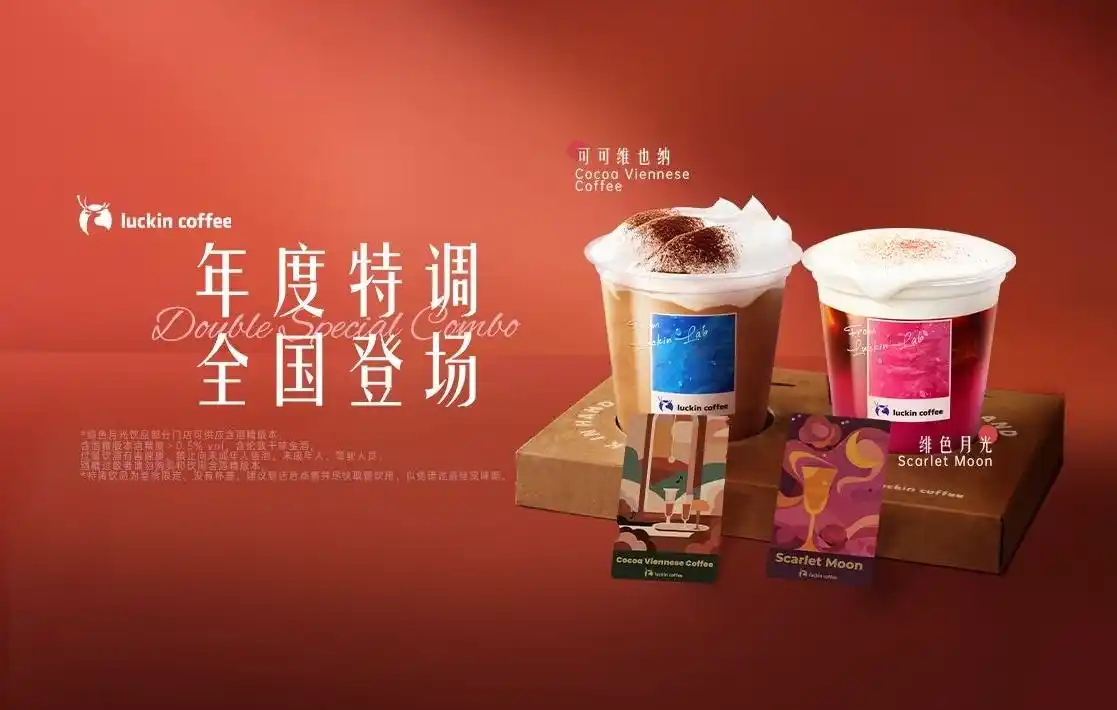
Luckin Coffee has begun selling gin- and whisky-infused coffee cocktails at its 33,596 mainland China outlets, a move that crystallizes a fundamental strategic inflection: the company is no longer managing a coffee business — it is engineering a full-day beverage platform, with the economics of that transition still deeply unresolved.
The alcoholic blends, which carry an alcohol-by-volume content exceeding 0.5% — the regulatory threshold classifying them as yǐnliào jiǔ under Chinese liquor law — require stores to post mandatory "No Sales to Minors" notices. Unlike the viral 2023 Moutai-latte collaboration, a co-branding exercise with negligible alcohol content, this product line is operationally and legally distinct. One frontline employee, speaking anonymously, said: "We don't really understand why the company has to sell alcohol. Verifying customer ages for a new cocktail is genuinely complicated for store staff."
The market's instinct to label this "innovation" is understandable, but it misses the structural pressure driving the decision.
Deteriorating Unit Economics Force a Revenue-Mix Overhaul
The headline number is stark. Luckin's self-operated store same-store sales growth (SSSG) has swung from 9.2% year-over-year in the equivalent prior-year period to -12.3% in Q1 2026 — a 21.5-percentage-point collapse that signals the company's hyper-density store rollout strategy has begun cannibalizing itself.
At 33,596 locations, Luckin has saturated China's tier-1 and tier-2 urban cores. The low-price anchor — its RMB 9.9 (US$1.37) coffee promotion — drove volume but structurally compressed margins. The delivery channel, which underpins a significant share of Luckin's order flow, is now visibly eroding profitability: delivery costs surged 89.8% year-over-year in Q1 2026, representing 10.9% of revenue, up sharply from prior periods. When platform commissions and performance marketing spend are layered on top, the true cost of each digitally acquired transaction is materially higher than reported delivery fees alone suggest.
The growth model that defined Luckin's 2020–2024 expansion — open stores, price aggressively, acquire users via third-party apps — has reached its logical ceiling.
Alcohol Strategy Targets Platform Dependency, Not Just Daypart Expansion
The alcohol move is frequently framed as a play on China's "light intoxication economy", a consumer trend toward low-ABV beverages among urban millennials and Gen Z. That framing is partially correct but incomplete.
The more precise strategic logic is channel arbitrage. Alcoholic beverages cannot be fulfilled via mainstream Chinese food-delivery platforms such as Meituan or Ele.me under current regulatory interpretations, meaning they are exclusively in-store pickup items. For Luckin, which paid delivery costs equivalent to nearly 11% of Q1 2026 revenue, a product category that structurally forces in-store traffic is a direct margin-recovery tool — not merely a menu diversification exercise.
The same logic extends to Luckin's parallel push into ready-to-drink (RTD) bottled coffee sold through convenience store and supermarket channels. Physical retail shelf space has no platform commission. Luckin's parent-affiliated investment firm Centurium Capital reinforced this premium-channel ambition by acquiring the global retail operations of Blue Bottle Coffee, the Oakland-founded specialty brand, positioning the group to address the high-unit-price segment that Luckin's RMB 9.9 flagship cannot reach.
Taken together — non-coffee beverages (kale juice blends, fresh fruit series, light milk teas), oversized cup formats to lift average ticket, RTD retail, Blue Bottle premium stores, and now alcoholic cocktails — Luckin's product architecture over the past 24 months describes a company systematically reducing its dependence on any single category, channel, or price point.
Brand Coherence Becomes the Critical Risk Variable
The competitive logic is sound. Chinese consumers typically consume one coffee per day at most, but beverage occasions span morning through late night. Luckin, Starbucks China, and Cotti Coffee are all, in effect, competing for a young urban consumer's total daily liquid wallet — not merely the morning caffeine window.
But the brand management risk is proportionate to the strategic ambition. Category expansion without a coherent identity architecture tends to produce what marketers often describe as "anchor drift" — consumers lose a clear mental model of what the brand represents, and loyalty, which in Luckin's case was already price-driven rather than emotionally rooted, erodes faster than new category revenue can replace it.
The question Luckin's management has not yet answered publicly is whether the company intends to reposition its master brand as a broad beverage platform — with all the marketing investment that repositioning requires — or whether it is executing a series of tactical product launches without a unifying consumer narrative. The two paths carry very different capital allocation implications.
For investors monitoring Luckin's trajectory ahead of its next earnings disclosure, the SSSG reversal and delivery cost inflation are the numbers that matter most in the near term. The alcohol launch is a symptom of those pressures, not a cure. Whether it represents a coherent strategic pivot or an increasingly diffuse brand in search of its next growth vector remains an open question as of late May 2026.
Related Coverage:
Luckin Coffee's Profit Squeeze: How the Delivery Wars Are Rewriting China's Coffee Economics