
Meituan Acquires Dingdong for $717 Million to Bolster Instant Retail Expansion
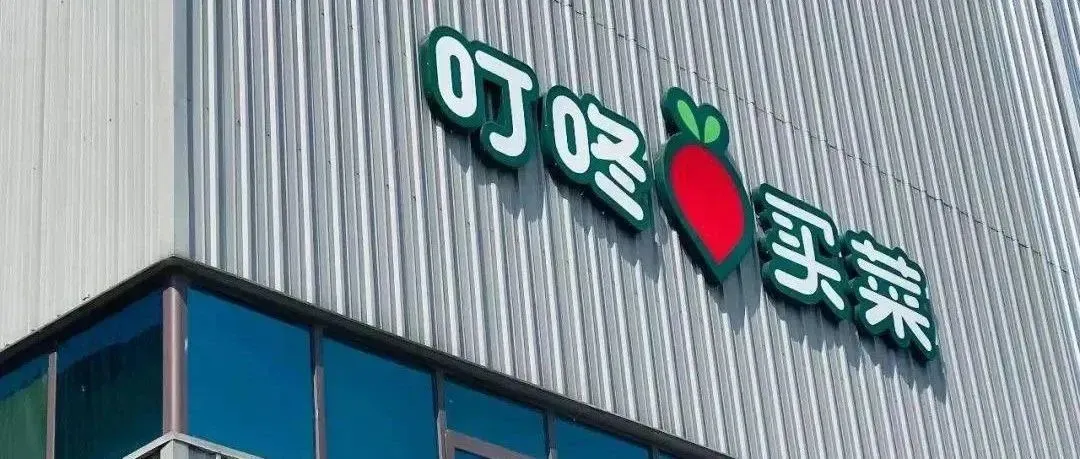
Meituan announced on February 5 the acquisition of 100% equity in the China operations of fresh grocery e-commerce company Dingdong(Cayman) for an initial consideration of approximately $717 million, or about 50 billion yuan at prevailing exchange rates. The deal marks a significant consolidation in China's competitive instant retail sector, positioning Meituan to challenge rivals including Alibaba's Hema and Sam's Club in the rapidly expanding market for on-demand grocery delivery.
The transaction structure allows Dingdong's shareholders to withdraw up to US$280 million in cash dividends from the company, bringing their total proceeds to approximately US$997 million (about RMB 7.1 billion, not RMB 69 billion, which is a likely typo). Meituan's shares rose 1.79% following the announcement, signaling investor approval of the strategic move. The acquisition excludes Dingdong's overseas operations, which will be divested before closing.
For Dingdong, founded in 2017 and listed on the New York Stock Exchange in 2021, the sale comes after achieving seven consecutive quarters of profitability under GAAP standards, though margins remain thin. The company generated revenue of 6.66 billion yuan in the third quarter of 2025, with net profit of 80 million yuan. Despite its profitability, sustaining operations amid intensifying competition from well-capitalized giants has created mounting pressure.
The deal represents Meituan's most decisive move yet to consolidate its position in instant retail, a sector facing aggressive expansion from ByteDance, JD.com, and Alibaba. Industry observers note that Meituan entered the bidding process relatively late but moved swiftly to finalize the acquisition, outmaneuvering JD.com, which had reportedly been in negotiations before denying involvement.
Strategic Fit Strengthens Regional Coverage
The acquisition directly addresses Meituan's expansion priorities for its Xiaoxiang Supermarket business. As of February 5, Xiaoxiang operates in 46 cities nationwide, having added more than 20 cities in the second half of 2025 alone. In June 2025, Meituan announced plans to expand Xiaoxiang to all first- and second-tier cities across China, up from 20 cities with nearly 1,000 fulfillment centers at that time.
Xiaoxiang's primary strength lies in Guangdong province and Beijing, while Dingdong commands a strong foothold in East China, particularly Shanghai and the Yangtze River Delta region. Dingdong maintained growth momentum in these areas through 2025, densifying its network of front warehouses across Jiangsu and Zhejiang provinces. As of September 2025, Dingdong operated over 1,000 front warehouses across 29 cities domestically.
An industry analyst noted that the acquisition serves dual purposes: accelerating geographic coverage and preempting competitors. Dingdong's stock had surged 20% in a single day when earlier acquisition rumors emerged, reflecting market expectations for consolidation in the fragmented sector.
Supply Chain Capabilities Drive Rationale
In an internal memo, Dingdong founder Liang Changlin explained the decision to choose Meituan, citing alignment in supply chain capabilities and premium product sourcing. He characterized the partnership as a forward-looking decision to collaborate rather than compete. Dingdong has built substantial supply chain infrastructure, including direct sourcing for over 85% of fresh produce, 12 proprietary processing facilities, and two self-operated farms.
Liang emphasized that Dingdong's business and team would remain stable following the transaction. He recalled that when he launched the company in Shanghai in 2017, the city hosted more than a dozen fresh grocery e-commerce platforms, with Dingdong entering as the latecomer. The company differentiated itself by offering delivery of live fish and shrimp to customers' homes, a service that enabled its survival through intense market competition.
The transition period will see Dingdong continue operating under its pre-transaction model. Meituan's announcement did not specify integration timelines or organizational changes beyond the commitment to business continuity.
Competitive Landscape Intensifies
The combined entity will emerge as a new leader in China's instant retail sector, though the competitive landscape remains crowded. Prior to the acquisition, Xiaoxiang, Pupu Supermarket, and Dingdong operated at similar scales. Dingdong recorded gross merchandise volume of 25.5 billion yuan in 2024, while Xiaoxiang approached 30 billion yuan and Pupu exceeded 30 billion yuan. Sam's Club's front warehouse business leads the sector in transaction value.
Alibaba's Hema has accelerated expansion dramatically since focusing on its Hema Fresh and Hema NB formats. In 2025, Hema Fresh entered 40 new cities, while Hema NB opened over 200 new stores. The sector also includes established players such as Qian Dama, creating a fragmented but rapidly consolidating market.
The acquisition reflects broader strategic imperatives for Meituan as it faces sustained competition from ByteDance, JD.com, and Alibaba across multiple business lines. Industry observers suggest the company is prioritizing focused strategic decisions and faster execution in response to mounting competitive pressures.
Dingdong's signature promise of delivery within 29 minutes established the company as an early mover in on-demand fresh grocery retail. The platform's ability to achieve consistent profitability, albeit at low margins, demonstrated operational viability but insufficient scale to compete independently against larger rivals with deeper resources. The sale provides shareholders with liquidity while preserving the business under Meituan's broader ecosystem.