
Meituan's Same-Day Air Conditioner Bet Faces Structural Limits
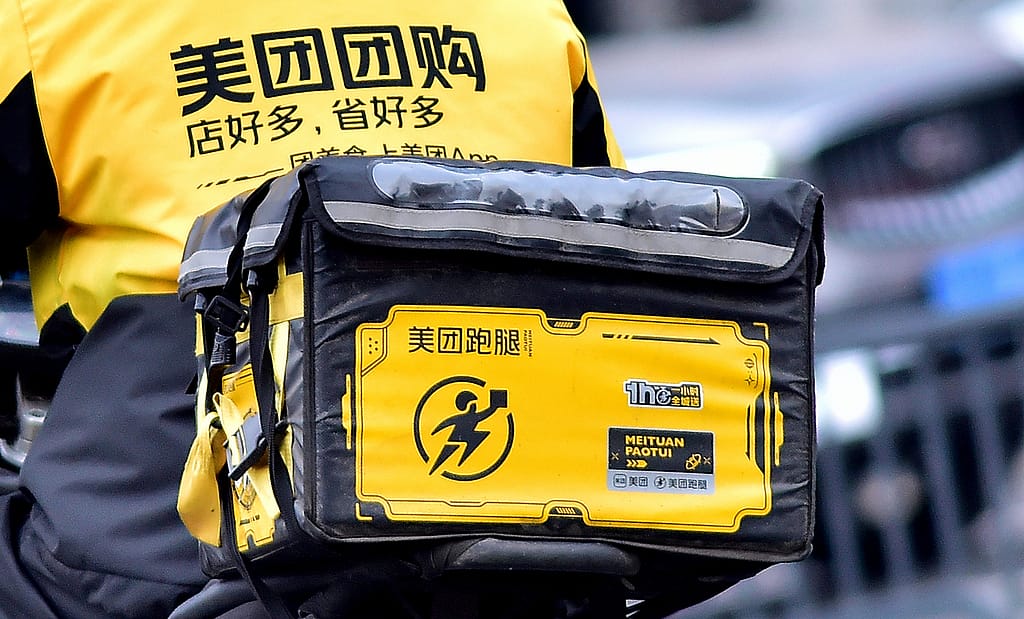
Meituan's aggressive push into the RMB 300 billion (US$41.7 billion) air conditioner market during China's 618 shopping festival exposes both the promise and the hard ceiling of instant retail in big-ticket home appliances.
At an industry summit in late May 2026, Meituan Flash Purchase unveiled its dedicated 618 major appliance strategy, concentrating the platform's top-tier traffic and core resources on air conditioners while committing to a same-half-day delivery-plus-installation service. The announcement signals a calculated escalation in the platform's war against JD.com for dominance in China's most lucrative consumer electronics category.
Market data lends initial credibility to the bet. According to Meituan, over 120 million users actively searched for home appliance products on the platform in 2025, with single-category search volume for air conditioners hitting 8 million queries per peak season. During the summer of 2025, Meituan Flash Purchase's air conditioner transaction value surged sevenfold year-on-year, with Chongqing recording growth exceeding 30%. The Commerce Ministry Research Institute projects China's total instant retail market will breach RMB 1 trillion (US$138.9 billion) in 2026.
Meituan Builds Its Economics Around High-Ticket SKUs
The strategic logic behind targeting air conditioners is more financial than operational. The entire instant retail sector faces a structural profitability problem: per-order fulfillment costs run RMB 10–16, consuming 30%–50% of total order costs. Meituan's food delivery business averages a ticket size of RMB 22–34, while fresh produce hits RMB 80–100 — neither generating sufficient margin to absorb a RMB 7 per-order delivery cost.
Air conditioners change the math entirely. Data from AVC Revo shows the average offline air conditioner price at RMB 4,195 (US$583) as of April 2026. At that price point, the delivery cost rate compresses to just 2%-3%. A RMB 5,000 appliance order absorbs fixed warehouse and system costs equivalent to roughly 50 orders of RMB 100 fresh produce while generating substantially higher revenue contribution.
Critically, Meituan has avoided building dedicated large-appliance forward warehouses. Instead, the platform has co-developed over 30,000 "Flash Warehouses" by leveraging the existing store footprints and inventory of partners including Midea and Haier. This asset-light model eliminates warehouse rental and fit-out costs while transferring seasonal inventory risk back to the manufacturers.
High-Value Users Drive Platform Upgrade Logic
Beyond unit economics, Meituan's appliance push carries a user-quality rationale. Consumers who impulse-buy a RMB 4,000 air conditioner for same-day delivery are structurally different from bargain-hunters who wait two weeks for a discounted unit on JD.com. They are time-sensitive, less price-elastic, and statistically more likely to repeat-purchase other high-ticket items on the platform — precisely the user profile that helps Meituan escape the low-margin trap of its food delivery origins.
Structural Barriers Constrain the Ambition
Yet the same-day air conditioner thesis faces challenges that platform economics alone cannot solve.
Installation capacity is the most acute bottleneck. Field reporting by the source publication found that instant retail platforms hold no priority access to installation technicians — offline stores serve walk-in customers first. During the 2025 summer peak in Harbin, installation wait times stretched to one full week, forcing major appliance brands to redeploy technicians from across the country. Meituan's "priority installation" promise has proven difficult to deliver in practice.
Consumer behavior contradicts the instant model for durables. Air conditioners and refrigerators carry 5–10 year lifespans. Most replacement buyers engage in extended comparison shopping and promotion-hunting — a decision cycle fundamentally incompatible with impulse-driven instant commerce. Industry analyst Liu Buchuan argues that flash purchase generates demand primarily through subsidies running at roughly 32% discount depth, far exceeding the industry's 5%–8% average net margin. The model risks inverting retail prices and destabilizing pricing structures that brands have built over decades.
Major appliance makers are quietly non-committal. While Midea, Haier, and Gree have opened their store networks to Meituan trials, none has highlighted the flash purchase channel in earnings calls or official channel strategy. Corporate communications from the three dominant players — who collectively hold over 60% market share — emphasize supply chain optimization and omnichannel coordination, language that pointedly excludes flash delivery as a strategic priority. A channel executive at a Jiangzhe-based small appliance firm confirmed to the source publication that smaller brands embrace instant retail precisely to reduce dependence on dominant channels — a motivation that does not apply to category leaders who already control distribution.
JD.com Moves to Defend Its Stronghold
JD.com has not waited passively. In direct response to Meituan's escalation, JD.com launched a nationwide "Cool Guardian" appliance service program, upgrading its delivery-plus-installation offering and tightening service-level standards across its logistics network. JD.com's decade-long investment in large-item logistics infrastructure — the foundational moat Meituan lacks — gives it a structural advantage that subsidies alone cannot replicate.
Wu Xianjian, Executive Deputy Secretary-General of the China Household Electrical Appliances Commercial Association, frames the competitive dynamic clearly: instant retail currently functions as a transaction-efficiency tool, not an independent retail format. Its value lies in incremental optimization, not channel disruption.
Impact Assessment: Tactical Win, Strategic Ceiling
The consensus among industry participants is that instant retail occupies a structurally bounded niche in home appliances — emergency replacements during heat waves, appliance failures requiring urgent resolution, and convenience-premium urban consumers. AVC Revo President Guo Meide identified the most durable long-term use case: post-installation service visits as a lead-generation channel, where technicians conducting maintenance calls can identify and convert upgrade demand in situ.
For investors assessing Meituan's appliance ambitions, the near-term read is positive on margin mix improvement but cautious on structural share gains. The platform is solving a real unit-economics problem by introducing high-ticket, low-fulfillment-rate SKUs into its order flow. What it cannot yet solve is the full-service lifecycle requirement of major appliances — pre-sale measurement, installation, multi-year warranty — that keeps JD.com, Suning, and brand-owned channels at the center of the consumer decision journey.
Instant retail in air conditioners is a tactically sound, financially rational bet. It is not a channel revolution.
Related Coverage:
Meituan's Q1 Beat Signals a Structural Earnings Recovery as Delivery Losses Narrow