
MiniMax Hong Kong Listing: A Capital-Efficient Divergence from the Silicon Valley Playbook
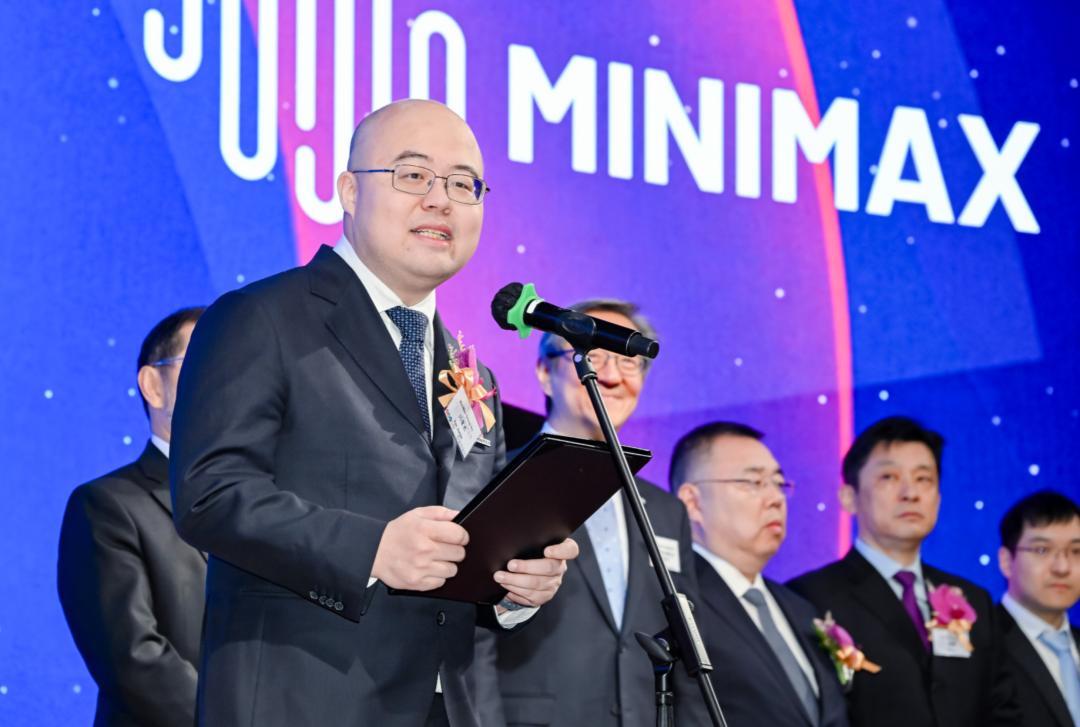
MiniMax’s debut on the Hong Kong Stock Exchange—closing with a market capitalization exceeding HK$70 billion—signals a critical pivot in the global AI arms race: the validation of a "capital-efficient" scaling model. By securing backing from fierce domestic rivals Alibaba and Tencent alongside global sovereign wealth funds, the listing positions MiniMax (0100.HK) not merely as a regional player, but as a profitable alternative to the cash-incinerating trajectory currently defined by Western generative AI giants.
Defying the Silicon Valley Burn Rate: A 1% Efficiency Play
The most significant signal from the MiniMax prospectus is not its valuation, but its comparative expenditure. While US-based peers like OpenAI have reportedly accumulated expenditures ranging between 40billionto40billionto55 billion to achieve dominance, MiniMax has constructed a full-modal global contender by burning approximately $500 million—barely 1% of the capital consumed by its American counterparts.
This divergence suggests a fundamental shift in the economics of AGI development. With HK$1.05 billion remaining on its balance sheet prior to the IPO, plus a fresh HK$4.19 billion raised from the offering, the company has demonstrated that engineering density can substitute for brute-force capital. The company’s ability to generate $53.4 million in revenue during the first nine months of 2025—a 175% year-over-year increase—while narrowing losses indicates that the "burn-to-grow" era may be yielding to a phase of unit-economic scrutiny. The operational efficiency is underscored by a lean workforce of just 385 employees (averaging 29 years old), with nearly 74% dedicated to R&D, creating a revenue-per-employee metric that likely outpaces many legacy SaaS entities.
Monetizing the ‘Global South’ and Beyond: The 70% Overseas Revenue Pivot
MiniMax has effectively decoupled its revenue engine from the fiercely competitive and regulated domestic Chinese market. The data reveals that over 70% of its revenue in the first three quarters of 2025 originated from overseas markets, a statistic that reshapes the company's risk profile from a pure China-play to a global exporter of intelligence.
This international traction is driven by a diversified product matrix rather than reliance on a single "ChatGPT" clone. The revenue split illustrates a mature monetization ecosystem: the character-interaction platform Talkie/Xingye contributes 35.1%, while the video generation suite Hailuo AI accounts for 32.6%. This near-even split protects the company from volatility in any single modality. The rapid ascent of Hailuo AI, launched only in late 2024 yet already a primary revenue driver, validates the company’s "omni-modal" strategy. Furthermore, the conversion of free users to paid subscribers—jumping from roughly 120,000 in 2023 to over 1.77 million by September 2025—proves that consumer willingness to pay for AI extends beyond productivity tools into entertainment and creative workflows.
Consolidating Domestic Power: The Alibaba-Tencent-MiHoYo Axis
The capitalization table of MiniMax represents a rare consolidation of China’s typically fractured tech landscape. It is highly unusual to see Alibaba (holding ~12.5% post-IPO) and Tencent (~2.37%) backing the same early-stage entity, signaling a consensus that MiniMax represents the industry's best bet for a foundational model breakthrough.
Crucially, the presence of MiHoYo (holding ~5.87%) provides strategic advantages beyond capital. As a global leader in gaming and virtual character intellectual property, MiHoYo’s involvement suggests a direct pipeline for MiniMax’s character-centric AI (Talkie) to integrate into high-fidelity entertainment ecosystems. Simultaneously, the inclusion of Middle Eastern capital via ADIA and Singapore’s GIC diversifies the shareholder base, potentially smoothing regulatory pathways in the Global South and non-aligned markets. This coalition of investors provides MiniMax with the cloud infrastructure (Alibaba), social distribution (Tencent/Red), and content application scenarios (MiHoYo) necessary to compete with the Microsoft-OpenAI alliance.
Navigating Geopolitical Friction and Post-IPO Cash Burn
Despite the efficiency narrative, MiniMax faces looming headwinds. The prospectus forecasts a monthly cash burn of $27.9 million by the end of 2025, indicating that as the company scales its video generation capabilities (Video 01/Hailuo 02) and open-source models (MiniMax M2), costs will inevitably rise. The reliance on overseas revenue, while currently a strength, exposes the firm to data sovereignty risks similar to those faced by TikTok. As MiniMax expands its user base across 200 countries, it will likely encounter increasing scrutiny regarding the data processing of its 212 million users.
Furthermore, the valuation uplift—opening 42.6% above the issue price—places immense pressure on the execution of its "Super App" strategy. The market is effectively pricing in MiniMax’s ability to transition from a model provider to a platform operator. Success will depend on maintaining that delicate balance: sustaining aggressive R&D in video and voice modalities while keeping the cash burn rate significantly below the industry average established by Silicon Valley.
By ChinaBiz Insider Analysis Desk