
NIO's Battery Affiliate Weilai Energy: Profitable Yet Perpetually Cash-Hungry After Five Years and $550M in Fundraising
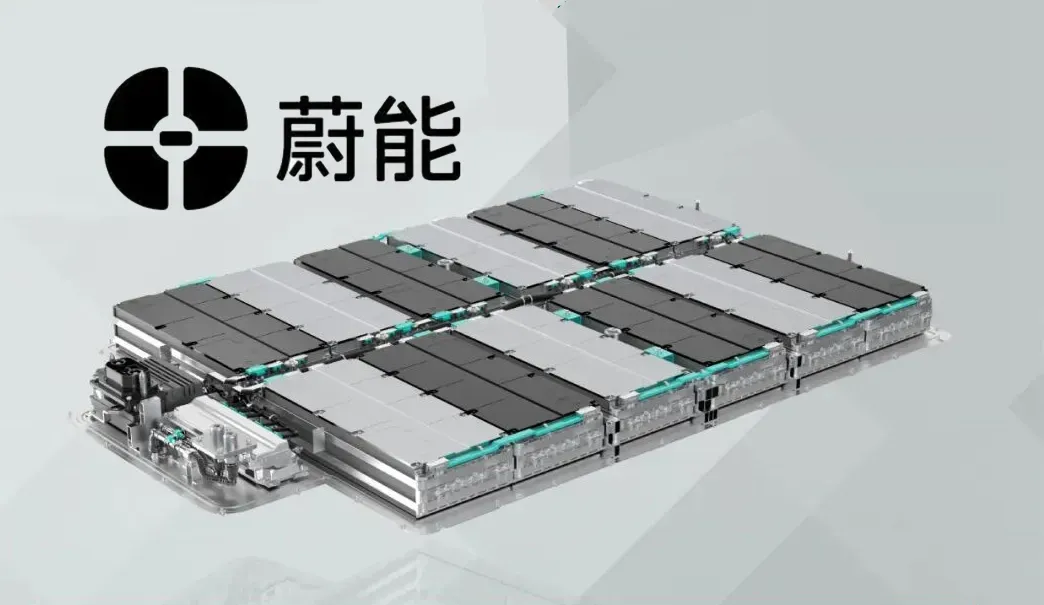
Wuhan Weilai Energy Battery Asset, the battery leasing arm closely tied to NIO Inc., has completed its latest funding round, raising a cumulative RMB 4 billion yuan (approximately US$550 million) over five years — a figure that exposes a fundamental paradox at the heart of China's most ambitious battery-as-a-service experiment: the business is genuinely profitable, yet structurally incapable of financing its own growth.
The company, known as Weilai Energy, closed its C3 round at RMB 1 billion yuan on February 13, 2026, capping a C-series fundraise that totaled nearly RMB 2 billion yuan between October 2025 and February 2026. The round drew notable participation from state-backed capital in Hefei — NIO's home base — with two Hefei government investment vehicles each contributing RMB 500 million yuan and each acquiring a 7.55% stake, becoming joint sixth-largest shareholders. The fundraise triggered a corporate registration update on February 24, with registered capital rising from approximately RMB 2.239 billion yuan to RMB 2.637 billion yuan.
The capital injection arrives as Weilai Energy sits on a balance sheet that is simultaneously impressive and precarious. As of the third quarter of 2025, the company reported total assets of RMB 25.2 billion yuan, a net profit margin of 15.15%, and year-to-date net profit of RMB 315 million yuan. Yet liabilities stood at RMB 22.5 billion yuan — a leverage ratio approaching 90%. For investors assessing NIO's broader ecosystem, Weilai Energy's financial architecture offers a window into both the scalability and the systemic risk embedded in the battery-swap model.
A Business Model That Prints Money — and Demands More
Weilai Energy's commercial logic is deceptively simple: it purchases battery packs from NIO, then leases them back to NIO customers who opt for the vehicle-battery separation (BaaS) model, as well as to NIO's expanding network of battery-swap stations. Revenue is generated from recurring lease payments; the asset base compounds with every new NIO vehicle sold and every new swap station opened.
The model has been profitable almost from inception. Founded in August 2020 with initial capital contributions from NIO's holding group, Contemporary Amperex Technology, Hubei Science and Technology Investment Group and Guotai Junan Securities, Weilai Energy turned profitable in its first year. Net profit margins have expanded steadily, reaching 15.15% through the first three quarters of 2025.
But profitability and self-sufficiency are not the same thing. The deeper constraint is asset intensity. Each BaaS purchase by a NIO customer obligates Weilai Energy to simultaneously acquire a corresponding battery pack from NIO. A long-range pack for a model such as the 2026 ES8 — which reduces the vehicle's sticker price by RMB 108,000 yuan when purchased under the BaaS scheme — must be acquired, held on balance sheet, and financed over its useful life. The monthly lease payment of RMB 1,128 yuan from the customer provides the income stream, but the upfront capital outlay is immediate and substantial.
NIO's Sales Surge Translates Directly Into Weilai Energy's Capital Needs
The scale of the capital challenge became acute in 2025. NIO delivered 326,028 vehicles over the full year, a 46.9% year-on-year increase, with more than 80% of buyers opting for the battery rental model. Simultaneously, NIO expanded its swap station network by more than 600 units to reach 3,750 stations nationwide, while also executing an 8,000-pack battery augmentation program for its Ledao brand swap stations in the fourth quarter — completing over 4,000 installations before year-end.
In January 2026, NIO announced a further deployment of more than 4,200 battery packs across its national swap network, combined with the December rollout, bringing the two-month total to approximately 12,200 new packs.
The aggregate numbers are striking. A rough calculation based on the BaaS adoption rate and swap station expansion suggests Weilai Energy needed to acquire upward of 270,000 battery packs in 2025 alone. At a conservative transfer price of RMB 50,000 yuan per pack — below the consumer-facing differential but a reasonable wholesale proxy — that implies procurement expenditure of approximately RMB 13.5 billion yuan for the year.
Weilai Energy's own operational data corroborates the scale: the company's managed battery capacity crossed 20 GWh in December 2024 and reached 42 GWh by February 2026, implying the addition of roughly 22 GWh — equivalent to approximately 275,000 packs at an average of 80 kWh — in just over a year.
Against this backdrop, the C-series fundraise of RMB 2 billion yuan is not a windfall; it is a minimum necessary condition. Prior to the C-round, Weilai Energy's cumulative equity financing stood at approximately RMB 2 billion yuan. Without the C-round capital, the company's ability to absorb the battery asset pipeline generated by NIO's sales acceleration would have been severely constrained.
Debt Markets Fill the Gap Equity Cannot
Equity alone cannot bridge the financing gap. Weilai Energy has increasingly turned to structured debt products to fund battery acquisitions at lower cost. In December 2025, the company successfully issued its second green innovation Asset-Backed Note (ABN) of the year at RMB 1 billion yuan, following a first-tranche issuance of RMB 550 million yuan earlier in 2025. In February 2026, Weilai Energy completed what it described as the world's first power battery Real Estate Investment Trust-style ABS, raising RMB 501 million yuan.
The company has also issued green battery asset-backed commercial paper in prior periods. The cost of capital on these instruments can be competitive: the priority tranche of the first green innovation ABN carried a coupon as low as 2.00%. This structured finance approach allows Weilai Energy to leverage its stable, contracted cash flows from lease receivables into lower-cost long-term funding — a critical advantage given the asset-heavy nature of the business.
Even so, the financing remains tight. Corporate registration data indicates that a portion of Weilai Energy's battery purchases from NIO has been recorded as accounts receivable on NIO's books, suggesting that intercompany payment terms play a material role in managing cash flow across the two entities.
The Related-Party Question and Its Regulatory History
The financial interdependence between NIO and Weilai Energy has attracted scrutiny. In June 2022, short-seller Grizzly Research published a report alleging that NIO used Weilai Energy to inflate revenues by approximately 10% and net income by approximately 95%. The allegations resurfaced in August 2025, when a regional sovereign wealth fund filed a lawsuit against NIO making similar claims regarding the BaaS accounting treatment.
NIO has consistently denied the allegations. JPMorgan, in a recent research note, stated that an independent investigation conducted at the time of the 2022 short-seller report confirmed that NIO's accounting practices complied with US Generally Accepted Accounting Principles (US GAAP). The bank further noted that the Hong Kong Stock Exchange conducted its own due diligence when NIO sought a Hong Kong listing in 2022, and that the relevant accounting practices were formally disclosed in that process.
The core analytical issue, however, is not fraud but pricing power and structural alignment. The transfer price at which NIO sells battery packs to Weilai Energy, and the payment terms governing those transactions, directly affect the revenue and margin recognition of both entities. With annual intercompany battery transactions potentially exceeding RMB 10 billion yuan, even modest adjustments to pricing or credit terms carry significant financial consequences for both balance sheets.
Long-Term Trajectory: Scaling the Model to 5 Million Vehicles
The strategic stakes extend well beyond the current funding cycle. NIO founder and CEO Li Bin has previously outlined a target of 5 million annual vehicle deliveries by 2035. Applying the current BaaS adoption rate of approximately 80%, that trajectory would require Weilai Energy to absorb roughly 4 million battery packs annually at peak volume. At RMB 50,000 yuan per pack, that implies annual procurement expenditure of RMB 200 billion yuan — a figure that dwarfs the company's current asset base of RMB 25.2 billion yuan and renders the current financing model insufficient at scale.
NIO's own path to profitability adds another dimension. Li Bin has forecast adjusted operating profit of RMB 700 million to RMB 1.2 billion (approximately US$96 million to US$165 million) for the fourth quarter of 2025 — which would mark the company's first quarterly operating profit in its eleven-year history. Battery pack sales to Weilai Energy likely contribute to that improvement, reinforcing the symbiosis between the two entities but also the sensitivity of NIO's financials to the intercompany relationship.
For Weilai Energy to function as a durable, independently creditworthy asset management platform rather than a captive financing vehicle, greater structural separation and transparent arm's-length pricing will eventually be necessary — both to satisfy institutional investors and to support the scale of capital markets access the business will require as NIO's ambitions grow. As the Chinese proverb invoked in the original analysis aptly suggests: even close brothers should keep clear accounts.