
NIO's ES9 Is a Bet on Brand in China's EV Price War
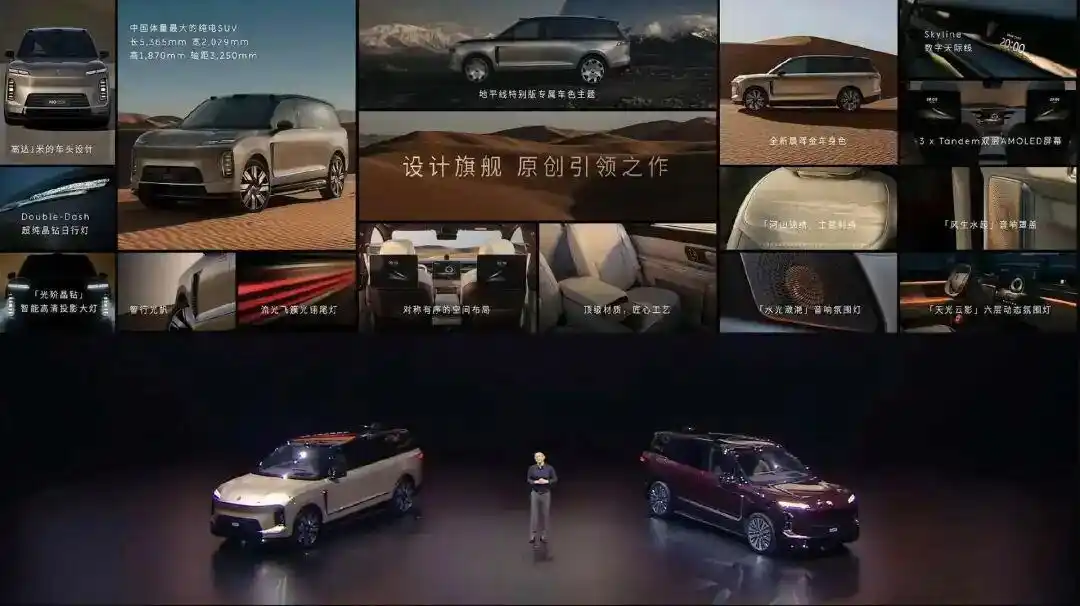
The launch of NIO's RMB 498,000 (US$69,200) ES9 flagship SUV exposes a structural dilemma gripping China's premium electric vehicle market: as hardware advantages compress to near-zero half-lives, the only defensible moat left is one that cannot be reverse-engineered overnight.
The May 27 Beijing unveiling of the NIO ES9 landed at a moment of acute industry stress. China's domestic new-energy passenger vehicle market contracted nearly 20% year-on-year in the first four months of 2026, yet virtually every major EV challenger — Li Auto, AITO, Xpeng, Leapmotor, and Xiaomi — has simultaneously funneled core engineering and marketing resources into the same oversized SUV segment: vehicles exceeding five meters in length with wheelbases above three meters. The segment was a blue ocean two years ago; it is a red ocean before NIO's newest entrant has delivered its first unit.
The ES9's starting price sits RMB 90,000 (US$12,500) above its stablemate, the third-generation ES8, which delivered more than 110,000 units in its first eight months on sale and emerged as the top-selling vehicle — across all fuel types and price bands — in Shanghai and Hefei. That commercial success, while pivotal in stabilizing NIO's path toward profitability, now creates an internal pricing credibility problem that the ES9 must solve in real time.
Shrinking Half-Lives Erode the Premium Narrative
The concept of a product "half-life" — the window between a manufacturer's first-mover advantage and the moment competitors replicate it — has always governed automotive pricing power. In the internal-combustion era, proprietary powertrains and chassis tuning extended that window to years, sustaining the premium storytelling that justified sticker prices.
Electrification has collapsed that timeline. Modular battery architectures and an increasingly commoditized supplier ecosystem mean that features once exclusive to seven-figure vehicles are now table stakes at the RMB 500,000 (US$69,400) tier. Full active suspension — historically a hallmark of ultra-luxury marques — is now standard equipment across the current wave of flagship SUVs, offered in both 48V and 800V configurations. Urban autonomous driving, 800V fast-charging, and advanced cockpit silicon have followed the same trajectory from silver bullet to commodity.
The industry consequence is structural: these features function as table-stakes entry tickets rather than competitive differentiators. Brands that over-index on hardware specifications alone face an inevitable race to the bottom on price, a dynamic already visible in the broader market contraction.
Brand weight in EV purchase decisions has climbed from fifth place to second place among consumer priorities in recent years, according to industry data cited by NIO CEO Li Bin at a media briefing surrounding the ES9 launch — a shift that signals the market is transitioning from what Li characterizes as a "chaotic phase" of proliferating tech stacks to a "clarification phase" where brand equity drives the final conversion.
ES9 Deploys Two-Track Defense Against Its Own Sibling
NIO's answer to the internal pricing tension is a two-layer strategy. The first layer is hardware differentiation at the margin: the ES9 incorporates 48V full active suspension, steer-by-wire, and proprietary design language to separate itself from the ES8's configuration sheet. These are meaningful additions, but by the logic of accelerating half-lives, their exclusivity window is finite.
The second layer is structurally harder to replicate. NIO's network of more than 3,800 battery-swap stations, accumulated over years of capital-intensive buildout that drew sustained skepticism from investors and analysts alike, now functions as an infrastructure moat that no competitor can procure from a tier-one supplier. The same applies to NIO's owner community ecosystem — a long-cultivated loyalty architecture that does not appear on a specification table and cannot be copied in a product cycle.
Li Bin has publicly acknowledged strategic missteps in second-generation vehicle planning and international expansion timing. But the ES9 launch narrative, amplified by brand ambassador Yao Ming — the former NBA center who drew an explicit parallel between NIO's resilience through adversity and his own career arc — is a deliberate attempt to convert those years of criticized "heavy-asset" investments into a brand identity that commands long-cycle premium pricing.
Brand Durability Becomes the New Battleground
The parallel to the mature internal-combustion market is instructive. Once powertrain engineering converged, Japanese automakers owned efficiency, German brands owned luxury, and American brands owned performance. Those associations were not built through specification sheets — they were built through decades of consistent product and service delivery. With EV penetration in China now exceeding 50% of new passenger vehicle sales, the segment is entering an analogous maturation phase.
For NIO, the strategic logic is coherent: if hardware half-lives keep compressing, the only durable pricing lever is a brand identity anchored in infrastructure, community, and accumulated trust — assets that require time, not just capital, to construct.
The execution risk is equally clear. Longevity as a strategy only compounds value if the direction is correct. NIO's ES8 success demonstrated that the formula can work at the RMB 400,000 (US$55,600) tier. Whether the ES9 can extend it another RMB 90,000 higher — against a field that includes Li Auto's L9, the AITO M9, and an incoming Xiaomi flagship — will serve as the most consequential market test of whether brand durability, rather than specification density, can sustain premium pricing in China's most competitive vehicle segment.
The answer will not come from a launch event. It will come from the delivery ledger six months from now.
Related Coverage:
Nio Escalates Premium EV Arms Race With ES9 Flagship Tech Integration