
Nio’s Li Bin Rules Out Robotaxis, Pitches Battery-Cell and Chip Standardization to Cut Industry Costs by RMB 100 Billion a Year
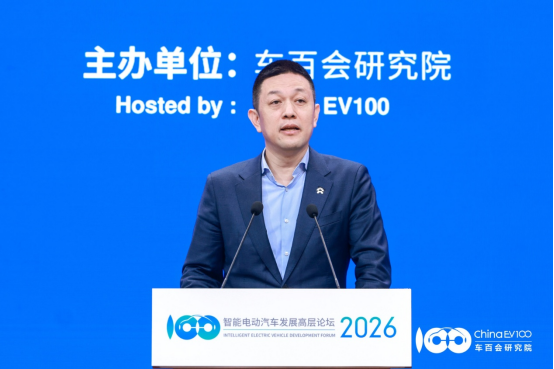
Nio Inc. founder and CEO Li Bin said the Chinese EV maker will not build robotaxis or humanoid robots, choosing instead to concentrate capital and engineering resources on core passenger vehicles as the sector grapples with rapid product churn, oversupply and margin compression.
Speaking on April 11 at the 2026 Intelligent Electric Vehicle Development High-Level Forum, Li framed the industry’s current problem as structural rather than cyclical: faster iterations in batteries, computing and vehicle electronics are shortening model lifecycles, raising ramp-up costs and leaving factories and suppliers stranded when demand cools. His proposed remedy—standardizing battery cells and reducing semiconductor variety—would, he said, remove more than RMB 100 billion (US$13.9 billion) of waste from the industry each year.
Initial market takeaway: while peers chase new revenue pools in autonomy-as-a-service and robotics, Nio is signaling a tighter ROI filter and a supply-chain play that could lower bill-of-materials risk—if automakers and regulators can align on common standards.
Rejecting Diversification Signals Capital Discipline
Li said Nio has “no plan” to enter robotaxis, arguing the business goes beyond technology into operations, regulation and social governance, including friction with taxi and ride-hailing ecosystems. On robotics, he called automakers’ interest “natural” given overlapping technology stacks, but said Nio will “for a relatively long time” focus on improving its car business and observe competitors rather than join the race.
Instead, Li positioned advanced driver assistance as Nio’s near-term value proposition, saying the latest version of its system has logged a safety mileage record more than seven times China’s national average for human driving—an attempt to anchor differentiation in measurable outcomes rather than new business lines.
Scaling In-House Chips Rewrites the Nvidia Cost Curve
Li also sharpened the economics case for Nio’s self-developed silicon. He said Nio previously spent as much as US$300 million annually at peak purchasing Nvidia’s OrinX chips. With vehicle volumes rising—Li cited expected annual growth of 40% to 50%—continuing to buy Nvidia chips across the lineup would have become a growing fixed drag on margins.
Nio’s Shenji NX9031 smart-driving chip and its “Yangjian” lidar master-control chip are now deployed across the company’s lineup, and are slated for full adoption on the Ledao L90, Li said. He added that Shenji has attracted external customers, including other automakers, unmanned logistics vehicle operators and embodied-intelligence companies, though he declined to name clients.
For investors, the message is that Nio is treating compute as a strategic cost center: trading upfront R&D for lower unit costs and improved gross margin leverage as volumes scale.
Shorter Model Cycles Expose a ‘New-Car’ Demand Cliff
Li argued that the old internal-combustion cadence—five to seven years per major iteration—has been replaced by a hardware-driven cycle where chip upgrades, battery advances and even lighting and interior updates force frequent refreshes. The result, he said, is a “new-car effect death valley”: demand spikes at launch and customers queue; by the time capacity and supply chains ramp, demand has already cooled.
That whiplash creates waste across the system. Suppliers add shifts, invest in tooling and hire workers, only to cut back months later when volumes fall short. Li estimated that “hundreds of millions of yuan” in waste per model is “normal,” leaving automakers, suppliers and consumers with little benefit.
He identified batteries and chips—together more than 50% of vehicle cost—as the two levers most capable of reducing systemic inefficiency.
Standardizing Cells and Unifying Chips Would Shift Supplier Bargaining Power
On battery cells, Li said inconsistent specifications have become a major constraint on cost and responsiveness. He argued the industry is now mature enough for standardization because physical structures for mid-nickel and high-nickel ternary cells have “basically converged,” making uniform formats feasible without stifling innovation—contrasting with earlier European efforts such as the German industry’s VDA standard initiative, which he said came too early.
On semiconductors, Li used Nio’s newly launched ES9 as an example: more than 1,000 semiconductor part numbers and about 4,000 chips per vehicle. Nio is pushing internal consolidation from more than 1,000 chip types to about 400, Li said, while acknowledging chip counts will keep rising as vehicles electrify and digitize.
Li linked chip unification directly to localization economics: only when per-vehicle volumes per chip rise—he cited “10 or 20” units—do low-cost “one-dollar” components support viable domestic supply. He urged government agencies to organize automakers to standardize chip categories and create interchangeable standards, arguing it would also improve resilience when specific components face shortages.
Li said the industry does not need to reallocate profits from battery makers or chip firms to automakers to achieve the savings; it needs common standards and coordination. If implemented, he said, the RMB 100 billion (US$13.9 billion) annual reduction in waste would translate into “a few thousand yuan” per vehicle.
Related Coverage:
Nio’s ES9 Teaser Puts Steer-by-Wire Chassis at the Center of Its 2026 Large-SUV Fight
NIO Accelerates Infrastructure Push with Seven New Power Swap Stations in Single-Day Blitz