
NIO's Path to Q4 Profitability Dims as Onvo Sales Plunge 32%
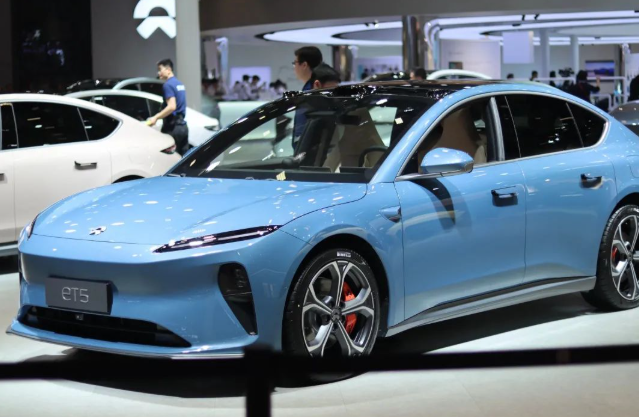
NIO faces mounting challenges in achieving its fourth-quarter profitability target after deliveries from its mass-market brand Onvo tumbled 32% month-over-month in November, raising concerns about the electric vehicle maker's ability to meet year-end delivery goals and reverse years of losses.
The company delivered 36,275 vehicles in November, up 76.3% year-over-year but down 10% from October's 40,397 units. The decline was driven primarily by Onvo's sharp drop to 11,794 vehicles from 17,342 in October, undermining NIO's strategy of using lower-priced brands to drive volume growth and improve margins.
NIO must deliver at least 43,000 vehicles in December to reach the lower end of its Q4 guidance of 120,000 to 125,000 units. That would mark a significant acceleration from November's performance and comes at a time when the company's Onvo brand is showing signs of order weakness, with dealerships reporting inventory buildups of three weeks for previously hot-selling models.
The delivery shortfall casts fresh doubt on CEO William Li's projection that NIO could achieve profitability in Q4 under non-GAAP accounting standards if deliveries exceed 150,000 units for the quarter. The company has yet to turn an annual profit since its 2018 U.S. listing.
Multi-Brand Strategy Shows Mixed Results
NIO's three-brand approach continued to deliver strong performance at the premium end while struggling in the mass market. The flagship NIO brand delivered 18,393 vehicles in November, marking four consecutive months of growth with an average transaction price above RMB 330,000 (US$45,400).
The company captured over 40% of China's premium pure-electric vehicle market above RMB 300,000 in November. Its ES8 model surpassed 20,000 deliveries within 70 days of launch, setting a record for pure-electric vehicles priced above RMB 400,000. Notably, 62.4% of ES8 buyers switched from traditional luxury brands, with nearly half previously owning vehicles from BMW, Mercedes-Benz, or Audi.
Firefly, NIO's compact car brand priced around RMB 100,000, delivered 6,088 units in November, its fourth consecutive monthly record, bringing cumulative deliveries past 30,000 units. The brand has begun international expansion with right-hand-drive production for markets including the Netherlands and Norway, with Southeast Asian markets planned.
Policy Headwinds Hit Onvo Demand
The 32% monthly decline in Onvo deliveries exposed the brand's vulnerability to policy changes. Industry observers attribute the drop to the expiration of favorable electric vehicle trade-in subsidies that drove October's sales surge, with customers front-loading purchases ahead of the policy wind-down.
The Onvo L90, launched four months ago, has delivered nearly 40,000 units with an average transaction price of RMB 260,000 (US$35,800). However, recent checks with dealerships reveal a dramatic shift from previous 20-week waiting periods to immediate availability, with inventory accumulating for three weeks at some locations.
The order weakness coincides with intensifying competition in the RMB 260,000-300,000 SUV segment. Recent launches including Zeekr's 900, Denza N8L, Deepal S09, and Aito M7 and M8 models have eroded Onvo's early-mover advantage. Aito's pure-electric M8 delivered 8,075 units in October and is expected to surpass Onvo volumes as production ramps.
NIO's battery swapping feature, a key Onvo selling point, has lost some differentiation after GAC Aion introduced swapping capabilities in models priced below RMB 100,000. Questions about station density and practical advantages versus fast-charging have also emerged among potential buyers.
December Delivery Push Critical
NIO needs December deliveries of at least 43,000 vehicles to meet its Q4 guidance lower bound, requiring a 19% increase from November despite seasonal headwinds. The ES8, with order backlogs extending to April 2025, represents the company's best opportunity to close the gap given its higher margins and strong demand.
Management has maintained its Q4 profitability target under non-GAAP accounting, which excludes stock-based compensation costs. The company recently began paying some employee salaries in stock, a move that could improve reported results under this metric while raising concerns about actual cash profitability.
NIO's year-end performance will largely depend on production capacity expansion for the ES8 and whether Onvo can stabilize after November's policy-driven decline. The company's battery-swapping network and premium brand positioning remain competitive advantages, but execution in the critical December period will determine whether it can deliver on profitability promises that have eluded it throughout its public life.