
Nio’s Sales Outlook Brightens, But Aggressive Price Cuts Squeeze Margins
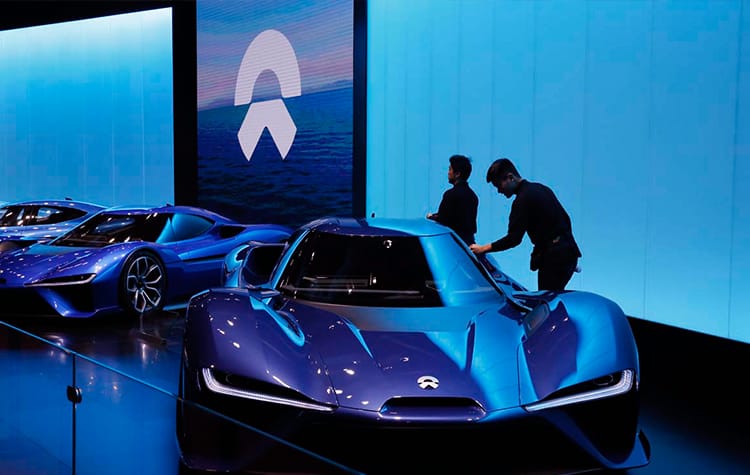
Nio Inc. signaled it is prioritizing sales volume over profitability, offering a strong delivery forecast for the third quarter but revealing that aggressive price cuts eroded vehicle margins in its latest results and would continue to do so.
The Chinese electric-vehicle maker on Tuesday reported a vehicle gross margin of 10.3% for the second quarter of 2025, essentially flat from the prior quarter and missing its own guidance of 12% to 13%. The primary cause was a drop in the average selling price, which fell to RMB 224,000, indicating deeper discounts than in the previous quarter to clear inventory.
Looking ahead, Nio projected robust vehicle deliveries of 87,000 to 91,000 units for the third quarter, a forecast bolstered by the successful launch of its new mass-market brand model. However, its revenue guidance of RMB 21.8 billion (US$3.03 billion) to RMB 22.9 billion implies that the average selling price will slide further to around RMB 220,000, a key point of concern for investors.
The results underscore the intense competition in China’s EV market, forcing Nio to trade short-term profitability for market share. While the company narrowed its losses through significant cost-cutting, its path to breakeven hinges on the success of upcoming, potentially higher-margin models.
Price Cuts Erode Margins
Nio’s struggle with profitability was evident in its second-quarter vehicle margins. The 10.3% figure fell short of market expectations of 12.9% and the company’s own forecast, primarily due to continued pricing pressure.
The average selling price per vehicle fell by RMB 12,000 from the first quarter to RMB 224,000, well below analysts’ estimates of RMB 241,000. This decline reflects an ongoing strategy to boost sales through discounts, even on refreshed models. The margin pressure persisted despite cost-saving measures, such as the adoption of its self-developed NX9031 chip, which replaced Nvidia’s Orin-X. A higher mix of lower-priced vehicles from its Firefly brand also contributed to the lower average price.
Strong Sales Outlook, Weaker Revenue
While margins disappointed, Nio provided an upbeat delivery forecast for the third quarter. The guidance of 87,000 to 91,000 vehicles suggests deliveries in September could reach 35,000 to 39,000 units, a notable increase from 31,000 in July. The growth is largely driven by its new Onvo L90 sedan, which has quickly become a top seller with nearly 10,000 units delivered in August.
However, the accompanying revenue forecast was less encouraging. The projected range of RMB 21.8 billion to RMB 22.9 billion was below market expectations and implies a further decline in the average vehicle price to approximately RMB 220,000. This indicates that the company’s focus remains squarely on capturing sales volume, even at the expense of revenue per unit.
Cost Controls Begin to Show Results
Amid the pricing pressure, Nio Inc. (蔚来汽车) demonstrated clear progress in controlling its expenses. The company, once known for its high spending to build a premium brand, showed significant discipline in the second quarter.
Selling, general, and administrative (SG&A) expenses fell by RMB 440 million from the prior quarter to RMB 3.96 billion, beating analyst expectations. The reduction was attributed to merging the sales channels of its Nio and Onvo brands and a recent organizational restructuring that included laying off approximately 5,000 employees, primarily in sales and service teams. Research and development spending also decreased, falling by RMB 170 million to RMB 3.0 billion, with Nio guiding for R&D costs to drop further to a range of RMB 2.0 billion to RMB 2.5 billion in the fourth quarter.
Path to Profitability Hinges on New Models
The cost-cutting measures helped Nio narrow its losses. The operating loss for the quarter shrank by RMB 1.5 billion to RMB 4.9 billion, and the operating loss margin improved significantly to -26% from -53.3% in the first quarter. A strong performance from its “other businesses,” including technology and energy services, also helped bolster the overall gross margin.
Looking ahead, the company’s financial turnaround hinges on its next wave of products. The market is now focused on the performance of the new ES8 model. Nio has set an ambitious target to achieve a 20% gross margin for both the Onvo L90 and the ES8 in the fourth quarter of 2025, with a goal of raising its overall vehicle gross margin to between 16% and 17% in the same period. Reaching these targets will be critical to demonstrating a sustainable path to profitability.