
Pony.ai's Revenue Jumps 76% And Gross Margin Turns Positive, But Net Loss Explodes By 73%
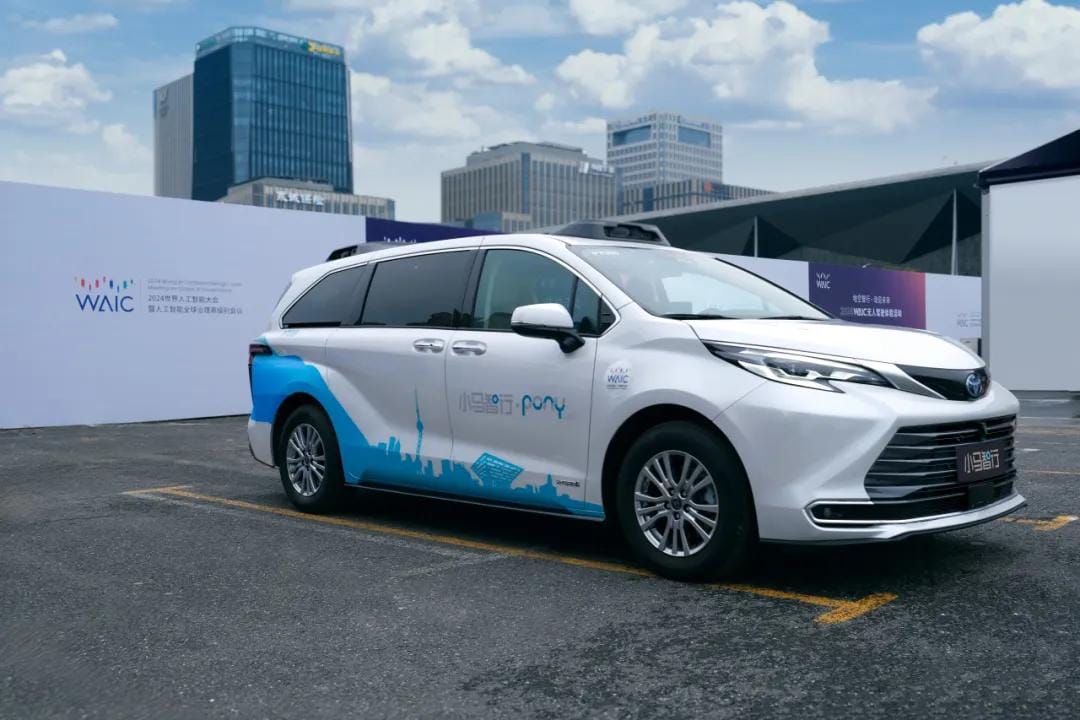
- Strong Top-Line Growth: Q2 revenue surged 75.9% YoY to ¥154 million ($21.5M), driven by accelerating commercialization efforts.
- Robotaxi Revenue Booms: The core Robotaxi business segment saw revenue spike 157.8% YoY to ¥10.9 million, with passenger fares alone growing over 300%.
- A Crucial Profitability Milestone: The company achieved a positive gross margin of 16.1%, a significant reversal from a -0.3% gross margin in the same quarter last year, suggesting improving unit economics.
- Soaring Losses & Expenses: The growth came at a steep price, with Q2 net loss widening by 72.5% to 53.3million.Operating expenses kept pace with revenue, rising75.153.3 million. Operating expenses kept pace with revenue, rising75.164.7 million.
- Aggressive Scaling: The Robotaxi fleet has surpassed 500 vehicles, with management confidently targeting over 1,000 by the end of 2025, supported by the mass production of its 7th-generation vehicle.
- Future Variable: While the company holds a solid cash position of ~$748 million, investors will be closely watching the cash burn rate against the backdrop of its aggressive global expansion and R&D spending.
Autonomous driving firm Pony.ai reported a quarter of stark contrasts, showcasing impressive top-line growth and a pivotal improvement in gross profitability, overshadowed by widening losses fueled by an aggressive push towards mass commercialization. For investors, the Q2 2025 results present a clear narrative: the high-stakes bet on scaling its Robotaxi business is gaining traction, but the path to bottom-line profitability remains distant and costly.
Revenue Growth, But At What Cost?
Pony.ai's total revenue for the second quarter reached ¥154 million RMB (approx. $21.5 million), a robust 75.9% increase year-over-year. The primary growth engine was its Robotaxi division, which saw revenue climb an impressive 157.8%. The company attributed this surge to expanded operational coverage in key Tier-1 Chinese cities like Beijing and Shanghai, and a 136% YoY increase in registered users.
However, this growth was not without significant cost. The company's net loss ballooned to 53.3million,a72.553.3million,a72.530.9 million loss reported in Q2 2024. This was driven by a 75.1% surge in operating expenses to 64.7 million. A deeper look reveals that adjusted R&D expenses alone accounted for ¥316 million RMB (approx. 44 million), underscoring the capital-intensive nature of competing in the autonomous vehicle space. The data suggests that, for now, Pony.ai is operating with minimal operating leverage, with nearly every dollar of new revenue being matched by a dollar of new spending.
The Silver Lining: A Milestone in Unit Economics
Perhaps the most significant metric for investors this quarter was the dramatic turnaround in gross margin. The company reported a gross profit of 3.5million,resultinginagrossmarginof16.13.5million,resultinginagrossmarginof16.141,000 and negative 0.3% margin in the prior-year quarter.
This flip to positive gross margin is a critical proof point for Pony.ai's business model. According to CFO Wang Haojun, the improvement is a direct result of tangible operational efficiencies, including optimizing the "personnel-vehicle" remote support ratio and reducing vehicle insurance costs. While the company is still far from net profitability, achieving positive gross margin suggests that the core Robotaxi service itself is becoming economically viable on a per-trip basis before accounting for massive corporate and R&D overheads.
Scaling Ambitions: From 500 to 1,000 Robotaxis
Management made it clear that the focus is now squarely on scaling its fleet and operations. The company announced it has surpassed 500 vehicles in its Robotaxi fleet and reiterated its confidence in more than doubling that number to over 1,000 by the end of 2025.
Underpinning this ambition is the accelerated mass production of its 7th-generation Robotaxi, developed in partnership with automakers like BAIC and GAC. Pony.ai stated that production has already ramped up, with over 200 of these new vehicles produced in just two months. These vehicles have reportedly undergone over 2 million kilometers of testing on public roads and have secured L4-level autonomous driving permits in Beijing, Shanghai, Guangzhou, and Shenzhen, validating their technical capabilities in complex urban environments.
This scaling is the central pillar of Pony.ai's strategy. A larger fleet is essential for improving service availability, reducing wait times, and ultimately capturing more market share to further drive down unit costs. Investors will be monitoring the year-end fleet count as a key performance indicator of management's execution.
Global Footprint and A Healthy Cash Runway
While scaling in China remains the priority, Pony.ai continues to lay the groundwork for global expansion with strategic moves in the Middle East (Dubai), Europe (Luxembourg), and Korea (Seoul).
Fueling this multi-front strategy is a substantial cash reserve. Pony.ai ended the quarter with ¥5.36 billion RMB (approx. $748 million) in cash, cash equivalents, and short- and long-term investments. At the current burn rate, this provides a considerable runway to pursue its aggressive growth targets. However, with losses continuing to mount, the efficiency of this capital deployment will remain a primary concern for investors tracking the long-term viability of its Robotaxi gamble.