
POP MART Launches Gold Jewelry Line as Toy Giant Expands IP-Driven Business Empire
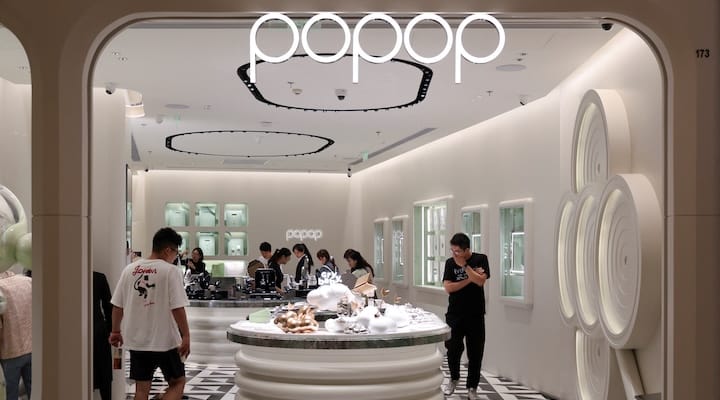
Collectible toy maker POP MART International Group Ltd. has launched its first pure gold jewelry collection through subsidiary brand Popop, marking the company's latest push to monetize its popular intellectual property across new product categories as it rides a wave of surging consumer demand for character-themed merchandise.
The gold jewelry line, featuring the company's Baby Molly character, went on sale September 12 at Popop stores in Shanghai and Beijing. Products include gold beads, pendants, bullion bars and ornaments priced between 980 yuan ($136) and 56,800 yuan using fixed pricing rather than weight-based models typical for gold jewelry.
The move comes as POP MART reported explosive first-half growth, with revenue jumping 204.4% to 13.88 billion yuan ($1.93 billion) and adjusted net profit surging 362.8% to 4.71 billion yuan. The company's expansion into premium categories reflects its strategy to maximize returns from popular IP characters that have gained international traction.
The launch capitalizes on growing Chinese consumer appetite for "emotional consumption" tied to beloved characters, particularly among younger demographics willing to pay premiums for products that provide psychological satisfaction alongside material value.
Gold Push Targets Premium Market Segment
The Baby Molly pure gold series represents POP MART's most expensive product offering to date through its jewelry subsidiary. Items carry significant premiums over standard gold jewelry, with one 0.7-gram bead priced at 1,380 yuan translating to roughly 1,971 yuan per gram compared to market rates around 1,078 yuan per gram for domestic pure gold accessories.
Consumer Zhou purchased nine gold beads totaling approximately 15,000 yuan at Popop's flagship Shanghai store as a birthday gift, illustrating the crossover appeal even among buyers unfamiliar with the IP characters themselves. Store staff reported customers queuing before the 10 a.m. launch, with products available exclusively through physical retail locations.
The pricing strategy mirrors trends in character-themed gold jewelry, where intellectual property licensing allows companies to capture substantially higher margins than commodity gold pricing would typically support.
Aggressive Store Expansion Signals Broader Ambitions
POP MART has accelerated physical retail expansion across multiple subsidiary brands throughout 2025, suggesting confidence in sustained consumer demand for IP-driven products. Following Popop's June debut in Shanghai, the company opened a second jewelry store in Beijing and appears planning additional locations, with signage spotted for a forthcoming Shanghai outlet in the Yangpu district.
The jewelry push forms part of a broader diversification strategy that has seen POP MART launch specialized concept stores for different character lines and consumer segments. The company opened its first Hirono character concept store in March and debuted a premium collectibles location at Chengdu's high-end SKP department store in May, becoming the first toy brand to enter that luxury retail environment.
This multi-brand approach allows POP MART to target distinct consumer groups while maximizing revenue potential from its character portfolio across price points and product categories.
Emotional Spending Drives IP Economics
The success of character-themed products reflects Chinese consumers' growing willingness to pay premiums for items that provide emotional satisfaction, particularly stress relief and self-expression among younger demographics facing workplace pressures. Consumer Xu cited both fashion utility and value retention as motivations for purchasing gold IP products over alternatives in other materials.
This "emotional consumption" trend has powered POP MART's remarkable financial performance, with first-half revenue exceeding 10 billion yuan and net profit surpassing the company's entire 2024 full-year results. International expansion has contributed significantly, as characters like Labubu gain popularity in overseas markets including Southeast Asia and Europe.
The company's ability to command premium pricing across diverse product categories demonstrates the monetary value of successful IP creation in China's consumer market, where character recognition translates directly into pricing power and customer loyalty across multiple touchpoints.