
Puya Semiconductor Profit Surges 1,930% as AI Memory Squeeze Reshapes Niche Storage
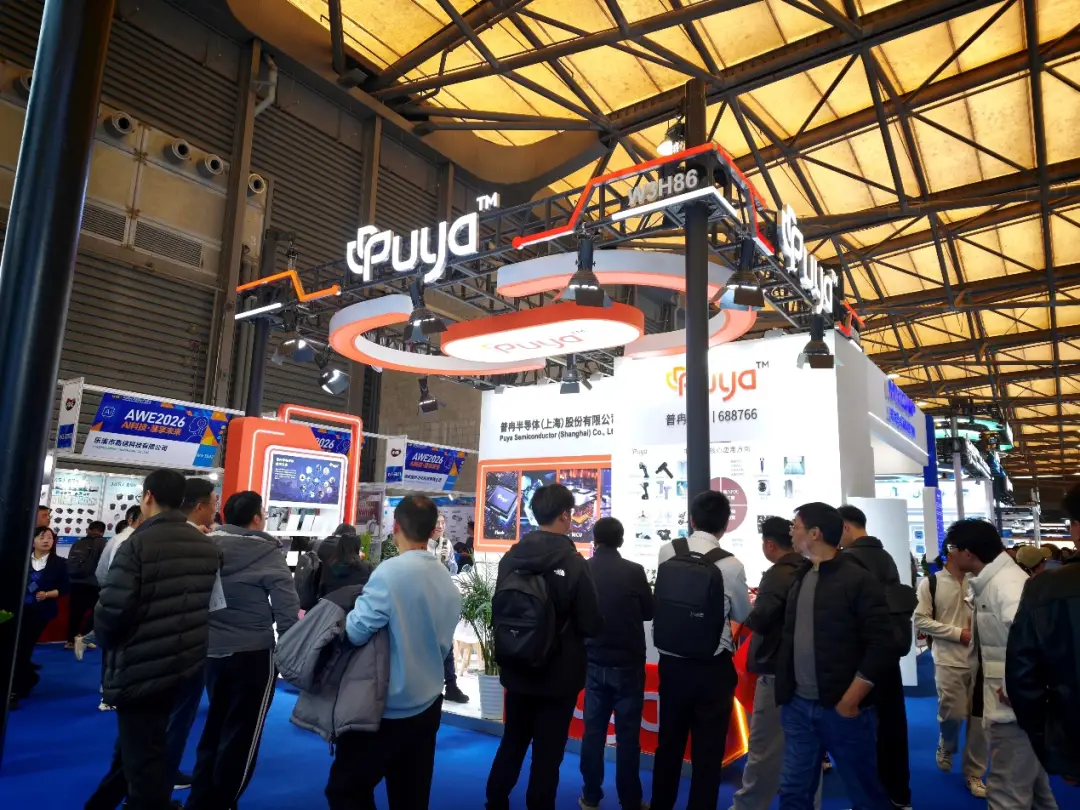
A structural supply shortage in niche memory chips, amplified by a transformative acquisition, has catapulted Puya Semiconductor into one of China's fastest-growing semiconductor stories of 2026.
Puya Semiconductor (688766.SH) reported first-half 2026 revenue of RMB 3.959 billion (US$549.9 million), a 337% year-on-year surge, while net profit attributable to shareholders reached RMB 827 million (US$114.9 million), up 1,930% from the same period a year earlier. Stripping out non-recurring items, core net profit climbed an even sharper 2,994% to RMB 825 million (US$114.6 million). The results, disclosed after market close on August 18, sent the company's market capitalization to RMB 69.42 billion (US$9.64 billion) at a closing price of RMB 466.81 per share.
The headline numbers mask a critical inflection in momentum: second-quarter net profit alone reached RMB 576 million (US$80 million), up 129% sequentially from Q1's RMB 251 million (US$34.9 million), suggesting the earnings trajectory is still accelerating rather than plateauing. The stock has gained 267% year-to-date through August 18, even after absorbing a 54% intra-period drawdown in July—a volatility profile that reflects both the conviction and the anxiety surrounding China's domestic memory buildout.
Acquisition of SHM Instantly Reshapes Revenue Architecture
The single most consequential event in Puya's recent history was not a product launch but a deal. In March 2025, the company took a minority stake in Zhuhai Noah Changtian Storage Technology; by November 2025 it had secured a controlling interest, bringing the latter's wholly owned subsidiary Skyhigh Memory Limited (SHM) onto Puya's consolidated balance sheet from Q4 2025 onward.
The financial impact of that consolidation is stark. SHM contributed approximately RMB 2.346 billion (US$325.8 million) in revenue and RMB 508 million (US$70.6 million) in non-recurring-adjusted net profit during the first half of 2026 alone—meaning the acquired entity accounted for roughly 59% of group revenue and about 62% of core earnings in the period. Without SHM, Puya's standalone parent-entity revenue still grew 81% year-on-year to RMB 1.642 billion (US$228 million), confirming that organic momentum is real, but the acquisition is unambiguously the primary earnings lever.
SHM specializes in high-performance 2D NAND flash memory and derivative storage solutions—planar NAND architecture that sacrifices density for the extreme reliability demanded by industrial automation, 5G infrastructure, automotive electronics, and AI edge-inference workloads. By absorbing SHM, Puya leapfrogged years of organic R&D to occupy a position in SLC NAND, eMMC, and MCP products that directly complement its existing NOR Flash and EEPROM portfolio. The strategic logic is coherent: a customer designing an industrial controller or a vehicle ECU can now source multiple memory components from a single Chinese domestic vendor, reducing qualification cycles and supply-chain geopolitical exposure.
Puya has disclosed it is pursuing a further transaction—acquiring the remaining 49% of Zhuhai Noah Changtian through a combination of share issuance, convertible bonds, and cash—which would consolidate full ownership of SHM and eliminate any minority-interest drag on future earnings.
Structural Supply Tightening Drives Niche Memory Pricing Higher
Beyond the M&A effect, Puya is benefiting from a macro dynamic that industry observers describe as a structural, rather than cyclical, supply reallocation. As Samsung Electronics, SK Hynix, and Micron Technology divert mature-node capacity toward high-bandwidth memory (HBM) and DDR5 to serve hyperscaler AI infrastructure demand, output of legacy NOR Flash and SLC NAND has contracted materially. The resulting supply-demand imbalance in the niche memory segment has pushed average selling prices upward throughout the first half of 2026.
Zhi Lu Capital partner Jing Yiming, commenting to Shanghai Securities News, framed the dynamic precisely: "The underlying driver of this simultaneous volume and price improvement is a structural redistribution of memory-industry capacity. As Tier-1 manufacturers pivot toward high-value products, niche memory supply continues to shrink while incremental AI-compute buildout expands demand."
For Puya, this environment translates into a dual tailwind: higher unit prices on existing products and faster customer qualification of new process nodes. The company's NOR Flash roadmap spans SONOS and ETOX dual-process platforms. On the SONOS side, 55nm and 40nm nodes now cover a full 4Mbit-to-128Mbit production range; a third-generation 40E-series process has already shipped in the 4Mbit-to-16Mbit range, with 32Mbit-to-128Mbit variants targeted for completion by year-end 2026. On the ETOX side, 55nm and 50nm processes cover 4Mbit to 1Gbit in full production, while next-generation 4Xnm products from 4Mbit to 256Mbit have entered mass production. EEPROM products span 2Kbit to 2Mbit across a 1.2V-to-5.5V operating range, with automotive-grade reliability certifications.
Market Diversification Reduces Customer Concentration Risk
Puya's geographic and end-market diversification strategy is gaining measurable traction, a factor that matters to investors assessing the sustainability of the earnings surge. NOR Flash large-capacity products have been qualified by leading PC and server platform customers—a segment where AI server proliferation is generating incremental demand for boot-storage and firmware-storage components. Simultaneously, the company has secured design wins in the Japanese, Korean, and U.S. supply chains, with NOR Flash and EEPROM now embedded in Tier-1 customers across those markets. SHM's existing engineering centers in Japan and Korea, combined with its sales network spanning Asia, Europe, and North America, provide Puya with distribution infrastructure that would have taken years to build organically.
On the product-extension front, Puya's "Storage+" initiative—covering MCU microcontrollers and VCM driver ICs for industrial and AIoT applications—generated RMB 329 million (US$45.7 million) in H1 2026 revenue, up 41% year-on-year. While modest relative to the core storage business, the segment demonstrates Puya's ability to leverage shared process platforms and circuit-design capabilities across adjacent product categories, a strategy that mirrors the playbook of diversified analog and mixed-signal semiconductor companies globally.
Cash Flow Conversion Signals Operational Maturity
Perhaps the most underappreciated data point in the half-year report is the operating cash flow reversal. Puya generated RMB 945 million (US$131.3 million) in net operating cash flow during H1 2026, compared with a net outflow of RMB 42 million (US$5.8 million) in the same period of 2025. A company posting nearly RMB 1 billion in operating cash generation while simultaneously integrating a major acquisition and scaling multiple new product lines is demonstrating a degree of financial discipline that pure earnings multiples do not fully capture.
The company did not announce a mid-year dividend, a decision that, given the ongoing capital requirements of the SHM full-acquisition transaction and continued R&D investment, appears consistent with a reinvestment-phase posture rather than a signal of any underlying weakness.
Risks: Valuation, Cycle Dependency, and Integration Execution
At RMB 69.42 billion in market capitalization against RMB 827 million in first-half net profit, Puya trades at an annualized price-to-earnings multiple that embeds significant expectations for continued earnings growth. Three risk factors warrant investor attention. First, niche memory pricing is sensitive to any reversal in AI infrastructure spending or a decision by major NAND producers to redirect capacity back toward commodity products. Second, full integration of SHM—including the pending 49% stake acquisition—introduces execution risk and potential dilution from the planned share issuance. Third, the July drawdown of 54% in a single month illustrates that the stock's liquidity profile can amplify sentiment shifts with limited warning.
What is not in doubt is the strategic coherence of Puya's positioning. As China's government and industrial base accelerate domestic substitution across the semiconductor supply chain, a company that can offer a full-spectrum niche memory portfolio—NOR Flash, EEPROM, SLC NAND, eMMC, MCP—with automotive-grade reliability certifications and a nascent global distribution network occupies a defensible and increasingly valuable position in the 2026 memory landscape.
Related Coverage:
GigaDevice Profit Surges 1,092% as Memory Super-Cycle Rewards Long-Term Bets