
RoboScience Founder, an Apple AI Veteran, on a Mission to Give Robots a 'Sense of Life'
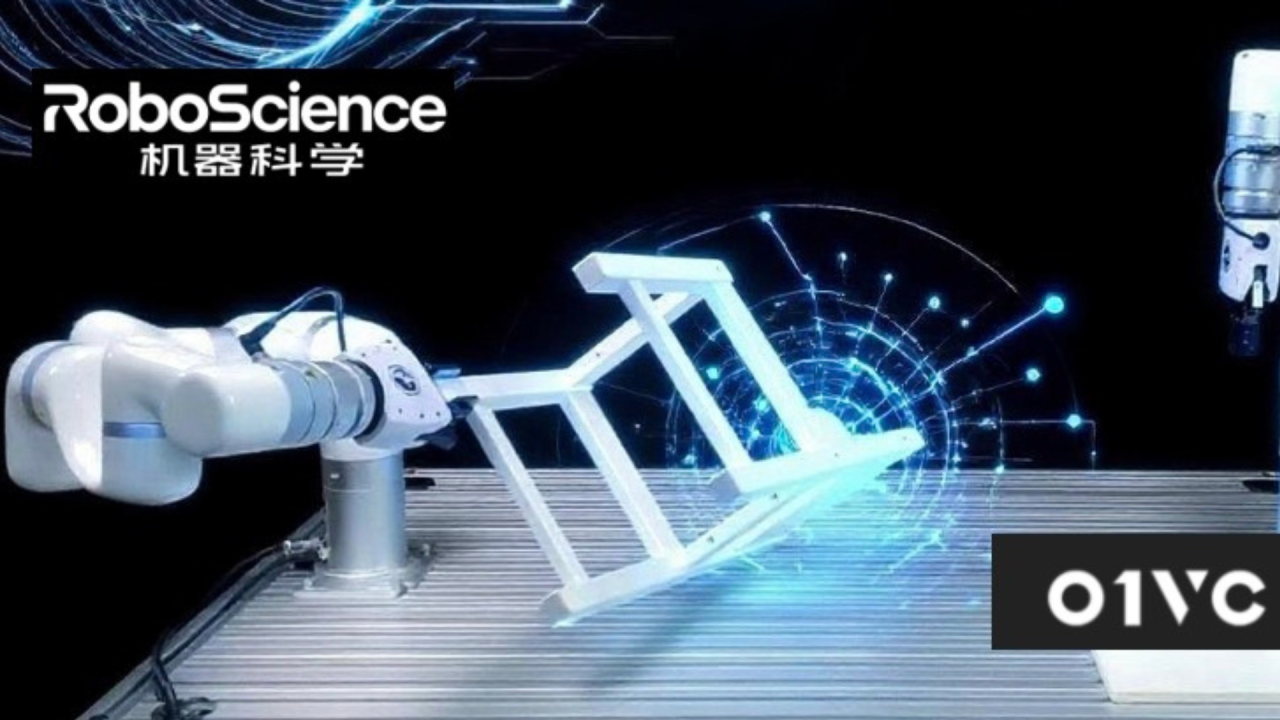
On a trajectory to redefine embodied intelligence, Tian Ye, founder of RoboScience, is leveraging his extensive experience from Stanford and Apple Inc. to build the next generation of robots. Tian, a physics undergraduate from the University of Science and technology of China, pursued his graduate studies at the Stanford AI Lab under the mentorship of Professor Andrew Ng. He later joined Apple, where he rose to become the Tech Lead for the Apple AI Platform. His team built the core infrastructure hailed as "Apple's PyTorch and CUDA," driving the large-scale implementation of key AI technologies across the Apple ecosystem and laying the foundation for its AI framework. Today, he is repurposing these foundational platforms and technologies for the field of embodied intelligence.
Deeply influenced by Apple's product philosophy, RoboScience is committed to a "software-hardware integration" development model. The team is creating its own robotic systems and proprietary core components, targeting both B2B scenarios such as logistics and commercial services, as well as B2C products envisioned as "companions" for users. With the company accelerating its technological iteration and market deployment, Tian aims to establish RoboScience as a leading brand in embodied intelligence within five years. In July 2025, RoboScience announced the completion of its Angel funding round, led by JD.com, with participation from China Merchants Venture Capital and SenseTime Guoxiang Capital. Existing shareholder 01VC also increased its investment.
What is RoboScience's core advantage in a competitive landscape? What are its future strategic plans, and how does it view industry trends? Below are the responses from Tian Ye, founder and CEO of RoboScience.
Stanford's Academic Imprint, Apple's Product Soul
Q: You studied physics at the University of Science and Technology of China and later went to the Stanford AI Lab to study under Professor Andrew Ng. Why did you choose this educational path?
Tian Ye: Since I was young, I've been fascinated by a wide range of fields, including biology, zoology, paleontology, and anthropology, driven by a desire to understand the fundamental principles of the world. In middle and high school, math and physics became my favorite subjects. For my undergraduate degree, I chose physics and took elective courses in mathematics and computer science. I wanted to comprehensively understand the laws governing society and nature, though at the time I wasn't sure what I wanted to create.
Around 2012-2013, I learned about Professor Ng's "Google Cat" project at Google Brain, where a neural network learned to identify cats unsupervised by watching YouTube videos. I was profoundly struck by this, realizing that AI was the way to create intelligence. From that point on, I wanted to dedicate my career to creating intelligence through technology. Later, I went to Stanford and had the privilege of conducting research with Professor Ng.
Q: How did this academic experience influence your subsequent career and technological perspective? What was it like to be mentored by an AI luminary like Andrew Ng?
Tian Ye: Studying under Professor Ng was an invaluable experience. He is a great visionary who believes AI will become the new electricity, empowering industries and products in every corner of life, from manufacturing to daily living. He emphasized the importance of technology, as demonstrated by the Google Cat project, which showed how neural networks could autonomously acquire knowledge. At the same time, he stressed the importance of engineering, advocating for building powerful neural networks combined with massive clusters and data.
This experience had a profound impact on me, making me understand that working in AI requires both a long-term vision and a solid engineering mindset, with a deep understanding of infrastructure, tools, and AI system architecture.
Q: When you joined Apple, the company's AI technology system was still in its early stages. Can you share what the initial situation was like when you participated in Apple's AI projects?
Tian Ye: When I joined Apple, its AI technology was indeed in its infancy, with only a few applications like the facial recognition system. However, the company had decided to invest heavily in AI research, such as designing Neural Processing Unit (NPU) chips. There were scattered teams attempting to integrate AI into products, but they lacked systemic support. The work I began was essentially that of an enabler: building a platform to make it easier for AI developers to turn their ideas into high-quality products.
I led a team to build an on-device machine learning platform, which primarily accomplished two tasks. First, we built a model evaluation and training system that not only tested model accuracy but also assessed its integration with Apple's systems. Since the NPU chips were not yet in production, we developed a simulator to test model architectures and their power consumption and speed on Apple's computing chips via a network-side web service. This platform ultimately became the company-wide standard for model development and evaluation. Second, we developed an on-device inference engine that enabled neural network models to run on Apple's phones, watches, computers, and other devices. This engine powered almost all of Apple's AI features, such as camera facial recognition, depth-of-field algorithms, and Siri's speech recognition. This was incredibly fulfilling work. For example, my elderly family members struggled with typing. I showed them that they could use our offline speech recognition system for input anywhere in the OS. I genuinely saw their lives become easier because of a product I helped create.
Furthermore, we built a rich ecosystem. For instance, Apple has a vast and active developer community. We provided different development frameworks based on the developers' varying capabilities. For AI experts, we offered a universal framework to easily deploy their models on Apple devices. For developers more focused on user experience and lacking AI expertise, we provided specialized frameworks allowing them to directly use powerful AI functions. For those in between, we offered flexible solutions.
On a spiritual level, Apple's developers have a strong sense of conviction and identity. This is partly due to Apple's excellent product platform and partly because of the community environment we actively fostered. For example, we held an annual developer conference, ran developer forums for frequent communication, and even invited developers with special requirements to collaborate with us directly at the company.
Q: You were a core participant in building Apple's AI product and application ecosystem, serving over a billion users. What was the most important productization insight you gained from this massive undertaking?
Tian Ye: Apple is one of the world's foremost product companies; few can match its product definition and technical prowess.
Apple's core strength lies in treating every user as an individual and prioritizing their feelings. This respect for the user allows them to form an emotional connection with their devices. For instance, the "Memories" feature we created in the Photos app would intelligently push curated video clips of past moments, making users feel that their life's memories were being carefully preserved. This kind of "subtle and silent care" makes people feel naturally integrated into the ecosystem.
Product design and development emphasize systemic thinking rather than single-point breakthroughs. Take the large model features in the latest iPhone as an example. This requires us to consider everything holistically—from the underlying chip-level computing power, memory management, and thermal control, to the mid-level software architecture, and all the way to the top-level integration with the application ecosystem.
The advantage of systemic thinking is that it enables us to efficiently integrate the best internal and external technologies into a unified product. To achieve this, we adopt mature solutions from suppliers while also developing core components in-house.
Q: During your seven years at Apple, you grew from an engineer to a Tech Lead. What are your key takeaways on team management?
Tian Ye: I believe team management is a science that requires a systematic approach. When managing a team, I prioritize two dimensions: solid professional fundamentals and genuine passion. A manager needs to inspire team members' sense of identification with and love for their work to maintain the team's strong creative drive.
I vividly remember our experience developing a vision system in 2018-2019. We needed to implement multi-object detection and segmentation, but the technology was not mature on mobile devices, and some network architectures were not even supported by the neural engine. A colleague on the team, who was strong in algorithms but less familiar with hardware and low-level software, took the initiative to dive deep into the subject out of his passion for technology. Together, we developed new compiler techniques and successfully deployed a complex, highly dynamic network onto the phone.
When exploring "uncharted territory," it's very difficult to set top-down plans for team members. What we should do is provide the environment and support that allow each member to spontaneously unleash their potential. Those who can proactively forge ahead often bring greater value to the team. This appreciation for technological passion is ultimately reflected in the quality of the product, allowing users to feel the creators' dedication.
Q: As a pioneer at Apple with no direct precedent to follow, did you rely on your own exploration or was your work driven by existing needs?
Tian Ye: First, in any field today, we never start entirely from scratch. In AI, there were many pioneers at Stanford and in Silicon Valley, including my mentor and Shao Lin's mentor, who had done significant foundational work.
Our core objective was to make the entire organization run effectively and inspire more talent to participate. At the time, AI professionals were scarce, so the key challenge was: how do we help those who are interested but lack deep experience to grow quickly and effectively integrate the team's strengths to create new products? This was the main reason I pushed for the AI platform.
From a product definition perspective, the needs for many application scenarios were clearly visible. For example, implementing facial recognition and voice interaction functions was a natural extension of AI capabilities. Ultimately, AI is artificial intelligence, and many facets of human intelligence, being useful in humans, are also useful when applied to artificial devices.
Many of these needs did not come from market research but from an understanding of users' fundamental expectations. Just as people naturally want their phones to take photos with the quality of a DSLR camera, our job was to use AI to turn that expectation into reality.
Embodied Intelligence's 'GPT Moment' to Arrive Within 5 Years
Q: For many, a career path from Stanford to Apple is ideal. What prompted you to leave and return to China to start your own company? Why did you choose embodied intelligence?
Tian Ye: I come from Zigong, Sichuan. Zigong is known as the "City of Dinosaurs" because it's rich in paleontological finds, especially dinosaur fossils. As a child, I was always at the dinosaur museum. There were sauropods several stories high, stegosauruses with-plated backs, pterosaurs in the sky, and plesiosaurs in the water. A little trivia: the latter two are not dinosaurs (laughs). These creatures that once existed made me feel how diverse the world is and planted an ideal in my heart: can human intelligence make the world richer and more beautiful?
Later, my studies and work gradually converged on the field of AI, because it is the endeavor of creating intelligence by artificial means. The various AI products I worked on at Apple truly created a lot of value for users worldwide. But I always hoped to create an intelligent agent that is closer to natural human life.
This is where my good friend Shao Lin comes in. Shao Lin was my classmate at Stanford. He has always been engaged in the scientific exploration of embodied intelligence robots, while I have been more involved in AI across various digital domains. We both believe that a physical robot with general intelligence is the creation we want to accomplish. An early example was back in 2020, when he and I were in a small pub near Stanford discussing how to enable a robot to interact and operate using general natural language. This discussion ultimately became the paper "Concept2Robot," which was one of the earliest papers in what is now the hot field of Vision-Language-Action (VLA) models.
Later, the generality of language models exploded with the advent of ChatGPT. There have been many attempts in academia and industry to replicate the scaling law in robotics. After much thought and discussion, we identified a technical path to generalization that we believe is feasible, which is VLOA. I told him: let's create intelligent robots together. And so, we started our entrepreneurial journey.
I decided to return to China because I saw a faster pace of development here.
Objectively, Silicon Valley in the U.S. is a region with a high concentration of technological resources, gathering numerous tech companies, universities, and research institutions, forming a vibrant innovation atmosphere. Many people there work for their passion, possessing a strong entrepreneurial spirit and initiative, continuously pushing the frontiers of technology.
However, China also possesses a world-class environment for innovation. It's full of vitality. When night falls, the streets are still bustling with people working hard and running businesses.
For example, from an industrial environment perspective, China's Greater Bay Area has a complete industrial chain. A large number of robotics companies are clustered here, offering everything from components and testing resources to software support. This ecosystem provides us with tremendous convenience. When we iterate on our robot hardware, we can find a supplier within a ten-minute drive. This is crucial for a startup. In a situation full of unknowns, we must be able to fail fast and build new products quickly to continuously push boundaries.
Q: What do you see as the similarities and differences between Apple's products and robots?
Tian Ye: I believe Apple products, especially the iPhone, and robots are highly similar. Both are intelligent devices that need to receive external information, process it, and produce an output. From software to hardware, their overall architectures have a lot in common. Moreover, the mobile phone is a "personal device" for everyone, while the future robot should become a "personal companion" for everyone. You would want it to understand you completely, never betray you, and ensure your data never leaks. You would also expect it to have a certain "sense of life"—just as we want our phones to be responsive, a robot's immediate feedback after receiving information is a direct manifestation of this "sense of life."
At the same time, Apple's two greatest successes came from revolutions in interaction. The first was popularizing the graphical user interface (GUI) with the Apple computer, and the second was popularizing the touchscreen with the iPhone. But the output of both is non-contact. Embodied intelligence will bring about contact-based output, meaning a robot can intelligently interact with people and the environment in the physical world through touch. There's a classic saying in media studies: "The medium is the message." I believe the innovation in interaction that embodied intelligence will bring will be another major breakthrough.
Q: What do you think is the biggest bottleneck currently holding back embodied intelligence? What is RoboScience's core advantage?
Tian Ye: I think this is a new industry, and everyone is still in the technological exploration phase; the path has not yet converged. Many are following methodologies similar to large models, hoping that general capabilities will one day emerge.
Our advantage lies in our deep thinking about the essence of embodied intelligence—how to achieve better results with less data. Currently, many solutions in the industry rely excessively on real-robot data collection, but the sustainability of this model is questionable. We calculated that one human operator can collect at most 200-300 valid data points per day, while achieving true intelligent generalization requires a quantity of data that is orders of magnitude larger. This reliance on manual collection presents enormous challenges in terms of data scale and time cost.
The VLOA model architecture proposed by our team has a core innovation: it captures the essence of a robot's interaction with the physical world. Take the action "move the cup from the table to me" as an example. The key is not who performs the action, but the description and planning of the "object's trajectory." We can achieve generalization in task planning, which allows massive amounts of video data to become training resources, reducing the reliance on real-robot data.
The second part is to solve the "how to execute" problem, which is enabling any robot to manipulate any object to complete a task. This is similar to how a baby learns: by instinctively applying forces to various objects and observing their state changes, they abstract a general understanding of physical laws.
We can save manpower and resources on collecting real robot data and instead focus our core energy on large model algorithms. When we started doing this last year, it seemed unconventional, but now even Elon Musk is talking about replacing real-robot data with video training, which shows the industry is moving in our direction.
Q: In which areas are the most immediate application scenarios likely to appear?
Tian Ye: I believe the application scenarios for embodied intelligence are full of possibilities. As we mentioned, the ultimate goal is to achieve "generalization," allowing any robot to manipulate any object and perform any task.
Currently, the easiest scenarios to implement are those with well-defined tasks and relatively fixed environments. For example, in a logistics warehouse or a commercial service setting, the robot needs to handle many types of objects, but the core actions are bounded operations like moving, stacking, and palletizing. Such scenarios are clearly defined, and the technical difficulty is relatively low.
In contrast, entertainment- or performance-oriented robots, or running robots, do not need to interact with complex objects. Their tasks are relatively simple, and the technical challenges are smaller.
The true advantage of embodied intelligence lies in breaking through the bottlenecks of existing automation. Traditional solutions require re-debugging for every new scenario, which is costly and time-consuming. Our system, with its generalization capabilities, can quickly adapt to new environments and new objects, significantly reducing deployment costs while enhancing flexibility in complex situations. This is the true meaning of an "intelligent upgrade."
Q: How do you see the future development of embodied intelligence? Will there be a "GPT moment," and when do you expect it to occur?
Tian Ye: It's indeed difficult to define the "GPT moment" for embodied intelligence by a single standard, but we can look at it from two dimensions.
The first is the technical dimension. The cognitive ability of ChatGPT at its breakout moment was perhaps equivalent to that of a 10-year-old child. For embodied intelligence, we should look at manipulative ability. A two- or three-year-old can use a spoon, a four- or five-year-old can use scissors, and by five or six, they can write and perform fine motor tasks. I think the requirement for robots can be earlier, because the body develops faster than the brain. When a robot can achieve the dexterity of a five- or six-year-old child, it will have achieved true technical generalization.
The second is the product dimension. A key indicator will be when an ordinary user can start using it within five minutes and feel that the value it creates exceeds its cost. Just as ChatGPT made it easy for everyone to have a conversation, if a novice user can command a robot to do tasks in five minutes and finds it more cost-effective than other alternatives, then the product has succeeded.
From these two perspectives, I believe the "GPT moment" for embodied intelligence will occur within five years.
Q: Looking globally, what kind of competitive and cooperative landscape do you foresee in the embodied intelligence field in the next three to five years?
Tian Ye: Embodied intelligence is far more than a single product; it is a strategic industry that will reshape the social fabric, forming industrial clusters like smartphones or automobiles. For this reason, I believe it's unlikely a single monopolist will emerge. Instead, there will be a very long industry chain with many players at each link. The final products will also be diverse.
The possibilities for robots are immense. Many people are focused on humanoid robots now, but who's to say we can't have dinosaur-shaped robots? (laughs). Or an example like Doraemon, who isn't humanoid, right? Different forms of robots will play roles in different scenarios. People should really open up their minds. Since this is a creative opportunity given to us by our era, we shouldn't limit our thinking.
From a national perspective, it's more likely that a "dual-engine" cooperative and competitive dynamic will form, led by the US and China. China's core advantage lies in its complete industrial chain and vast market depth, which can support large-scale, accessible commercial applications. The US, on the other hand, is more likely to focus on the high end of the value chain, creating premium, high-value-added solutions for the high-end market. Other regions may find it difficult to form a third pole independently but can participate by collaborating with the US and Chinese ecosystems, serving as important supply chain and market partners in the global landscape.
Giving Robots a 'Sense of Life,' Making Them 'Loyal Companions' for Humanity
Q: How did you and your co-founders come together? How do the team's diverse backgrounds (e.g., academic, product) complement each other?
Tian Ye: We currently have four co-founders, two of whom are long-time friends of mine.
Shao Lin is a close friend from my time at Stanford University. We enrolled together in 2014 and both studied at the AI lab; my focus was on AI, while his was on embodied intelligence and robotics. We have known each other for many years, have a strong foundation of trust, and our personalities are complementary—he is more rigorous and calm, while I am more outgoing and lively. Our technical skills are also complementary: he has long focused on the underlying systems of robotics, leaning towards the scientific side, while I focus on the AI layer, leaning towards engineering implementation.
Another co-founder is my good friend Wang Tao. We were in the same undergraduate class at the University of Science and Technology of China. Although we were in different departments, we had a class soccer team, and he was my captain. He has been in the investment industry, is very familiar with the financing, internal management, and strategy of tech startups, and has made many investments. I believe his skills are highly complementary to our team.
The other co-founder, Liu Penghai, is an industry veteran with over 20 years of experience in hardware R&D, management, and supply chain. He previously worked at Ecovacs Robotics, one of the largest robotics companies by shipment volume. I met him last year, and we quickly became good friends. We share a lot of common ground, from technical complementarity to product vision.
Q: Will RoboScience also develop its own robot bodies?
Tian Ye: Although many robots on the market today are humanoid, their internal configurations vary greatly, and different scenarios have completely different requirements for a robot. This is especially true for the "hand," or the end-effector, where the needs vary for each scenario.
Therefore, we will initially adopt a more integrated approach, but we will gradually develop our own end-effectors and other core components, with the key focus being on delivering the best possible user experience. Ultimately, software and hardware must be optimized together. This is very similar to Apple's philosophy—software-hardware integration is necessary to create a great experience.
Besides chips and sensors like those in a phone, the power system is also crucial. In most cases, we can use existing solutions, but for some special requirements, we have to tackle them ourselves or work with partners in the industry chain to refine them. We will certainly build our own robots, but not everything from scratch. The process will ultimately be product-driven, aiming to perfect the experience, which requires a tight integration of software and hardware.
Our algorithm has a unique advantage: it can be quickly migrated across different robot bodies, allowing the same model to support robots of various forms. However, we will not blindly try to cover all scenarios. Instead, we will focus on creating a perfect experience in core scenarios. For other scenarios, we are very open to collaboration and working with all robotics companies to grow the ecosystem together.
Q: What are your commercial considerations and plans for the next five years?
Tian Ye: Our development will proceed in several steps. The current stage focuses on polishing our model's capabilities to perfection while conducting Proof-of-Concept (POC) validations in small-scale scenarios, putting the robots into actual tests. This will be our focus for 2025 and into 2026. After that, we will deeply integrate our proprietary robots and algorithms and get them running successfully in real-world scenarios.
In the long term, we need to walk on two legs: B2B and B2C. Especially in the B2C direction, a robot should not just be a tool, but a companion that can integrate into your life and truly understand you. Many people say that dogs are humanity's most loyal companions. The future robot will be a loyal, intelligent, and capable companion. That is the state we ultimately want to achieve.
Drawing from Apple's experience, building an ecosystem moat can be divided into three layers. The first layer is that the product itself must have an outstanding user experience. The second is to build an active hardware, software, and developer ecosystem. The third is brand building, so that when users think of "embodied intelligence," they naturally think of our brand, "RoboScience."
Although the specific timeline has some uncertainty, we will focus on rapid iteration and progress. The first phase will launch a few products recognized by the market to accumulate a core user base. The second phase will gradually expand the user base and build a complete ecosystem, attracting developers and partners. The third phase will focus on shaping our brand influence. We plan to complete these three phases within five years.
The robotics ecosystem will be much broader than the mobile phone's because every user can become a developer—you can directly teach your robot to do new things. Technically, most capabilities will run on-device. This is key to giving the robot a "sense of life," meaning it can respond and act independently and quickly. And it will keep your secrets for you. In other words, it should behave like a living being with independent actions, while also being a friend you can absolutely trust.