
Tencent Says Cloud Hit “Scaled Profitability” as AI Spend Reshapes Its Growth Mix
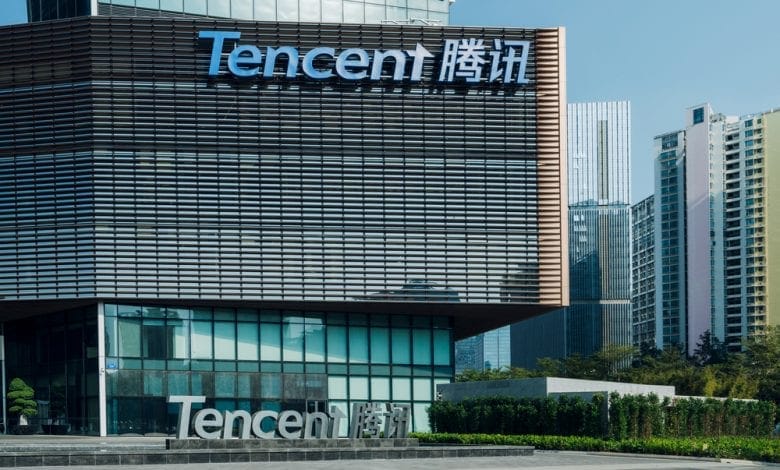
Tencent Holdings said its cloud business achieved scaled profitability for the first time in 2025, marking a turning point for a unit long viewed as capital-intensive and positioning AI-driven demand as a new profit engine.
In its latest earnings release on March 18, Tencent reported 2025 revenue of RMB 751.8 billion (US$104.4 billion). FinTech and Business Services, its core ToB segment that includes cloud, reached a record RMB 229.4 billion (US$31.9 billion), accounting for 31% of total revenue, with enterprise services revenue rising 22% year-on-year.
Management framed the cloud milestone as the result of both cost discipline and a richer product mix, while signaling a sharper AI push. President Martin Lau said Tencent invested RMB 18.0 billion (US$2.5 billion) in new AI products last year and expects at least double that level in 2026, setting up a year where AI-related capex and model rollouts could become key variables for investors tracking margins and monetization.
Cloud profitability shifts the investor focus to mix and discipline
Chairman and CEO Pony Ma said Tencent’s cloud revenue accelerated in 2025 and delivered “scaled profitability,” attributing the improvement to supply-chain optimization and strong growth in PaaS and SaaS. The statement matters because it suggests Tencent is moving away from low-margin infrastructure-heavy expansion toward higher value-added services that can sustain earnings.
Tencent Cloud opened to the public cloud market in 2013 and reached the profitability milestone in 2025, a 12-year cycle that aligns with the industry’s long payback profile described in the materials. Company executive Yang Chen previously said the public cloud business had already turned profitable in 2024’s fourth quarter after cutting “unhealthy” business and focusing on platform products, reinforcing the narrative that profitability is as much about customer and product selection as it is about scale.
AI demand lifts To B revenue and rewrites cloud’s growth logic
Tencent’s results link cloud economics directly to AI workloads. Management and the materials point to large-model training, inference, and agent deployments as drivers of higher consumption of compute, storage, and data processing, helping shift cloud from “selling resources” to “selling capabilities.”
That shift is visible in Tencent’s revenue structure: FinTech and Business Services contributed nearly a third of total revenue in 2025, while enterprise services growth of 22% indicates AI-related demand is filtering through corporate spending. The broader implication for investors is that cloud competition may tilt further from price-led share grabs toward product depth and operational efficiency, as AI workloads reward platforms that can bundle tools, security, and developer services.
Rising R&D and capex point to a 2026 execution test
Tencent reported 2025 R&D spending of RMB 85.747 billion (US$11.9 billion) and capital expenditures of RMB 79.198 billion (US$11.0 billion), both record highs. The company said Hunyuan 3.0 is set to launch with a “significant” intelligence upgrade from Hunyuan 2.0 and highlighted organizational restructuring to integrate model development with productization, including new teams for large language models, multimodal models, AI infrastructure, AI data, and data-compute platforms.
Tencent also disclosed that by the end of 2025 it had filed more than 94,000 global patent applications and secured more than 52,000 authorizations. For markets, the near-term question is whether elevated investment converts into defensible platforms and incremental cloud profitability, particularly as Tencent commits to materially higher AI product spending in 2026.
Consumer AI adoption expands the distribution layer for cloud monetization
Tencent’s consumer-facing AI apps are scaling quickly, offering distribution that can feed enterprise adoption and cloud usage. The company said its Yuanbao app surpassed 100 million monthly active users, while Ima reached 13 million MAUs with over 420 million files in its knowledge base. QQ Browser’s AI features have served more than 130 million users cumulatively, and Sogou Input Method reported 98% AI speech-recognition accuracy with mobile MAUs above 670 million.
On the developer and enterprise side, Tencent is building an agent-focused toolchain around OpenClaw, including WorkBuddy, QClaw, and a cloud development platform. It also said Tencent Meeting’s AI user base grew more than 150% year-on-year, and its cloud coding assistant CodeBuddy covers over 90% of engineers and reduced overall coding time by 40%, metrics that support management’s view that AI agents will expand real-world workloads that “run on the cloud.”
Related Coverage:
Tencent Said to Build a Secret WeChat AI Agent, Eyeing a 2026 Rollout to All Users
Tencent Finds Its "ChatGPT Moment" With Product-Driven AI Strategy