
Tencent's GooseMeta AI Gaming Companion Enters Beta After Mihoyo's Costly Lessons
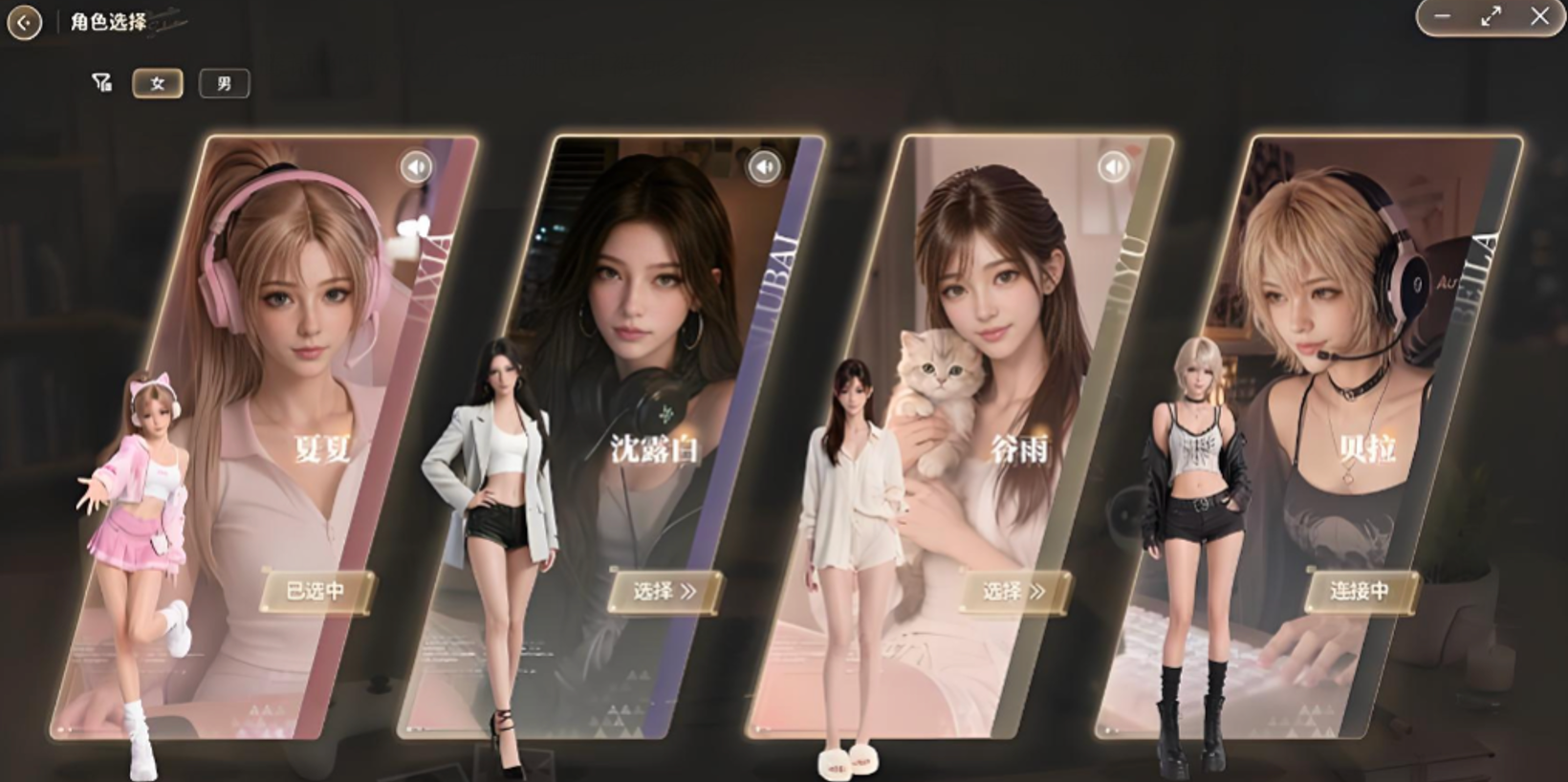
As China's AI companion race pivots from pure emotion to gameplay utility, Tencent is betting its first cross-game AI agent can outlast the pitfalls that shut down a rival product in under 30 days.
Tencent has launched the inaugural beta test — dubbed "Vitality First Test" — of GooseMeta, its first AI gaming companion agent targeting the PC client game market. The product runs as an independent Windows client, using real-time screen recognition and multimodal dialogue to deliver in-game tactical guidance alongside persistent emotional companionship. The debut comes weeks after Mihoyo shuttered its own AI companion product, BSide: Olivia Lin, in August 2026 after less than one month on Steam — a failure that has effectively rewritten the product rulebook for every player entering this space.
The timing is deliberate. Mihoyo's high-profile exit crystallized what analysts at DataEye Research Institute now frame as the sector's defining tension: AI companion products anchored purely to emotional chat carry structurally low retention ceilings and ruinous token costs, while companions fused to high-frequency gaming sessions may finally crack a viable commercial loop.
GooseMeta Targets a Gap That Pure-Emotion Rivals Failed to Fill
GooseMeta currently supports four PC titles — League of Legends, Valorant, CS2, and the recently launched Blades of Shadow: Zero — with Tencent committing to weekly title additions. The agent ships with four distinct character personas — Xiaxia, Shen Lubai, Guyu, and Bella (the last not yet live) — each carrying an independent memory architecture that retains match history, in-game preferences, and conversation threads across sessions. This persistent-memory design is a direct architectural counter to the "tool-mode reset" problem that plagued earlier chatbot companions.
In live matches, GooseMeta's screen-recognition engine reads the battlefield state in real time: in MOBA and FPS contexts it tracks laning dynamics and delivers situational advice; in single-player exploration it surfaces puzzle hints. Crucially, the system is tuned to judge intervention timing autonomously, avoiding the dual failure modes of spam-notification fatigue and silent irrelevance.
Beyond active gameplay, the product extends its session window through desktop-pet functionality, AI-generated wallpapers, and ambient chat — a deliberate strategy to monetize idle screen time between matches and lengthen overall daily active minutes within Tencent's gaming ecosystem.
Mihoyo's Retreat Redraws the Strategic Map
BSide: Olivia Lin launched on Steam on July 13, 2026, and published its shutdown notice on August 11 — 29 days later. The product was architecturally a standalone desktop companion: no game binding, no tactical layer, centered on therapeutic chat, letter-writing, and music interaction. User reception was not overtly negative; the product's fatal flaw was structural rather than qualitative.
Without a recurring high-frequency trigger — the kind that a live ranked game match provides automatically — user interaction frequency decayed sharply after initial novelty. Simultaneously, every open-ended conversational session burned compute at a fixed marginal cost, regardless of whether the user was paying. The unit economics never closed.
The parallel with Character.AI is instructive. The U.S.-based AI chat pioneer, which filed for Chapter 11 bankruptcy protection in Delaware in October 2026 after accumulating 163 million users and 20 million monthly actives, reportedly burned approximately US$30 million per month in operating costs in 2024 against a paying subscriber base of only 139,000 — implying an annualized cash deficit exceeding US$400 million. Users were abundant; payers were not.
Mihoyo's failure does not indict the AI companion category. It delineates it. Tencent's strategic read, as evidenced by GooseMeta's architecture, is that scene-anchored agents — companions that activate because a player is already launching a game — possess a structurally superior retention and monetization profile versus companions that must generate their own reason to be opened.
Tencent's Structural Advantages Compress Risk, But Do Not Eliminate It
Tencent's decision to enter now rests on four compounding advantages that Mihoyo lacked.
First, Tencent owns the distribution. League of Legends and Valorant are among China's highest-DAU PC titles, with multi-year active player bases that require no acquisition spend. GooseMeta is an incremental monetization layer on existing engagement, not a cold-start consumer product.
Second, the companion-meets-tactical-assistant hybrid addresses a documented unmet need: solo players in late-night ranked sessions who lack access to human teammates or coaching. This "duo partner plus strategy assistant" value proposition is functionally distinct from the pure-emotional-companionship vertical that BSide occupied.
Third, Tencent has multi-year investments in gaming AI and multimodal visual recognition infrastructure. GooseMeta functions simultaneously as a consumer product and as a live data-collection vehicle, feeding user interaction signals back into agent capability refinement ahead of a full commercial launch.
Fourth, competitive density in the scene-anchored AI gaming companion segment remains low. The window before replication by ByteDance, NetEase, or international incumbents is finite but currently open.
Two Architectures Are Emerging; Neither Eliminates the Other
DataEye's analysis identifies a structural bifurcation in AI gaming companion deployment that will likely define competitive positioning through 2027.
The external cross-game agent model — represented by GooseMeta — relies on screen-capture recognition to remain game-agnostic, enabling coverage across dozens of titles from a single client. Its ceiling is imposed by that same mechanism: screen-recognition latency, accuracy limits under fast-paced FPS conditions, and the fundamental inability to read sub-surface game data such as server-side hit registration, hidden map state, or opponent intention signals.
The native in-game agent model — exemplified by Zhaxi Guangnian's title Bu Wen Fan Chen, where an AI NPC with full world-state access operates as an original game character — offers superior precision and immersion but is locked to a single title. Its addressable market is capped by that game's player base.
These are complementary deployment vectors, not substitutes. Platform-scale publishers like Tencent are logical operators of the external model; individual game studios optimizing for depth of experience within a single IP are logical operators of the native model.
The Commercial Risk Tencent Has Not Yet Solved
GooseMeta's beta test defers the central monetization question. If the product moves to a subscription model — the most natural pricing architecture given its persistent-memory, always-on design — Tencent faces the same token-cost exposure that broke Character.AI and constrained Mihoyo. A large cohort of users engaging in continuous real-time voice sessions across multi-hour gaming nights generates compute costs that a RMB 30–50 (US$4.17–6.94) monthly subscription may not cover at scale without aggressive session throttling or tiered access design.
The game-binding architecture mitigates but does not eliminate this risk. Session length in a League of Legends match averages 30–40 minutes; a player running five ranked games in an evening generates meaningful inference demand. Multiply by hundreds of thousands of concurrent users, and the token bill compounds quickly.
Whether Tencent structures GooseMeta as a standalone subscription, bundles it into existing Tencent Gaming membership tiers, or cross-subsidizes it as a retention tool against game churn will determine whether the product generates a margin contribution or remains a strategic loss-leader. That answer will not emerge from the beta.
Impact Assessment
The AI gaming companion category in China is transitioning from proof-of-concept novelty to architectural competition. GooseMeta's beta is Tencent's declaration that the next phase belongs to agents embedded in what players are already doing — not agents asking players to do something new.
Related Coverage:
AI-Powered Games Flood China's Market, But Quality Gap Widens as Platforms Race for ScaleMiHoYo's Three Founders Crack Hurun Top 100 as AI Pivot Transforms a Game Studio Into Industrial Capital