
Tencent’s WeChat Pushes Into AI Agents With ClawBot Plug-in, Turning Chat Into a Control Layer for OpenClaw
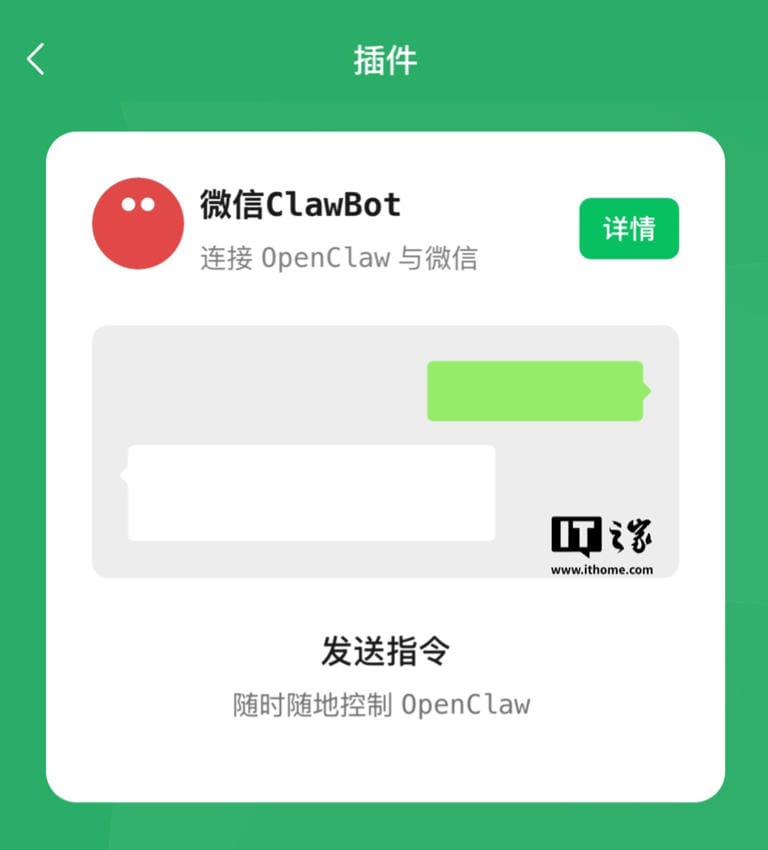
WeChat, Tencent Holdings’s flagship social app, is moving unusually fast to make itself the default “remote control” for AI agents, as it rolled out an official plug-in called ClawBot that lets users operate the open-source OpenClaw agent directly inside chats.
The March 22 launch marks a notable shift for WeChat, a product known for restrained updates and long internal testing cycles. Users can connect either a cloud-based or local OpenClaw instance to WeChat via QR-code authorization or a one-line command, then issue tasks conversationally.
The release also extends a rapid sequence of moves by Tencent in March 2026, following public criticism from OpenClaw founder Peter Steinberger over Tencent’s handling of OpenClaw-related content. The pace signals rising urgency among large platforms to secure the next primary interface layer as interaction shifts from “search and browse” to “instruct and execute.”
ClawBot Expands WeChat’s Role From Messenger to Agent Interface
ClawBot effectively embeds OpenClaw into WeChat’s conversation window, allowing users to interact with the agent as if they were chatting. In Tencent’s framing, the key is not which large model runs underneath, but whether the command interface remains inside WeChat—preserving its position as consumer internet infrastructure.
A person close to Tencent said the company had historically worried about taking too much user time, but AI iteration is moving too quickly for WeChat to remain slow-moving. The plug-in’s prominent placement also functions as distribution: WeChat is giving an agent product form a national-scale channel, potentially compressing user education and accelerating adoption for OpenClaw-style workflows.
Tencent Backtracks After OpenClaw Dispute, Then Re-enters With Sponsorship
The WeChat rollout comes days after an unusually public dispute. On March 12, Peter Steinberger accused Tencent of “copying” OpenClaw content after Tencent launched SkillHub, described in the materials as a localized skill mirror site that moved more than 13,000 skill packages from OpenClaw’s ClawHub without prior coordination. Steinberger also said the activity pushed his server costs into “five figures.”
Tencent responded via its Tencent AI account, saying SkillHub’s first week distributed 180GB of data and handled 870,000 downloads, while pulling only about 1GB of non-concurrent requests from the official source site. Steinberger argued the issue was less bandwidth than the unilateral diversion of users and download statistics.
The turning point came March 16, when Steinberger posted that Tencent’s lightweight cloud service had become an official GitHub Sponsors backer of the OpenClaw community, adding: “Love a good redemption arc.” Within days, Tencent went from being criticized to sponsoring, and then to broad product-level integration across QQ and WeChat, culminating in ClawBot.
Accelerating Integration Signals a Fight for the Next “Operating System” Layer
Tencent’s speed stands out against WeChat’s historical product philosophy, repeatedly described by WeChat leadership as minimizing disruption. Yet the materials frame agent-based interaction as a new platform shift: from “people finding information” to “people issuing instructions,” with the chat box becoming the next-generation access.
For Tencent, keeping the instruction layer inside WeChat serves both defense and offense. On defense, it reduces the risk that users move work-related workflows to other collaboration platforms to use AI assistants. On offense, it positions WeChat to capture incremental usage time by reframing the app as a productivity interface for daily tasks rather than only messaging and social browsing.
Tencent CEO Pony Ma underscored the internal priority in an unusually direct signal, reposting OpenClaw-related product content and listing multiple “Claw” variants under development, according to the materials.
Tencent Cloud Stands to Benefit as Always-on Agents Drive Server Demand
The push into agents also links to Tencent’s infrastructure ambitions. Tencent Cloud’s Lighthouse lightweight application server had already launched an OpenClaw one-click deployment image in mid-March, according to the materials. While rival cloud vendors also offer similar deployment options, WeChat’s distribution strength could become a funnel: users who want OpenClaw online 24/7 may need a cloud server, and WeChat could be the nearest conversion point.
If WeChat becomes the default place where hundreds of millions of users first try an agent via OpenClaw, the materials suggest OpenClaw could strengthen an “Android-like” position in the agent ecosystem—while Tencent retains the high-ground interface and potential cloud monetization path.
Related Coverage:
Tencent Said to Build a Secret WeChat AI Agent, Eyeing a 2026 Rollout to All Users
Tencent Tests AI-Powered Social Network With $1.4 Billion Red Envelope Blitz