
The AI Pivot: Scalpers Flip Bytedance-Powered ZTE Phones At 40% Premium As Goldman Weighs In
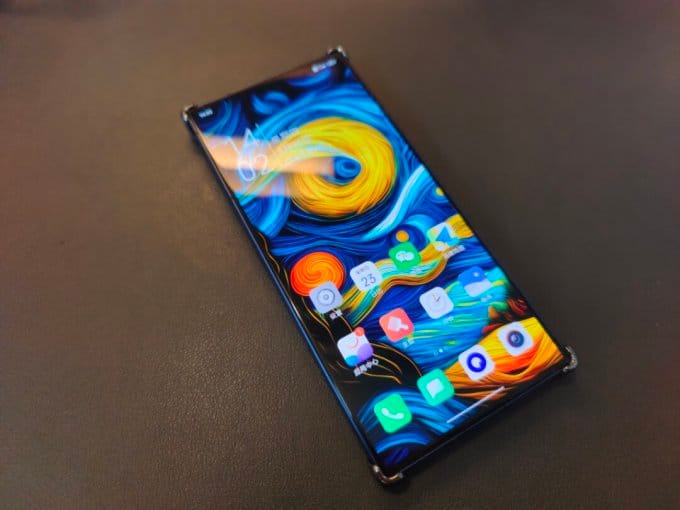
In the relentless race to monetize Generative AI, the battleground has shifted from data centers to the palm of your hand. On Monday, December 2, 2025, Goldman Sachs released a pivotal note on ZTE, arguably one of the clearest signals yet that the "AI Smartphone" era has moved from marketing fluff to tangible—and heavily scalped—reality.
The catalyst is the launch of the Nubia M153, a "prototype" device born from a collaboration between ZTE and TikTok parent ByteDance. While Goldman Sachs maintains a "Neutral" rating on ZTE, citing fair valuation, the immediate consumer reaction suggests the market's appetite for AI-native hardware is far from satiated.
The "Engineering Prototype" Frenzy
On December 1, 2025, ZTE’s sub-brand, Nubia, released the Nubia M153. Priced at RMB 3,499 (US$489), the device was marketed not as a mass-consumer flagship, but as an "engineering prototype" for developers and early adopters.
The inventory evaporated instantly.
According to local media regarding the ZTE Mall, the device is strictly sold out. The secondary market, inevitably, has gone parabolic. On trading platforms like Xianyu, scalpers are flipping the unit for between RMB 4,200 (US $580) and RMB 4,999 (US $690)—a premium roughly 40% above retail. This speculative fever comes despite explicit warnings from the manufacturer that the software experience is "not yet at the level of a mature commercial product."
Goldman’s Take: The Second Curve
In a Dec 2 note led by analyst Allen Chang, Goldman Sachs highlights this launch as a critical milestone for ZTE’s "second curve" growth strategy. The investment bank views the partnership as a strategic lever for ZTE to utilize its manufacturing prowess while offloading the heavy lifting of AI model development to ByteDance’s "Doubao" ecosystem.
"We are positive on ZTE’s progress in AI smartphone development, leveraging its smartphone design and manufacturing capabilities to being an early mover of AI smartphone innovation," Goldman analysts wrote.
However, the bank remains cautious on the stock itself, maintaining a Neutral rating. While the AI narrative is seductive, Goldman points to ZTE's "relatively fair valuation," suggesting the current stock price already prices in much of the telecom infrastructure and server growth expected in the coming quarters.
Hardware vs. Intelligence
The Nubia M153 represents a divergence in smartphone design philosophy. According to the Goldman report, ZTE has effectively sacrificed traditional hardware dominance for AI capability.
While competitors like Honor and Vivo are pushing 200MP camera sensors and massive 8,000mAh silicon-carbon batteries, the Nubia M153 settles for a standard 50MP triple-camera setup and a 6,000mAh battery. The buildup is entirely focused on silicon transaction speeds: the phone packs 16GB of RAM and 512GB of storage specifically to handle the on-device compute loads required by the Doubao AI assistant.
The roadmap is aggressive. ByteDance has promised bi-weekly software updates through the first quarter of 2026, turning users into effectively paying beta-testers for its Large Language Model (LLM) integration.
The "Smart Agent" Economy
The real value proposition, according to the research, lies in the "OS-level" integration. Unlike an app, the Doubao assistant has "onscreen awareness." It can read the content of the user's screen, interpret context, and execute multi-step tasks via Graphical User Interface (GUI) agents.
Goldman notes: "The AI can compare prices across ecommerce platforms and help place an order for goods, check for podcast updates, and book restaurant reservations."
This moves the goalpost from a chatbot that talks to an agent that does. For ByteDance, this is a masterstroke: they secure deep OS-level data access without incurring the massive capital expenditure of building a hardware supply chain from scratch. ByteDance has clarified it has no plans to manufacture its own phones, preferring the "Android model" of expanding partnerships with multiple OEMs.
Conclusion
For investors, the ZTE-ByteDance experiment offers a preview of 2026's primary tech thesis: hardware is becoming merely a vessel for AI agents. While Goldman Sachs isn't chasing the rally on ZTE just yet, the immediate scalping premium on a distinctively "prototype" device suggests the consumer market is desperate for the next leap in mobile utility—or perhaps just the next bubble.