
The Great EV Divergence: China Sprints Ahead As Tesla And The West Hit The Brakes
If there remained any lingering optimism that the Western automotive establishment could dictate the pace of the global energy transition, the latest data from Deutsche Bank Research should serve as a sobering obituary for that narrative.
In a report released on November 5, 2025, titled "Top 15 Countries' New Energy Vehicle Sales Volume Tracker," analysts Tim Rokossa and Edison Yu lay bare the widening chasm in the global auto sector. The data for October 2025 reveals a bifurcated world: one where Chinese OEMs are consolidating hegemony with ruthless efficiency, and another where Western champions—led by a faltering Tesla—are struggling to find traction in their own home markets.
This isn't just a monthly sales blip; it is the crystallization of a new world order in auto manufacturing.
The Dragon in the Driver's Seat
The headline figures are staggering, but the trend lines are what should keep executives in Detroit and Wolfsburg awake at night. The sheer velocity of the Chinese automakers is now the defining feature of the global market.
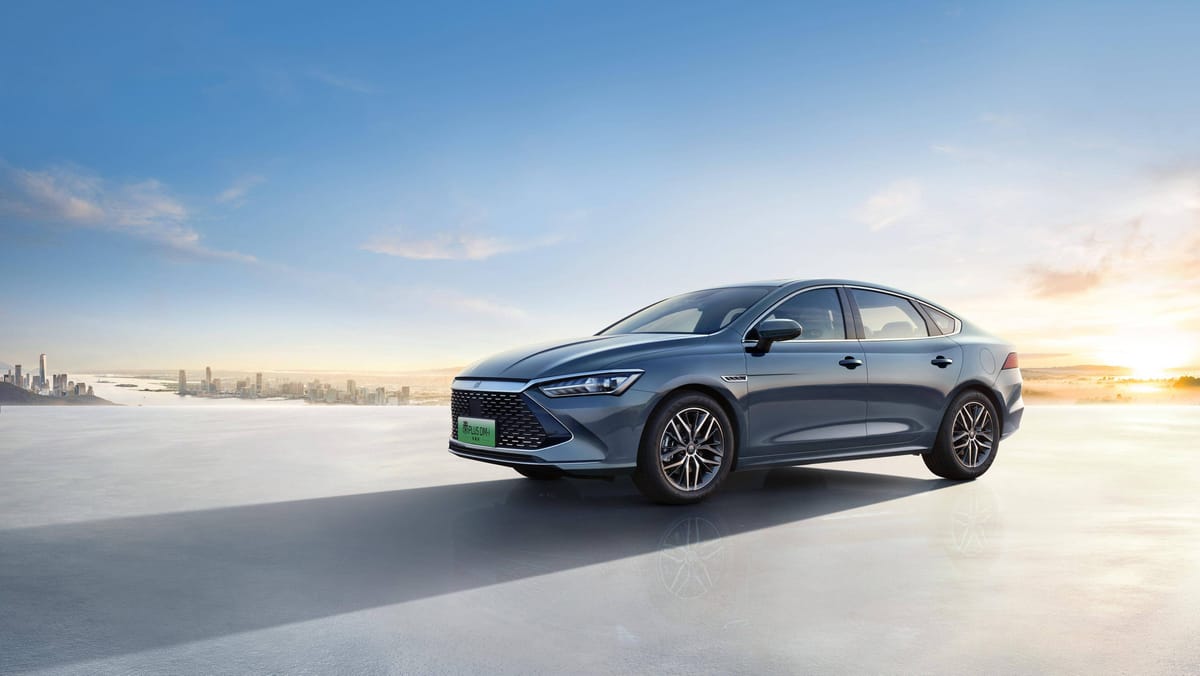
BYD continues to operate in a stratosphere of its own. Deutsche Bank notes that the Shenzhen-based giant solidified its iron grip on the number one spot, delivering over 461,597 units in October 2025 alone. To put that magnitude into perspective, BYD is now selling four times as many electrified vehicles globally as its closest American rival.
However, the real story of October 2025 belongs to the relentless ascent of Geely Automobile. While others consolidate, Geely is accelerating. The report highlights:
"Geely 189,859 units [in October], 56.5% YoY growth... ranked second."
This 56.5% surge is not merely organic growth; it is market share conquest. With a portfolio expanding through brands like Zeekr and Galaxy, Geely has successfully flanked legacy competitors, pushing the monthly "China Brand" narrative from dominance to monopoly.
Other Chinese heavyweights are following suit. Chery Automobile posted a 74.8% year-over-year jump, while Changan Automobile managed a respectable 23.6% increase. The domestic Chinese market itself grew 18.6% year-over-year in October, proving that the appetite for NEVs (New Energy Vehicles) in the East remains insatiable.
Tesla and the Erosion of the First-Mover Advantage
Conversely, the data for Elon Musk’s empire paints a grim picture of saturation and aging lineups. Tesla's global sales for October 2025 plummeted by 17.5% year-over-year to 115,156 units. The company is bleeding volume in the very markets that were supposed to be its fortresses.
Deutsche Bank’s data breaks down the retreat across key Western geographics:
"Tesla global sales down 17.5% YoY... In the USA, Tesla sales down 32.3%... In Germany, sales down 53.5%."
The collapse in Germany is particularly symbolic, signaling that the European consumer is rejecting the aging Model Y and Model 3 in favor of fresher, often Chinese-made alternatives or subsidized domestic options. In the US, a 32% contraction suggests that even on its home turf, the EV pioneer is struggling against headwinds of high interest rates and model fatigue.
The "Tale of Two Markets" for Legacy Auto
Perhaps the most cynical insight from the report is found in the performance of General Motors. On paper, GM looks healthy with 20% global NEV growth. However, look under the hood, and the fragility of the American automotive industry becomes apparent.
GM's growth is entirely outsourced. The company is effectively becoming a Chinese entity with a Detroit headquarters. According to the breakdown in the report, SAIC-GM-Wuling Automobile and GM’s other Chinese ventures are doing the heavy lifting, while the domestic US market crumbles.
"GM China NEV sales 132,166, +23.0% YoY... USA NEV sales 10,707, -10.5% YoY."
While GM celebrates success in Shanghai, its US NEV sales contracted by double digits. It is a precarious position: relying on the very market that Washington is actively trying to decouple from, while losing ground to indifference at home.
The Bottom Line
The Deutsche Bank tracker confirms what the market has arguably known for months: 2025 is the year the competition gap became a chasm.
While Chinese giants like BYD and Geely are engaging in a high-speed arms race of technology and volume, Western OEMs are largely fighting a rear-guard action to protect margins amidst shrinking volumes. With global NEV penetration rates continuing to climb, the winners of the next decade are being decided right now—and they aren't speaking English in the boardroom.