
Tianyima Starts a Huawei-Powered Cluster in Shantou to Sell AI Tokens Overseas
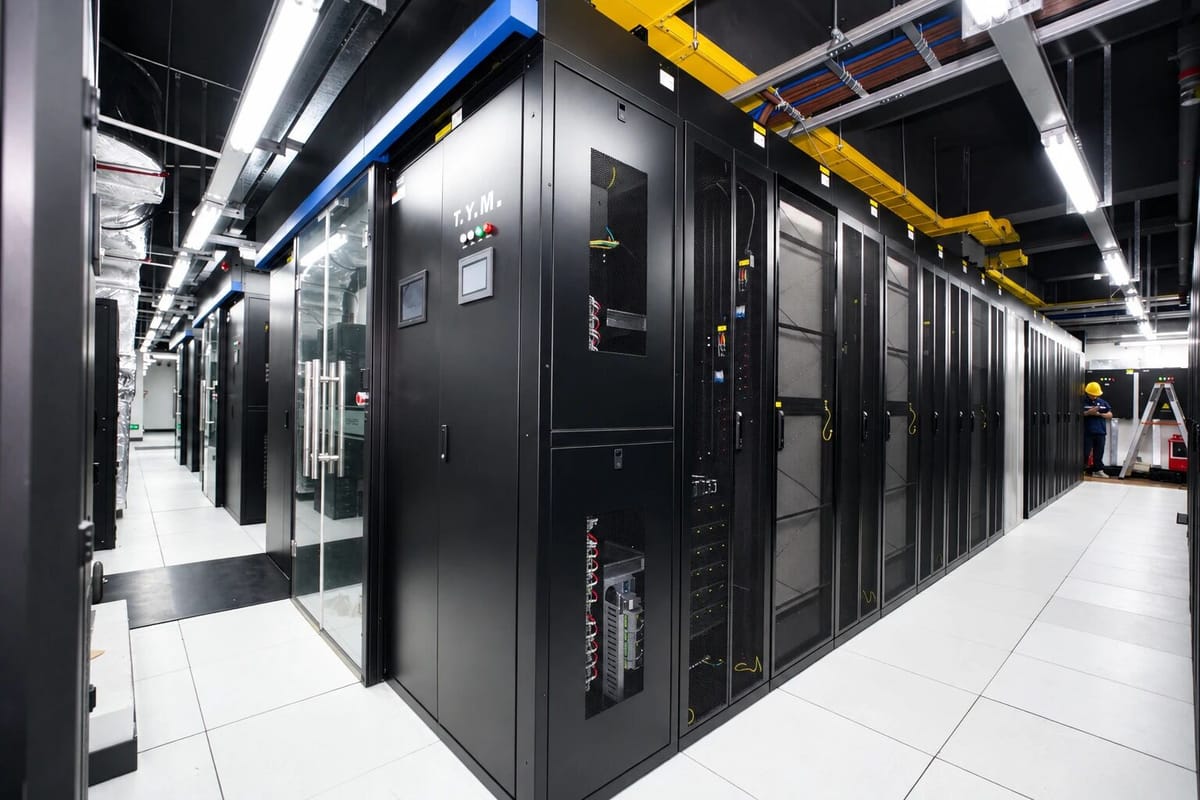
A Shenzhen-listed Chinese IT company has switched on a computing cluster in the southern city of Shantou that uses Huawei Technologies' newest artificial-intelligence chips and is meant to sell AI tokens to customers overseas.
The lighting ceremony on Nov. 13 was hosted by the Shantou branch of state telecom operator China Telecom, together with Tianyima Information Industry and Huawei, according to a report published on the Shantou municipal government's website and credited to the official Shantou Daily.
Local officials described the facility as the country's first intelligent-computing cluster to use Huawei's Ascend 950DT chips for "token export": selling units of model inference, rather than the servers themselves, to overseas users.
The cluster is tied to China Telecom's international submarine-cable landing station in the city. In the official account, computing is generated in Shantou and carried over the cables toward markets in Southeast Asia.
Liu Xiangmin, who heads government and enterprise business at China Telecom's Shantou branch, said the carrier provides the facility, Huawei supplies the equipment, and Tianyima invests in and operates the project.
That pitch matters because China is already trying to turn domestic inference capacity into a cross-border service. ChinaBiz Insider has reported on the model, including a $200 million overseas contract disclosed in October by telecom-services firm Runjian.
The Shantou ceremony is a narrower claim: Huawei's latest chip has now been publicly placed into that export business, at a cable landing point built to reach foreign customers.
Tianyima said on its website on Oct. 21 that the first batch of Huawei Atlas 650E servers, each with eight Ascend 950DT processors, had arrived two days earlier at its "950" computing room, part of the company's No. 1 international token factory.
At a briefing 10 days later, vice general manager Lin Shusheng said the company had deployed 16 of the chips, was still debugging the cluster and loading models, and expected to put the capacity on the market by the end of November, official news service Yangchengpai reported.
On Nov. 17, Securities Times, citing Tianyima's official WeChat account, said the lighting ceremony marked the 950 computing room's entry into "large-scale commercial use."
That wording sits alongside the 16-chip first batch and the end-of-November target Lin had given three weeks earlier.
Tianyima, stock code 301178, is a relatively small ChiNext company whose businesses include information-technology services and, more recently, sales of new-energy power stations.
In its unaudited third-quarter report, nine-month revenue rose 50.43% to 342.5 million yuan, a gain the company attributed mainly to power-station sales.
Net profit attributable to shareholders fell 54.59% to 1.90 million yuan.
The same report shows prepayments jumped more than tenfold, to 79.6 million yuan, which Tianyima said was mainly for domestic computing servers needed to build the token factory, and short-term borrowings rose 65.80% to 125.0 million yuan to finance the token-export project.
The 950DT room is being added to a factory Tianyima has already started.
The company said it began building the first factory, with a planned first-phase capacity of about 2,000P, in May, and that it held an unveiling ceremony for the factory on Nov. 1.
In a Sept. 15 investor Q&A filed with the exchange, the company said some equipment at the first factory was already in operation, and that it had already reached overseas end customers in AI short dramas, AI toys, technical-service firms and among independent developers, with demand concentrated in Singapore, Thailand, Malaysia and Indonesia.
It did not say those customers were running on the new 950DT racks.
Huawei computing project manager Wang Dingxuan told Shenzhen Special Zone Daily that the cluster would carry commercial computing services aimed at the global market.
The same report, like other local official coverage, cited a rise in daily token calls in Shantou from 100 million in April, when the city said it completed a full token-export loop, to 100 billion, and more than 3 trillion tokens a day in registered overseas demand.
Those figures were not sourced or defined in the reports, and registered demand is not the same as paid usage.
What officials switched on last week is a Huawei 950DT cluster at a cable landing station, operated by Tianyima, and billed as China's first such site for selling tokens overseas.
The first batch in the room is 16 chips, which the company said it planned to put on the market by the end of November.
Tianyima is already putting money into the factory — prepayments and short-term borrowings are up — while the sales growth in its latest quarterly report still comes from power stations.
Related Coverage:
Huawei Cloud Launches CloudRobo-WM1.2 for Embodied AI
Huawei Confirms OSTA Smartphone Sub-Brand, Leaves Key Details for Nov. 20